


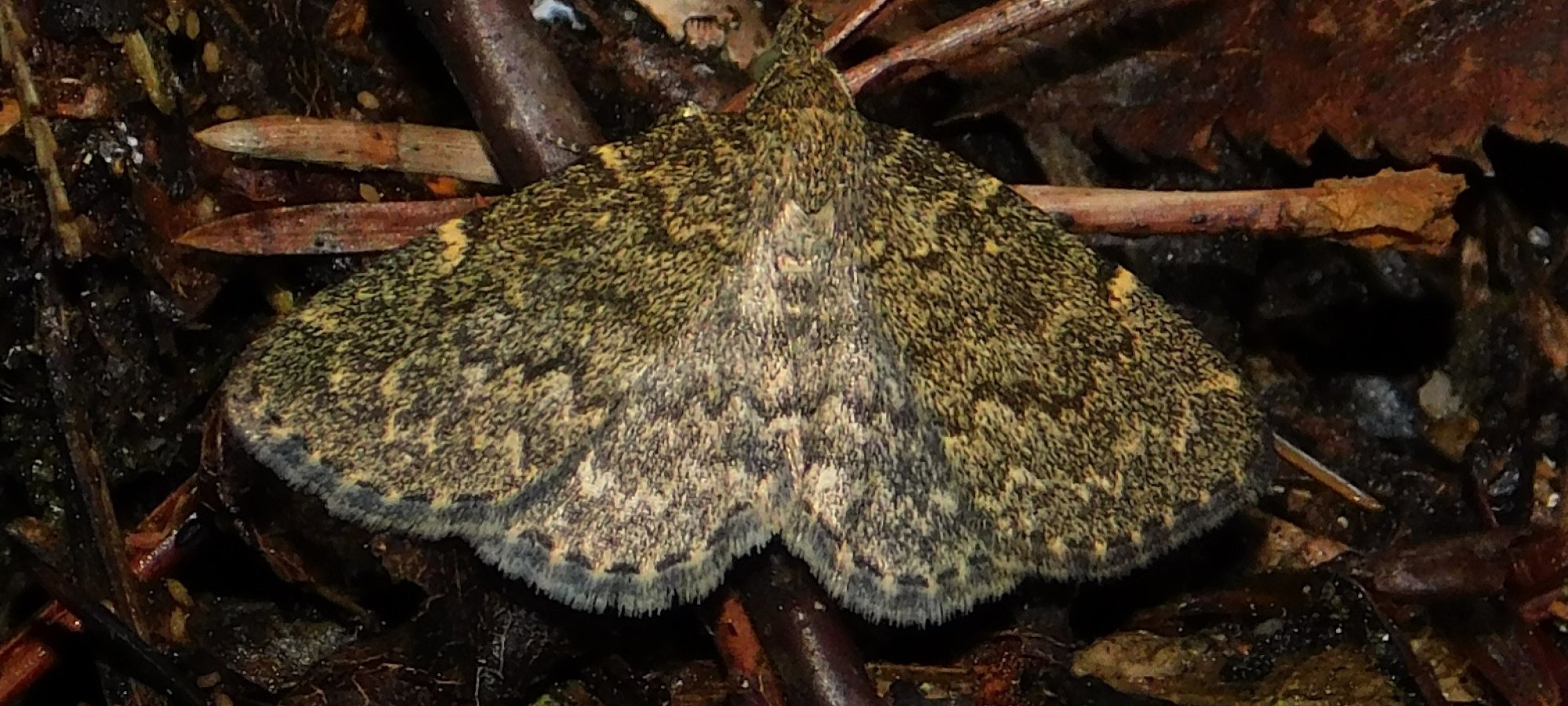
July 25, 2022 |
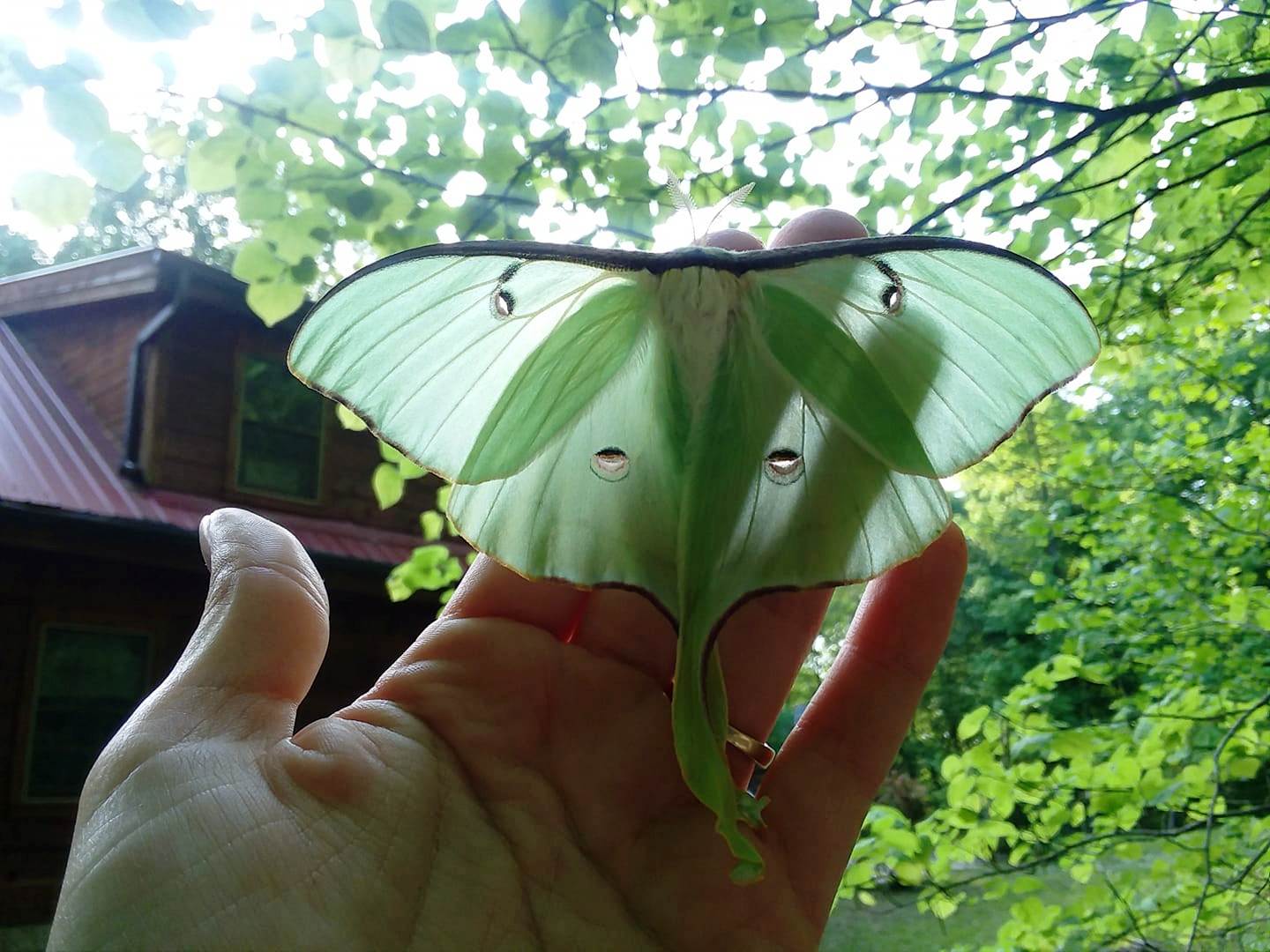
Happy National Moth Week!
This is a time we set aside to recognize and celebrate the incredibly diverse world of moths and the roles they play in the ecosystem.
Butterflies are well-appreciated for their beauty and pollination efforts as they grace our fields and gardens. Because their habits are largely diurnal (or day-active), they are much more likely to be encountered and enjoyed by us.
Most moths fly under the cloak of darkness and thus pass through our lives largely unnoticed, unless perhaps they linger at a porch light from the night before. And yet, there are far more moth species present than butterflies! For the 147 or so species of butterflies found in Tennessee, there are at least 1682 moth species. They may be perceived as nothing more than dull pests by some, but their colors and patterns can rival even the most beautiful of butterflies.
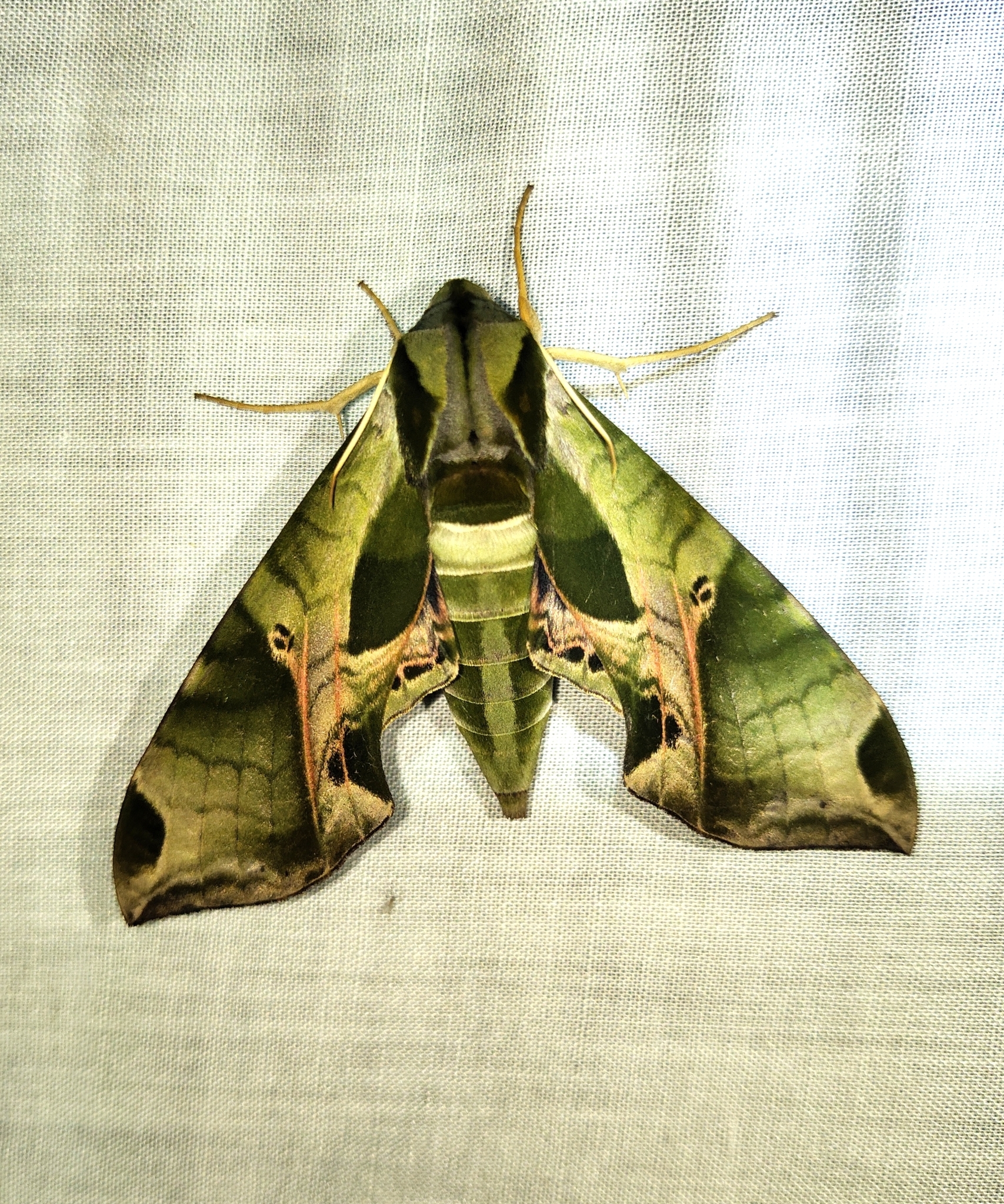
Pandorus Sphinx (Eumorpha pandorus), Putnam county
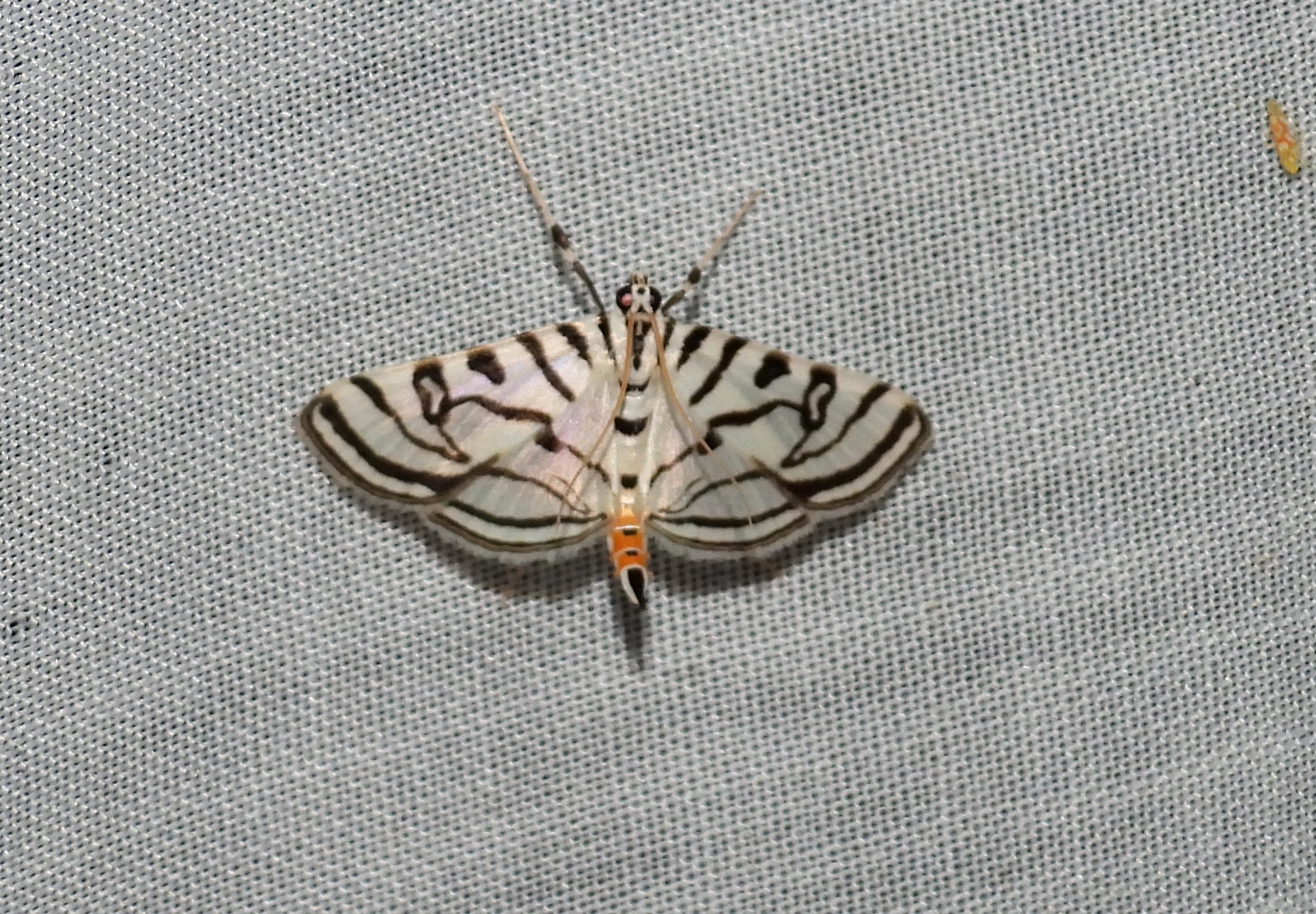
Zebra Concylodes (Conchylodes uvulalis), Putnam county
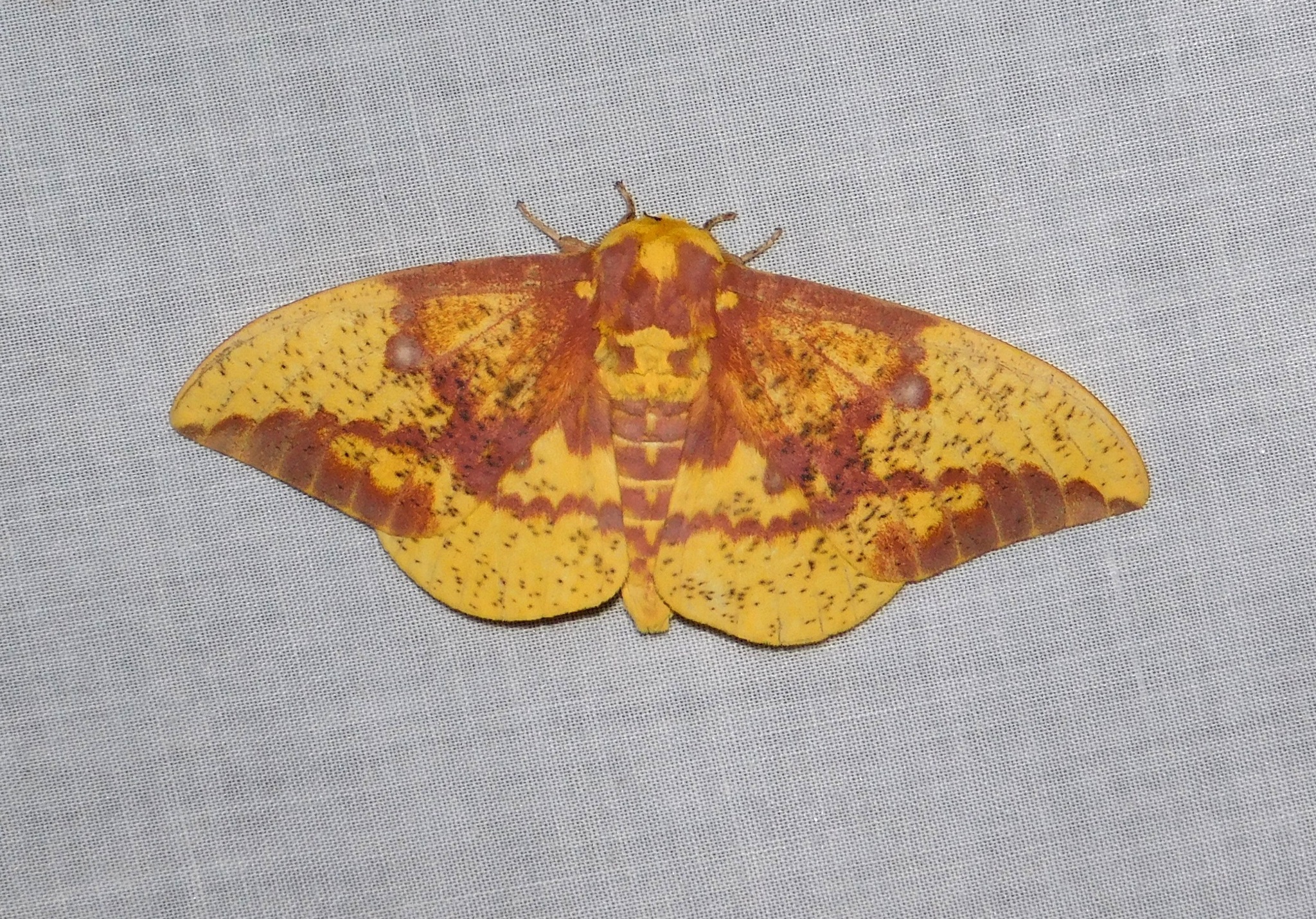
Imperial Moth (Eacles imperialis) at Edgar Evins State Park
So what are moths exactly and why are they important? Moths, along with butterflies, are insects in the order Lepidoptera (a word meaning “scaled wing”). How can you tell a moth from a butterfly? Generally speaking, butterflies are more likely to be active during the day, while most moths work the night shift. There are however, more day-active moths than night-active butterflies. Some of these moths are cleverly disguised as other creatures!
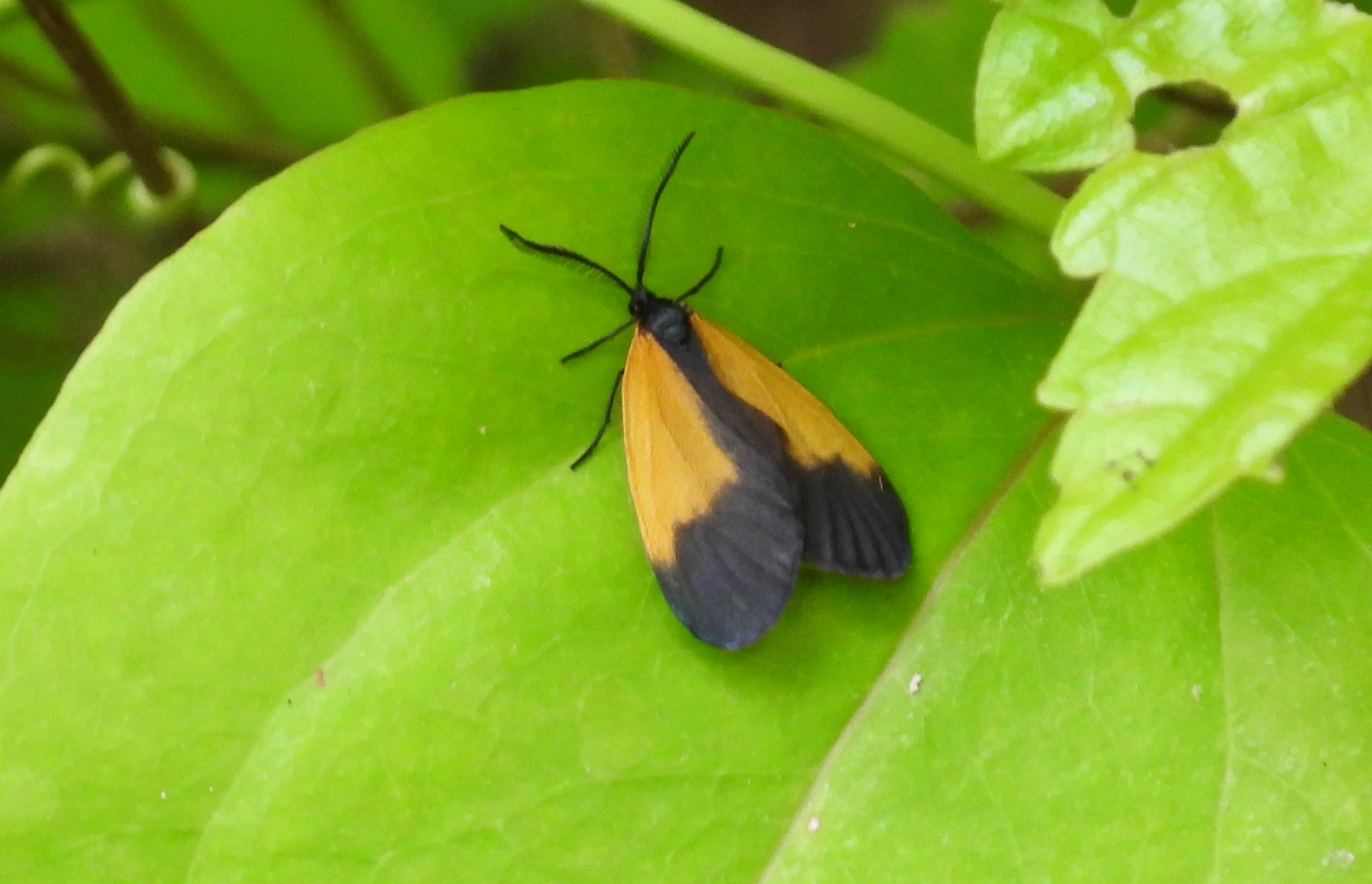
An Orange-patched Smoky Moth (Pyromorpha dimidiata) mimicking a beetle, at Chickasaw State Park
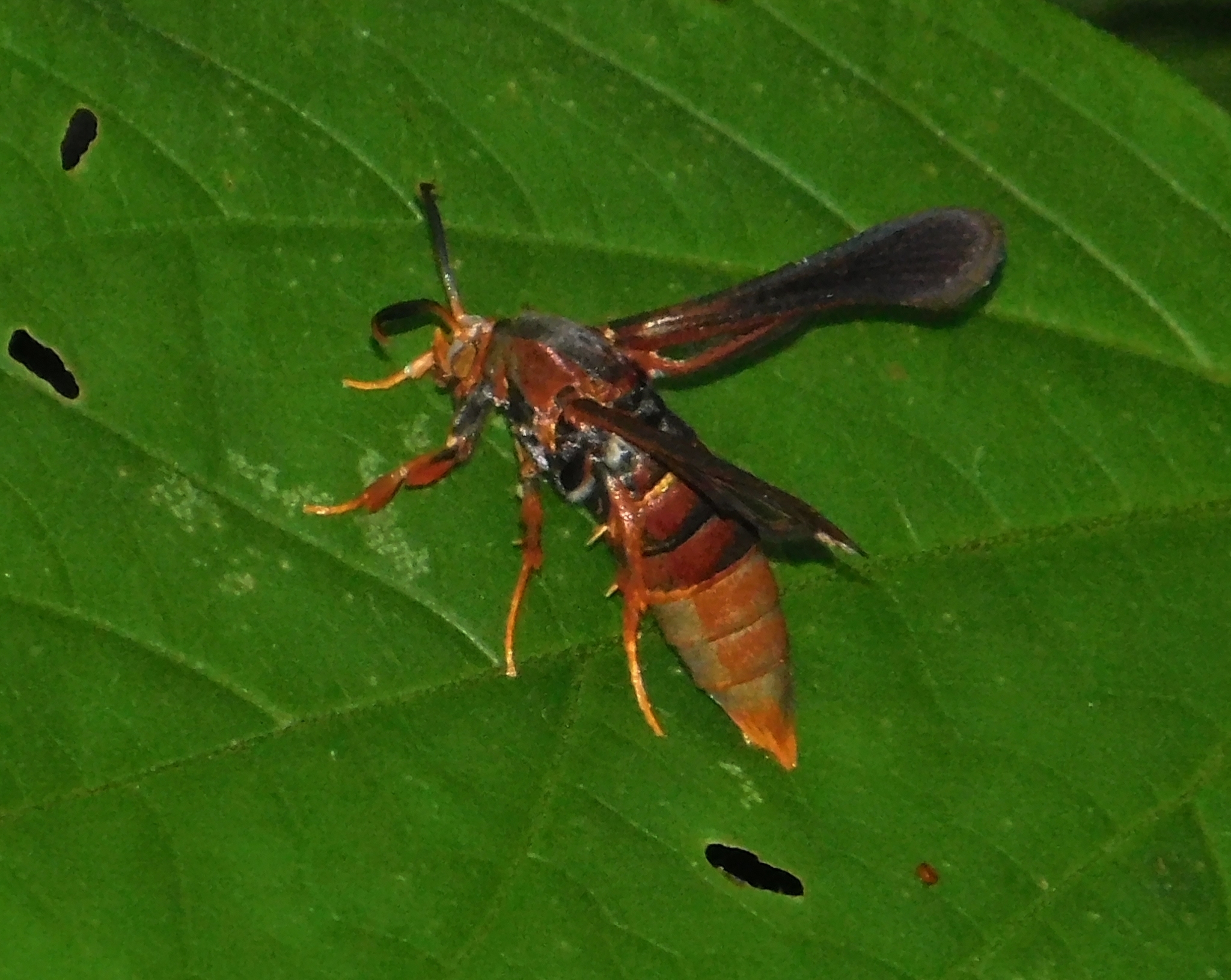
The Grapevine Borer (Vitacea polistiformis) looks very much like a paper wasp! Edgar Evins State Park.
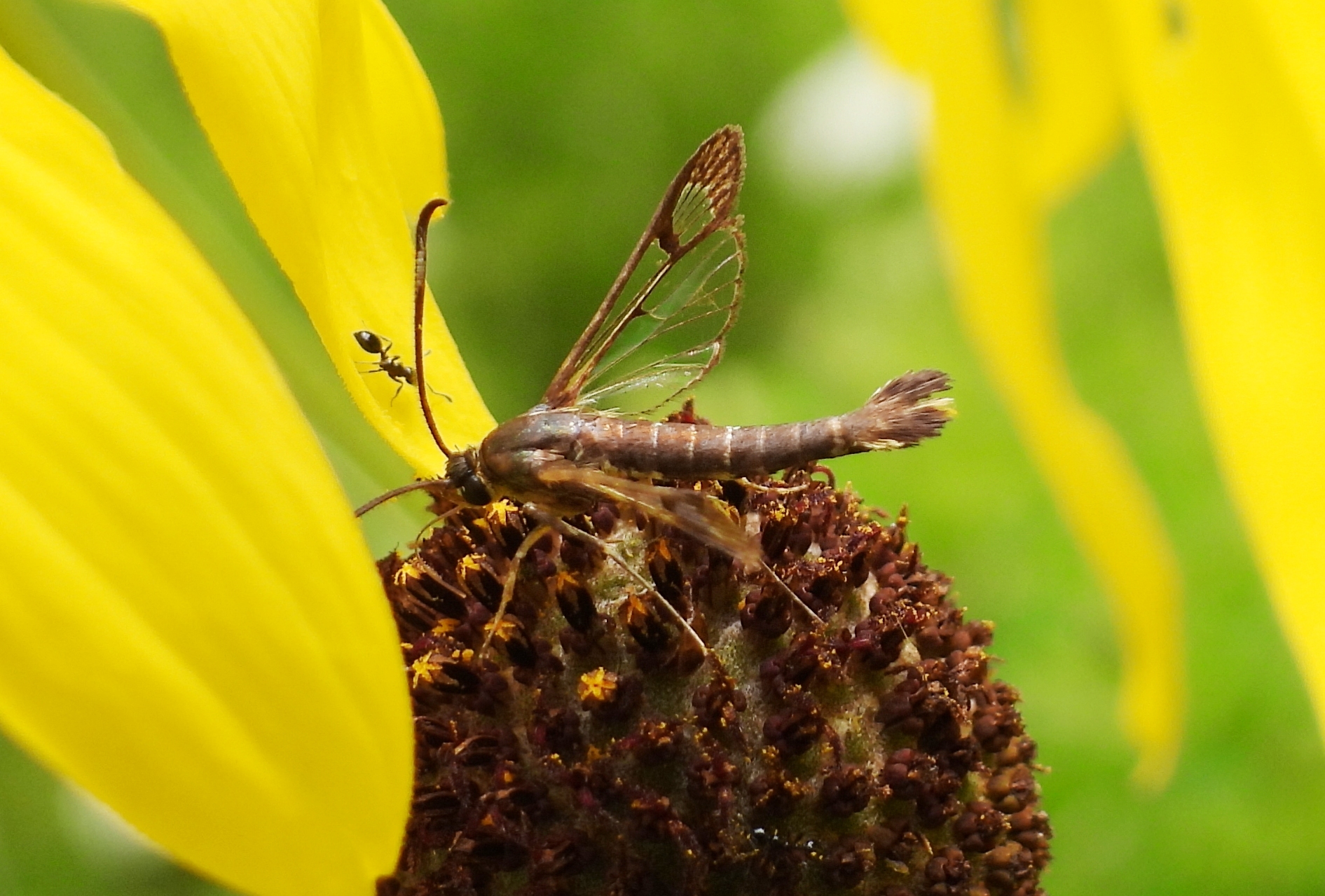
A Clearwing Moth (Carmenta) nectars safely with its wasp disguise
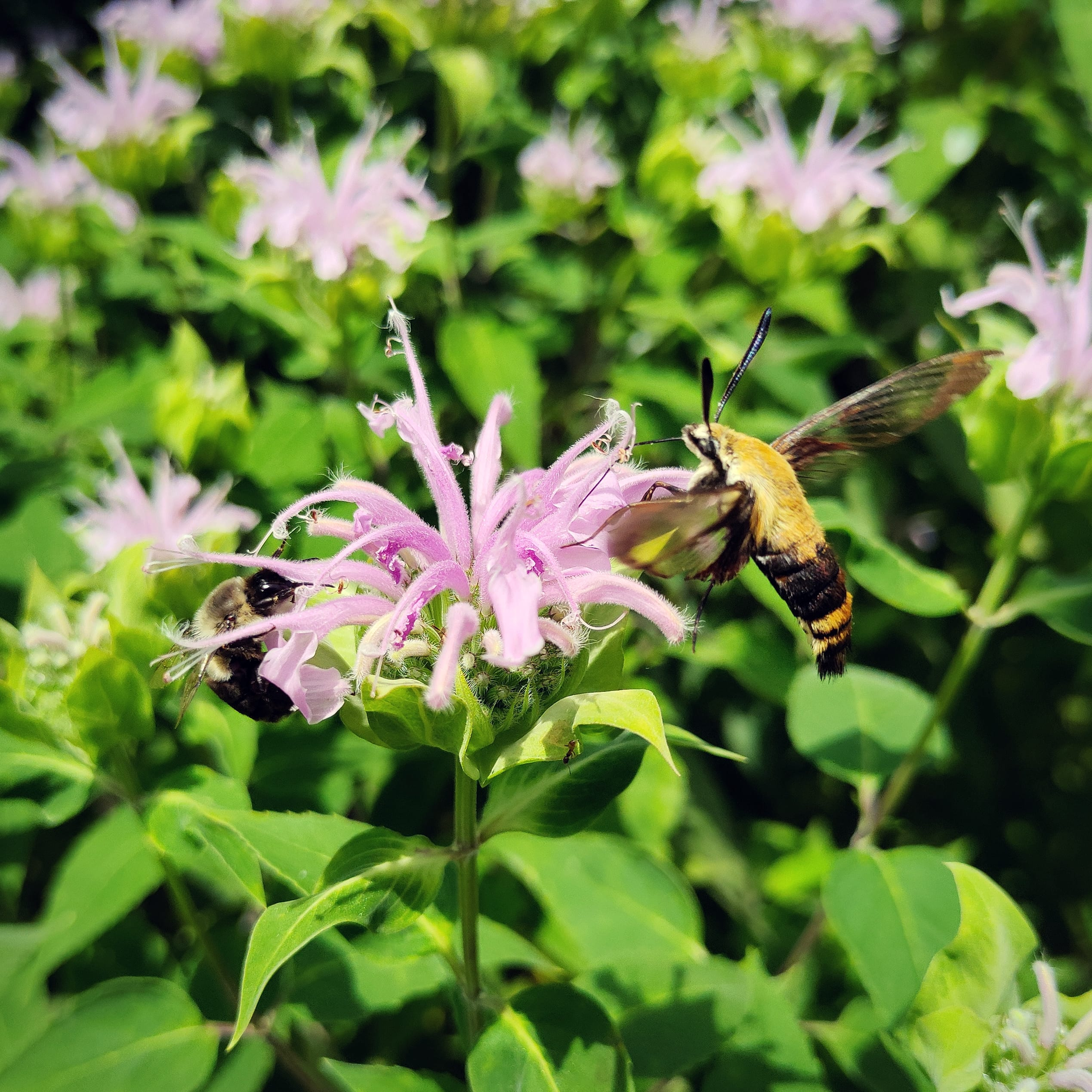
A Hummingbird Clearwing moth (Hemaris diffinis) nectars alongside a Bumble Bee
Moths typically have feathery antennae while butterflies’ are knobbed.
Many moths sit with their wings spread while butterflies hold their wings upright.
Moths are often fuzzier while butterflies are smoother and more streamlined.
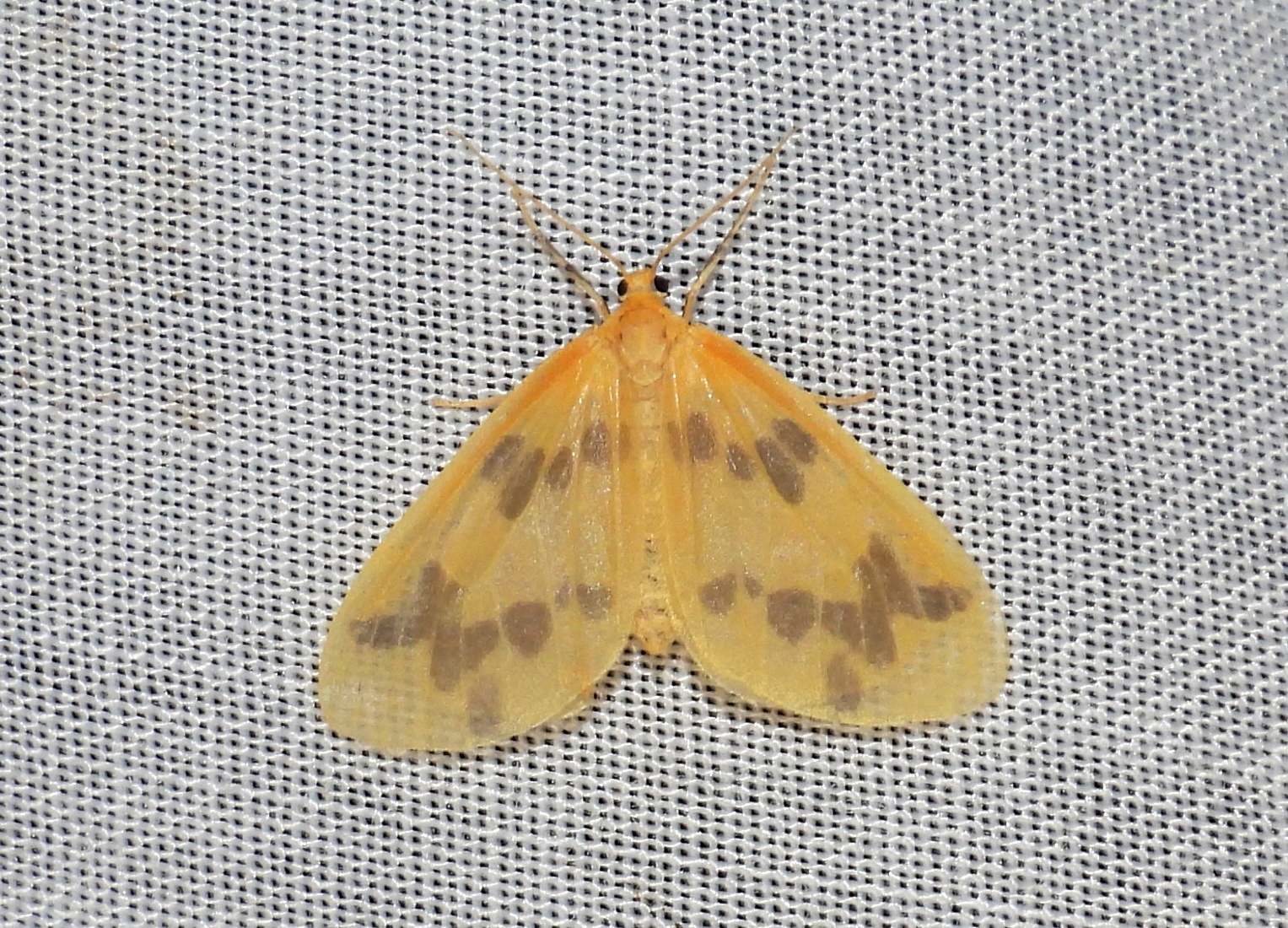
Beggar Moth (Eubaphe mendica)
Like butterflies, moths undergo true metamorphosis, a life cycle that has 4 distinct stages: egg, larva, pupa & adult.
Most moths lay their eggs in large masses on their host plant of choice. Various trees, shrubs, vines, grasses and flowering plants will serve as a food source, depending on the species. Some are so choosy they will only feed on a single plant type.
Moth caterpillars are just as varied as their adult counterparts – some of which take forms that look very un-caterpillar like. There are quite a few moth caterpillars that are well-armed with irritating hairs, noxious poison or stinging spines.
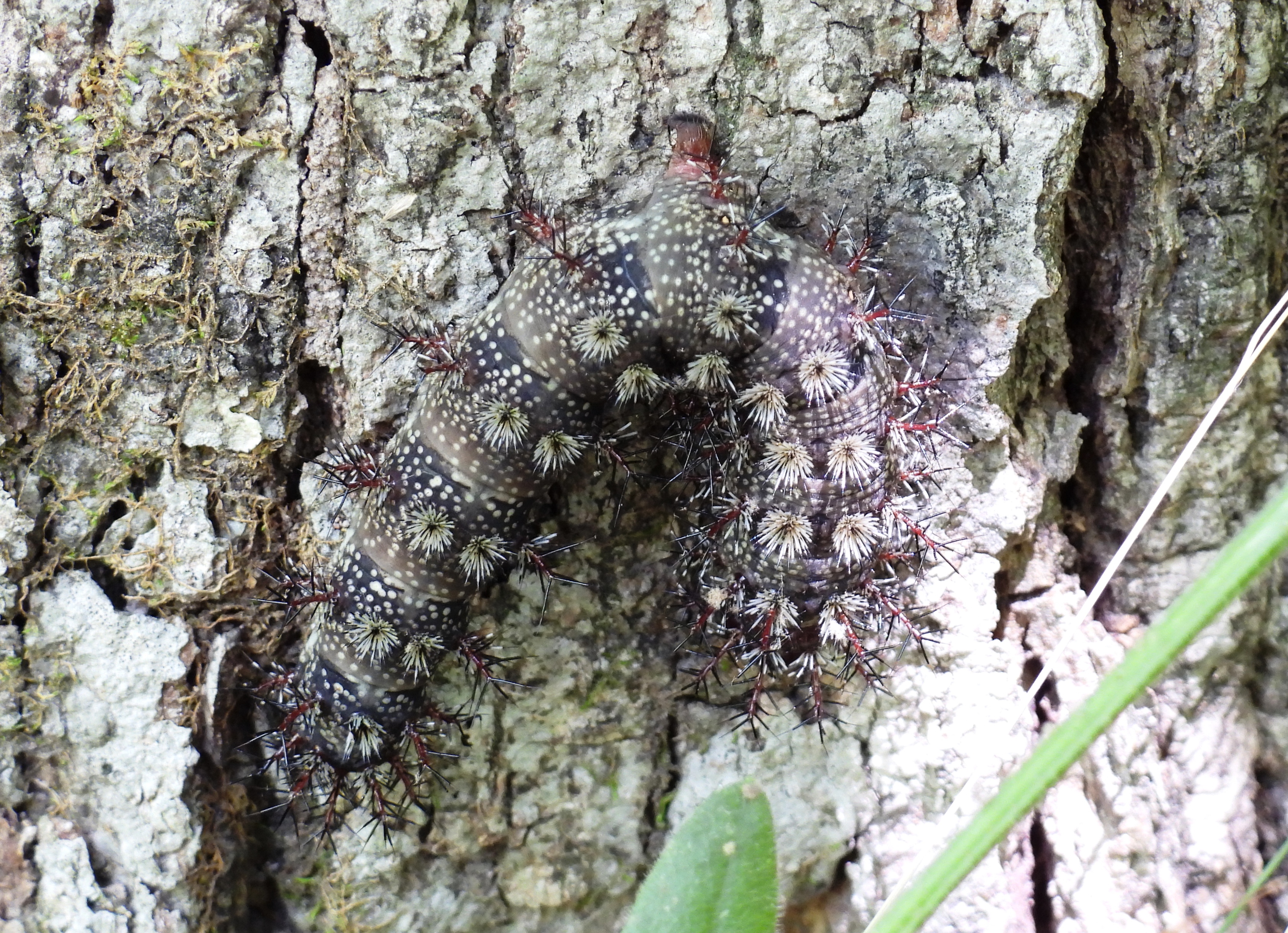
The Buck Moth (Hemileuca maia)Caterpillar is not only well-comouflaged, but also covered in spines that give a very painful and memorable sting! Montgomery Bell State Park.
Some have incredible camouflage to help prevent capture by one of their many predators.
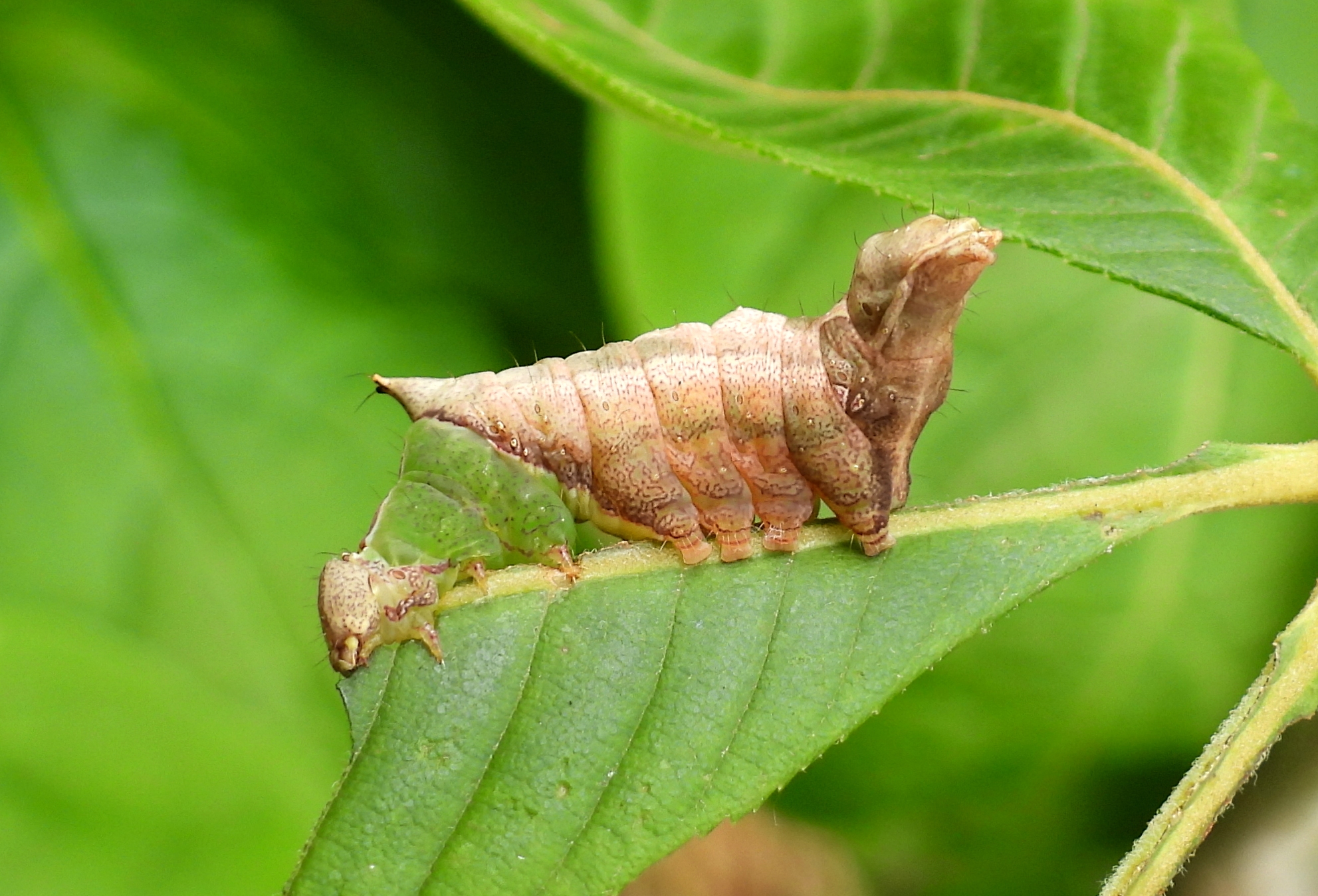
This Unicorn Prominent Moth (Coelodasys unicornis) caterpillar has an amazing disguise as a leaf's edge
Unlike butterflies, moths do not make a chrysalis when it comes time to pupate. They spin a cocoon of silk, sometimes from a single strand that stretches for miles. They will often spend the winter in their protective cocoon, usually hidden in the leaf litter, before emerging the following year. Some moths have multiple broods per season.
Adult moths run the gamut from extremely colorful and vibrant to remarkably well comouflaged.
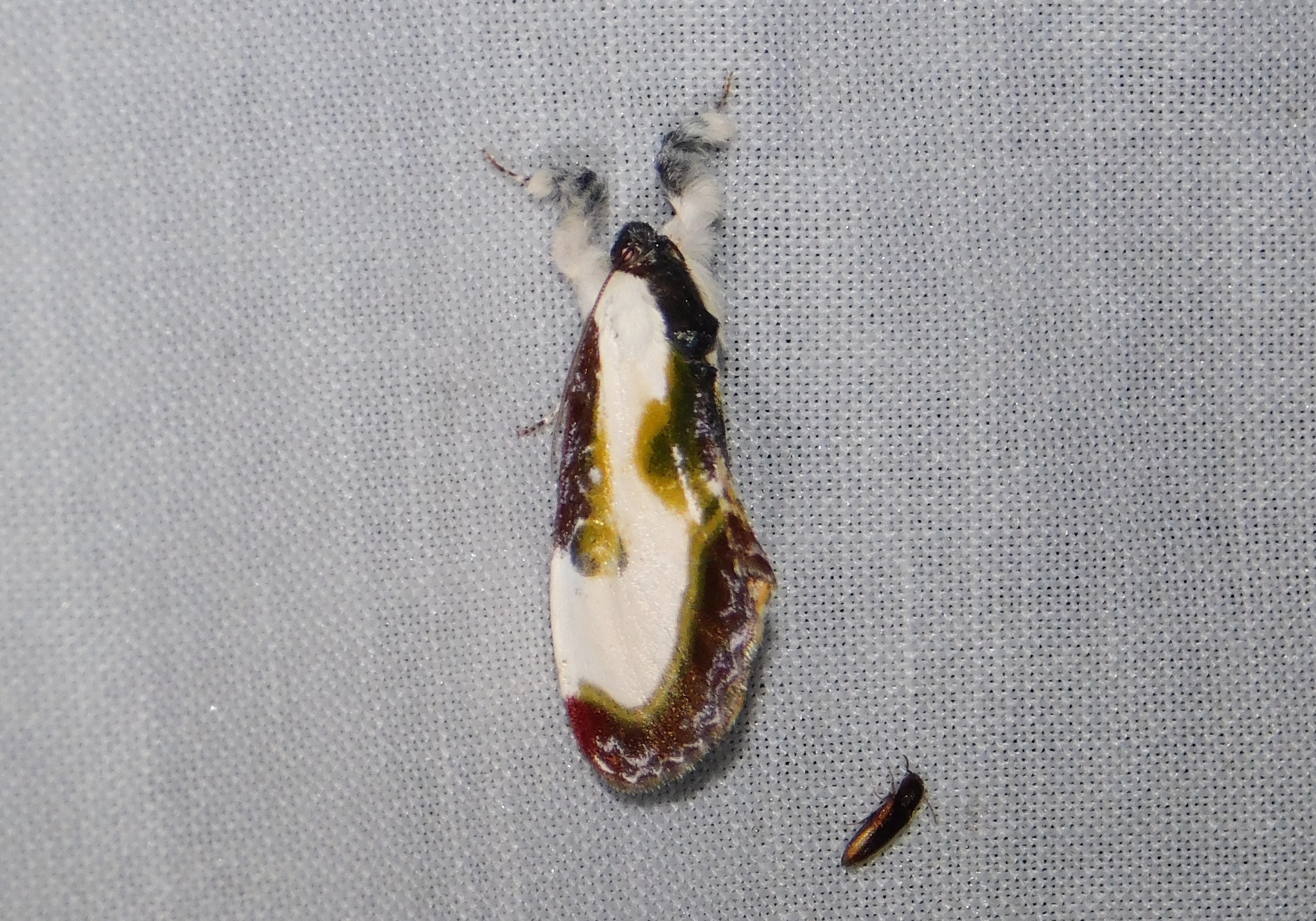
The Beautiful Wood-nymph (Eudryas grata) is disguised as bird poop!
So why should we care about moths? For one thing, they are excellent bioindicators. A diversity of moth species present is a good indication of the overall health of the ecosystem. The moth species will reflect the local plant community, and let you know whether or not pesticide use is having a negative impact on the local ecosystem.
Moths are also an incredibly vital food source for a wide range of species, particularly breeding birds. The summer explosion of moth caterpillars provide everything a baby bird needs to grow and thrive in a convenient, squishy package. These caterpillars provide the bulk of a baby bird’s diet, in fact. This seasonal abundance is one of the main reasons birds migrate for hundreds or thousands of miles to reproduce in the eastern US.
While there are many moths that do not feed in the adult stage (like the giant silk moths, for instance), there are plenty more that are essential pollinators for a diversity of flowering plants.
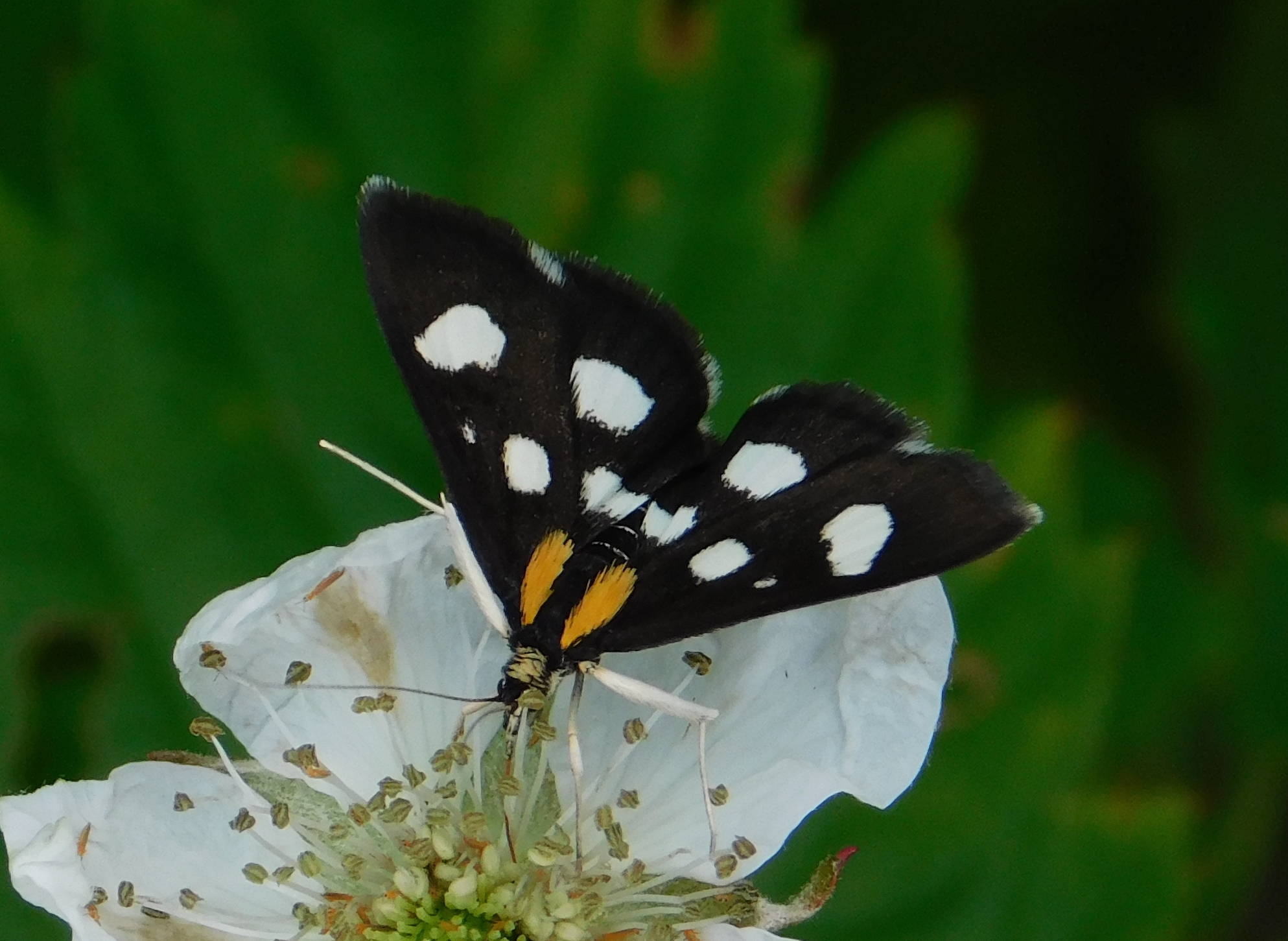
White-spotted Sable moth (Anania funebris) feeding on a blackberry blossom, Roan Mountain State Park
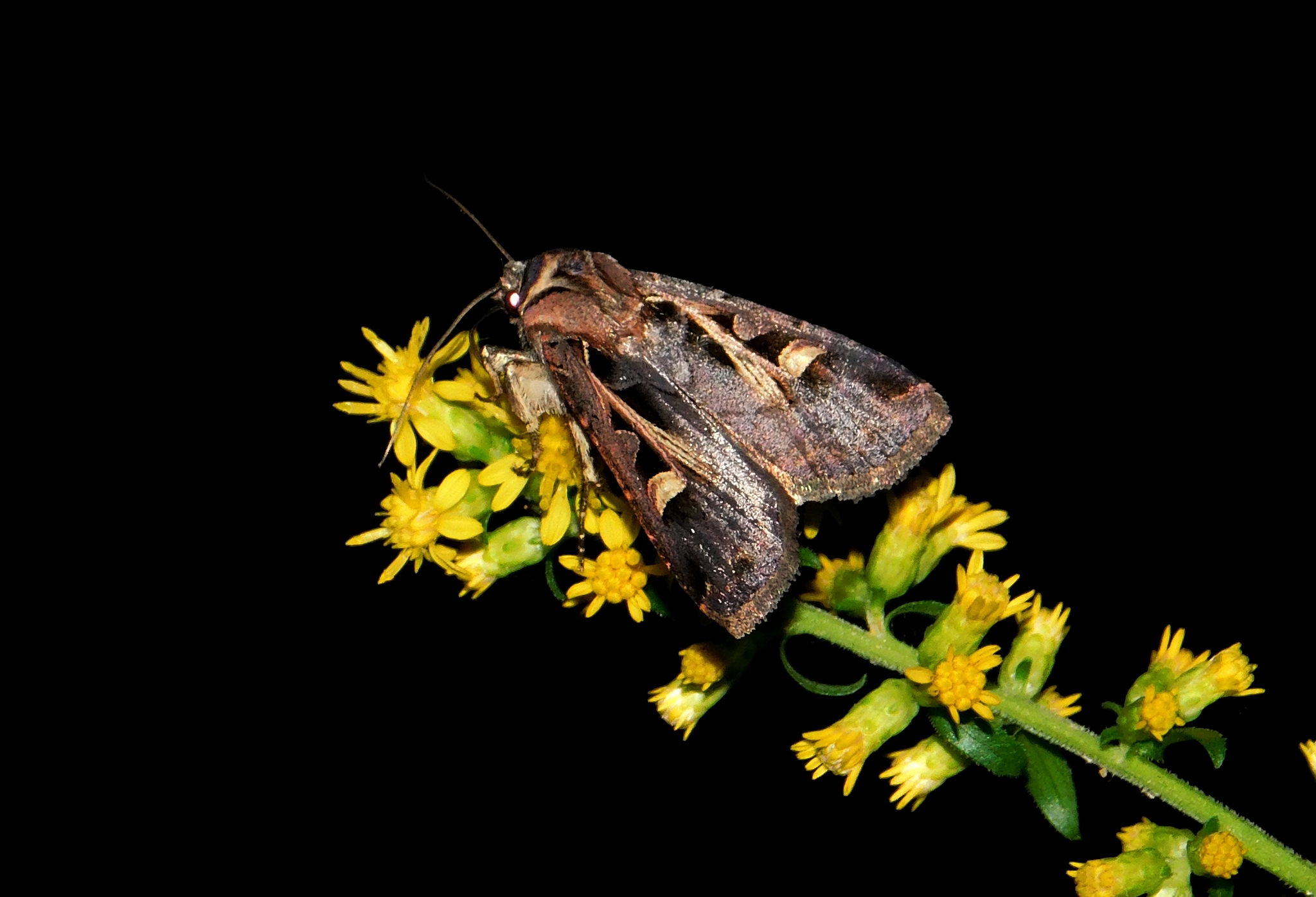
A Dart Moth (Feltia) nectars on goldenrod under the cover of night, Pickett CCC Memorial State Park
If you are interested in learning about the diversity of moths that can be found in your own backyard, there are some simple ways you can achieve that.
It can be as easy as leaving your porch light on and seeing what shows up. You could take it a step further and hang a sheet with a bright light over it. UV or black lights are especially effective.
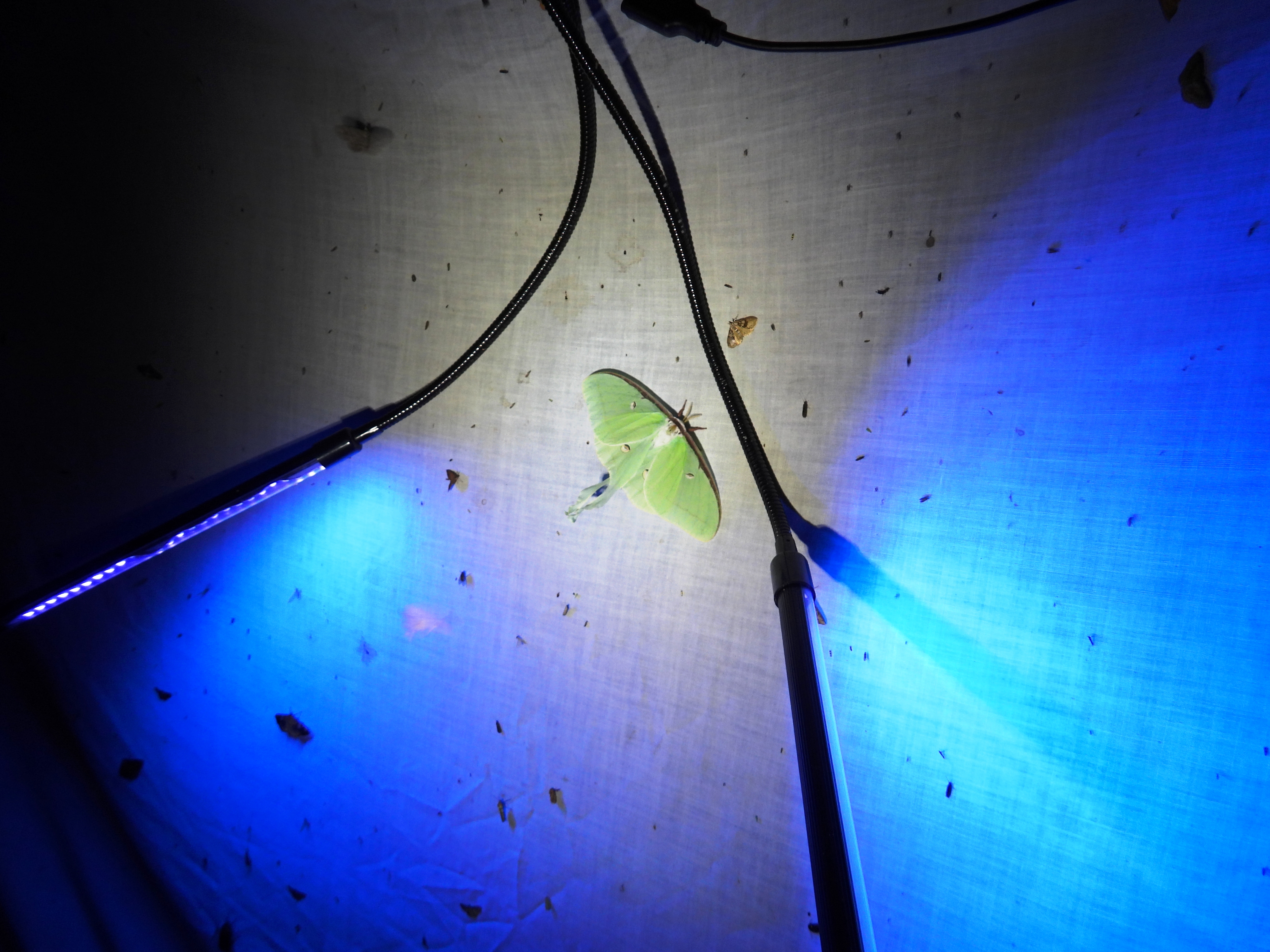
The white sheet acts as a reflector and also gives the moths a place to land. Make sure it is a cheap sheet with a low thread count, otherwise they will have a difficult time gripping it. Once darkness falls, turn on the light and let the show begin! You will be amazed at the diversity of moths (and other insects) that can be present right in your backyard. (Just be sure to flip it off before sunrise to give the insects time to disperse. Otherwise it will be an all-you-can-eat buffet for the birds at first light!)
You can also attempt putting out moth bait. Simply mix old bananas and brown sugar, let it ferment for a few days, and then paint it onto tree trunks or rocks.
If you would like to turn your efforts into a community science project (which I strongly encourage you to do), photograph your findings and submit them to a free database such as iNaturalist or BugGuide.net.
You can make your yard more inviting to moths by:
- Reducing or eliminating pesticides
- Reducing light pollution
- Planting a diversity of native plants, trees and shrubs
- Leaving leaf litter for overwinting moths
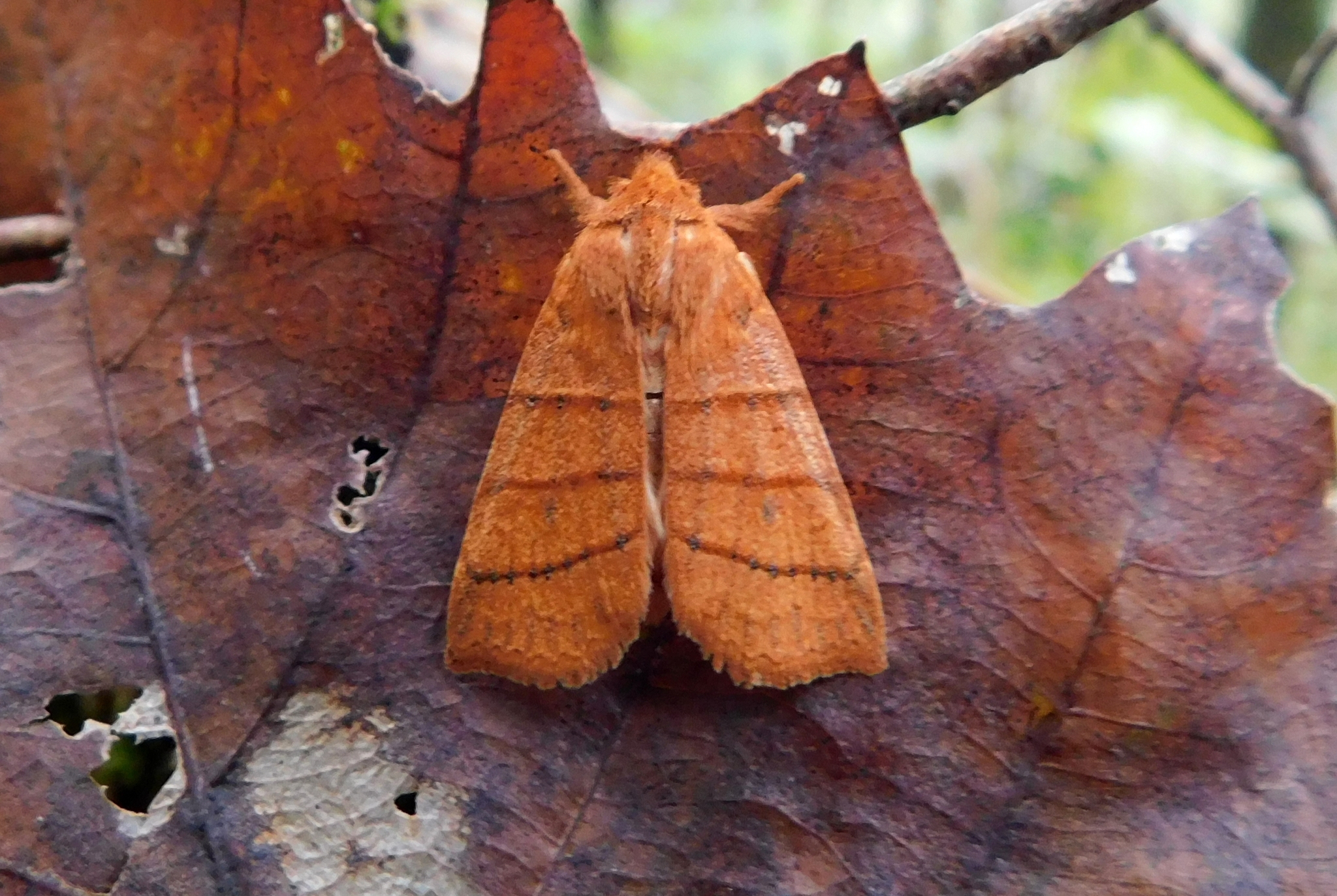
Moths like this Sallow (Pyreferra) need leaf litter for over-wintering habitat
Check out the National Moth Week official webpage for more information and resources about moths.
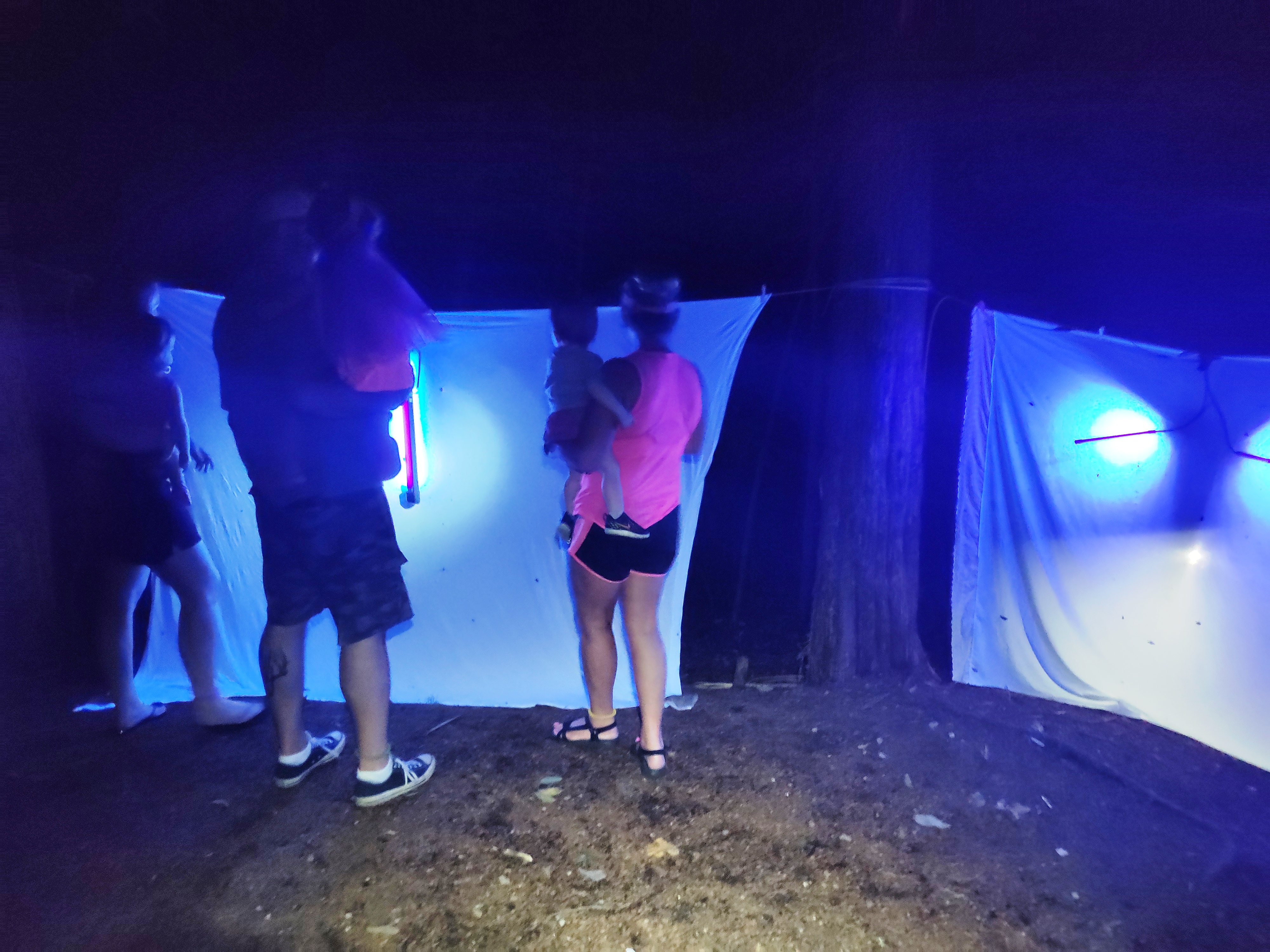
Guests discovering moths at Edgar Evins State Park
I will leave you with a few more moth observations for your enjoyment.
Happy Mothing!
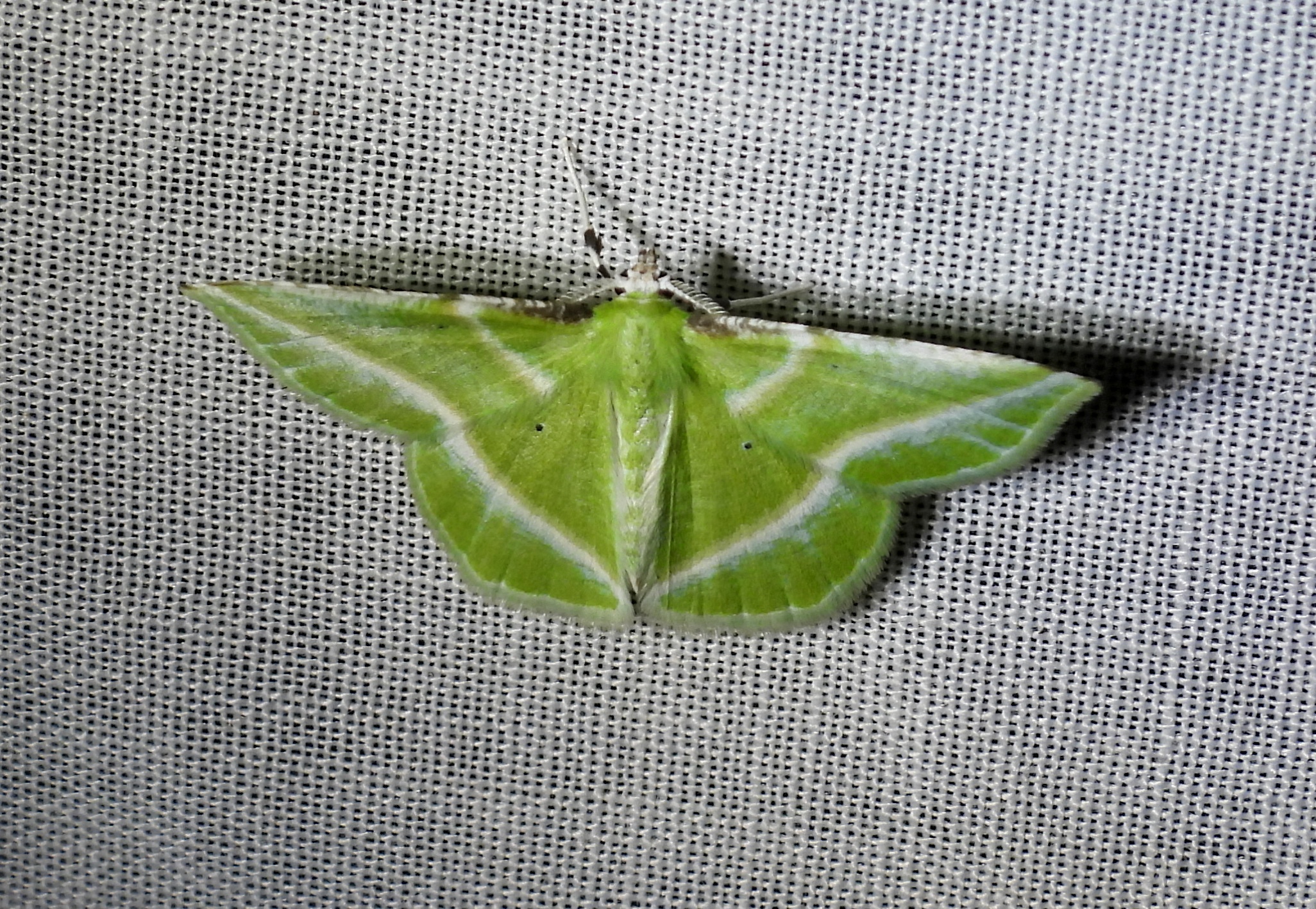
Showy Emerald (Dichorda iridaria)
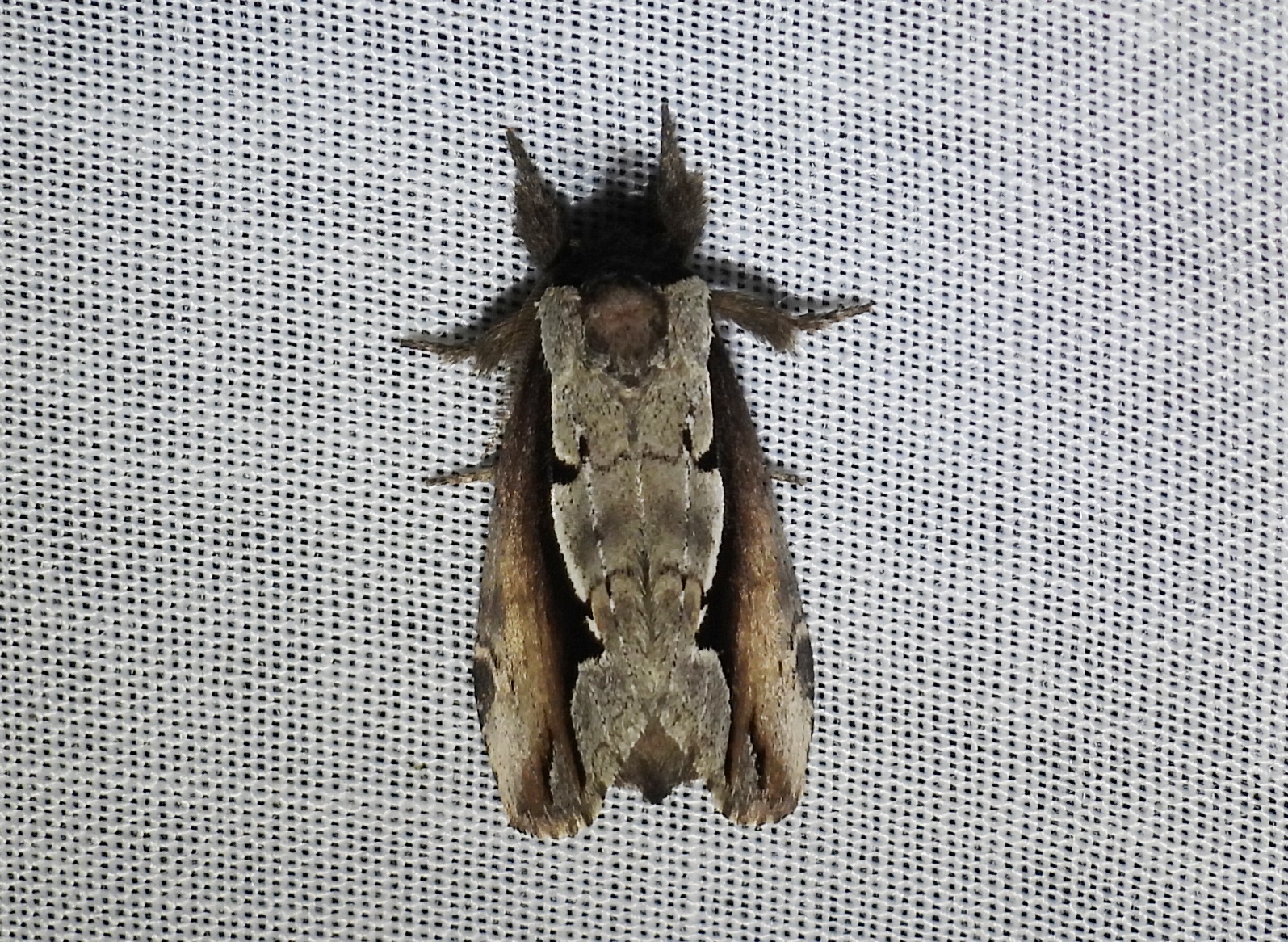
Double-toothed Prominent (Nerice bidentata)
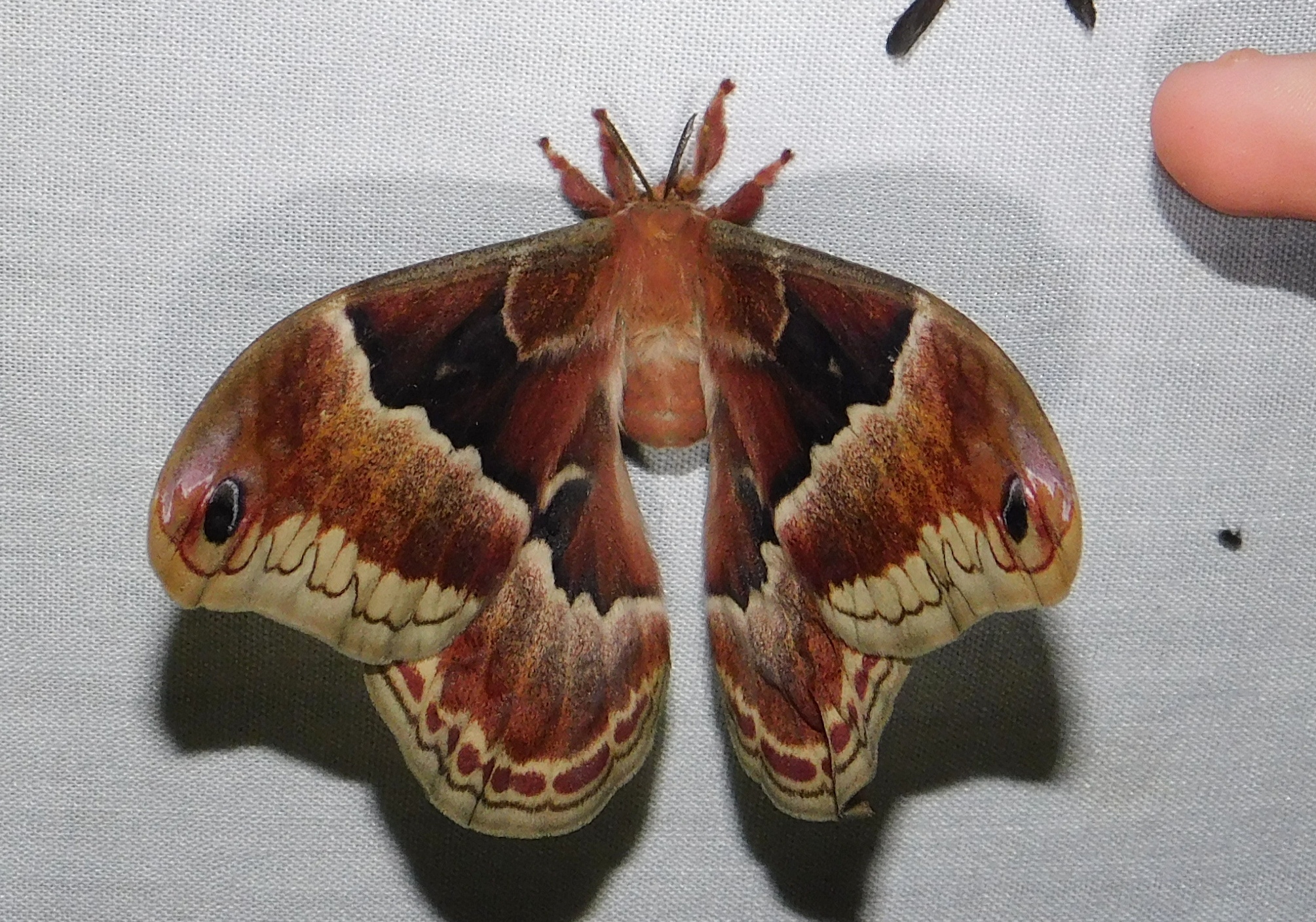
Prometha silkmoth (Callosamia promethea)
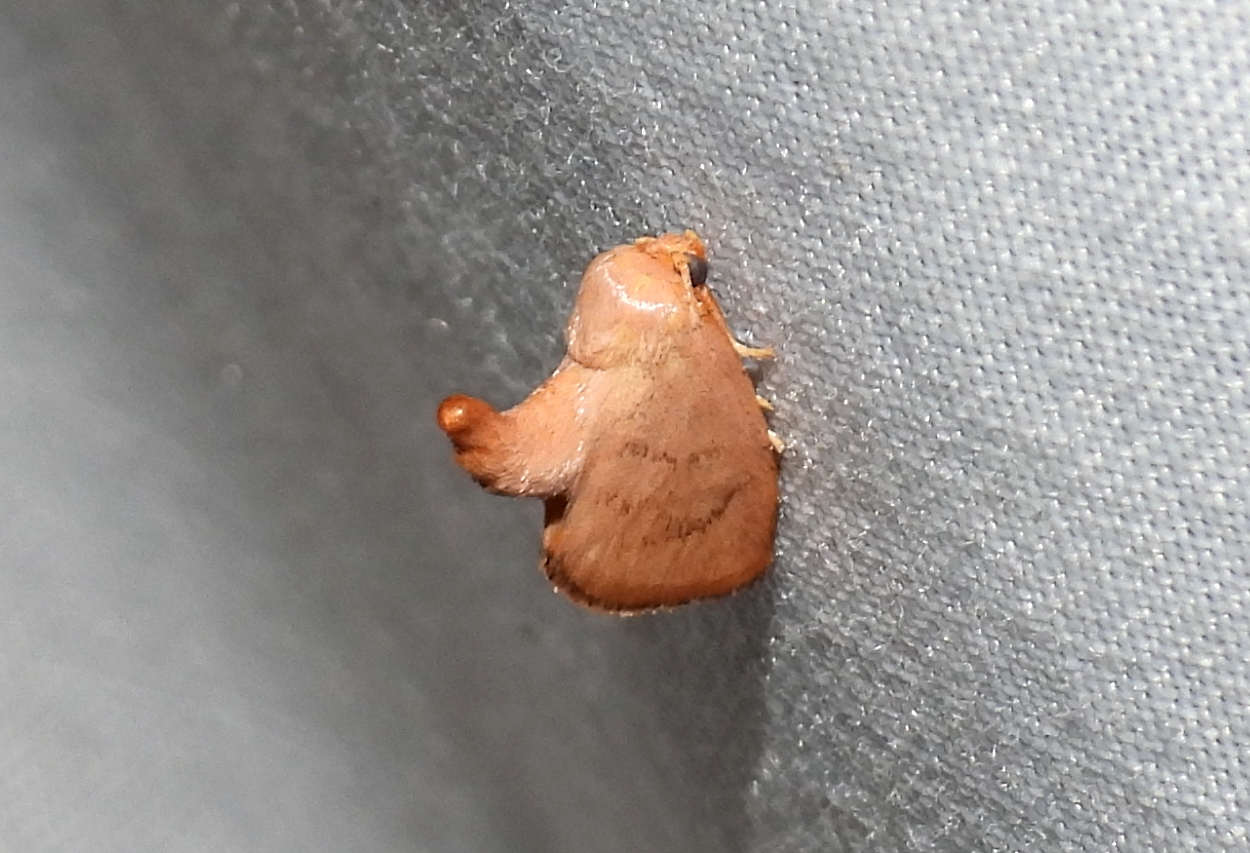
Red-crossed Button Slug (Tortricidia pallida)
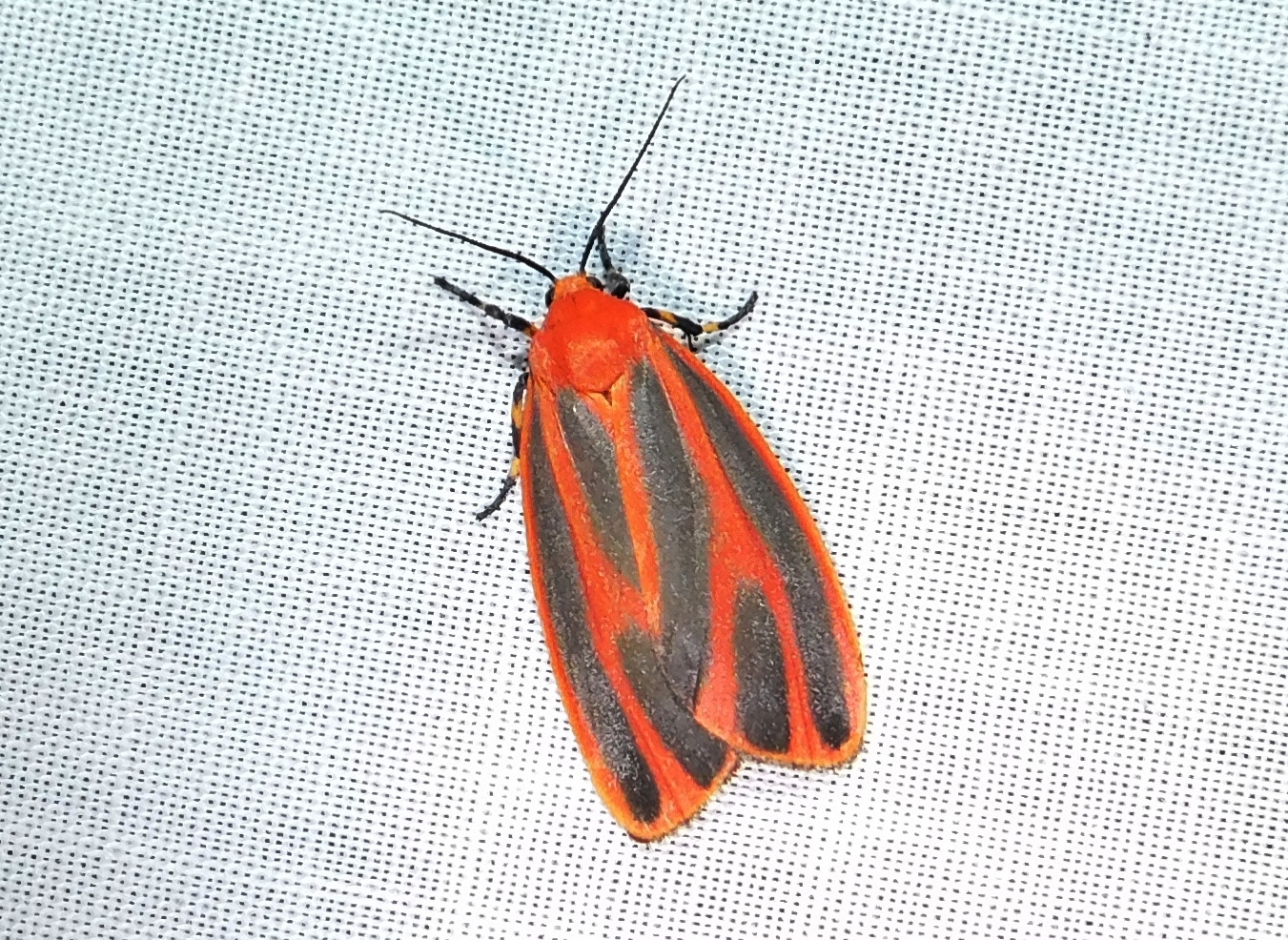
Scarlet-winged Lichen Moth (Hypoprepia miniata)
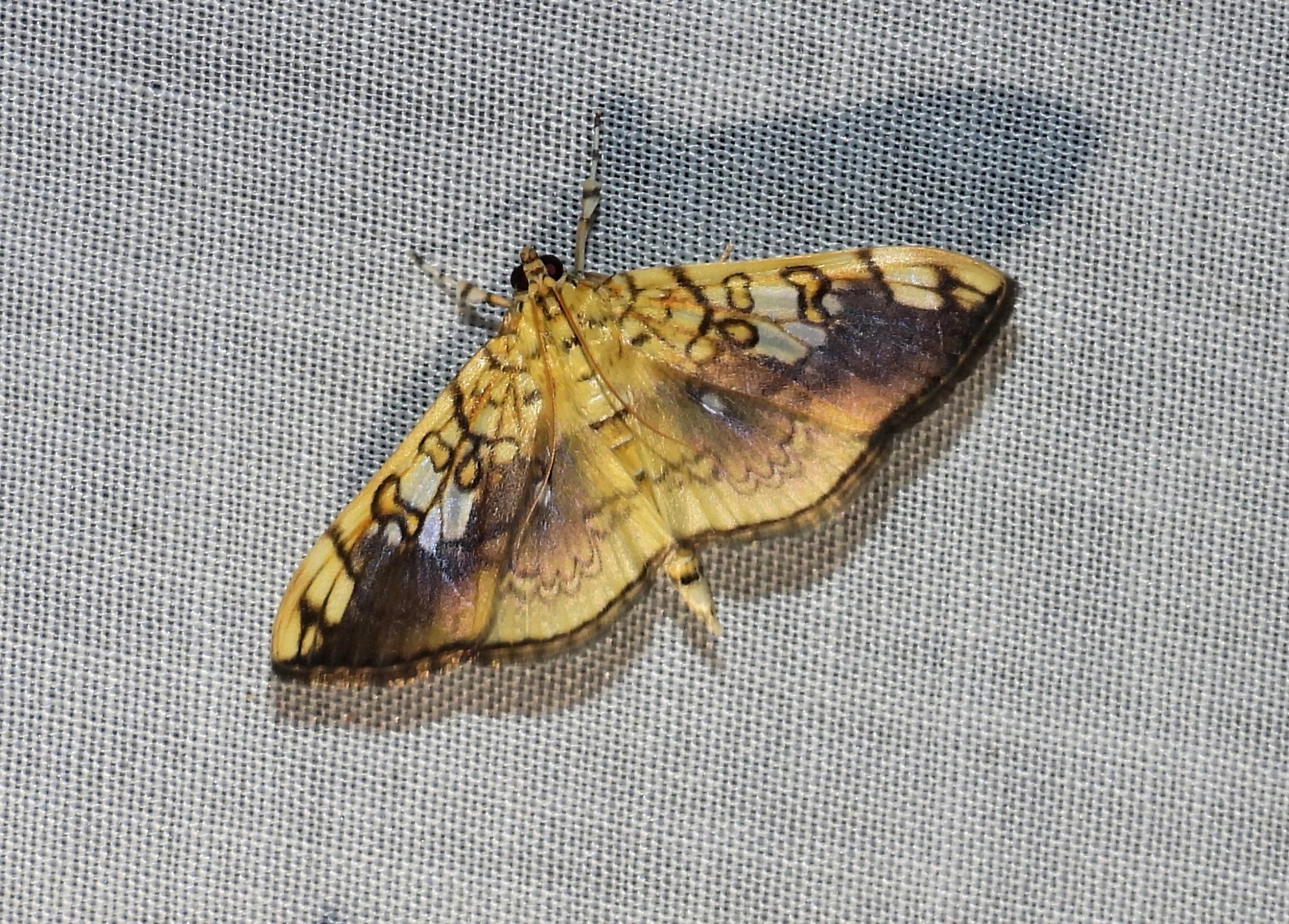
Basswood Leafroller (Pantographa limata)
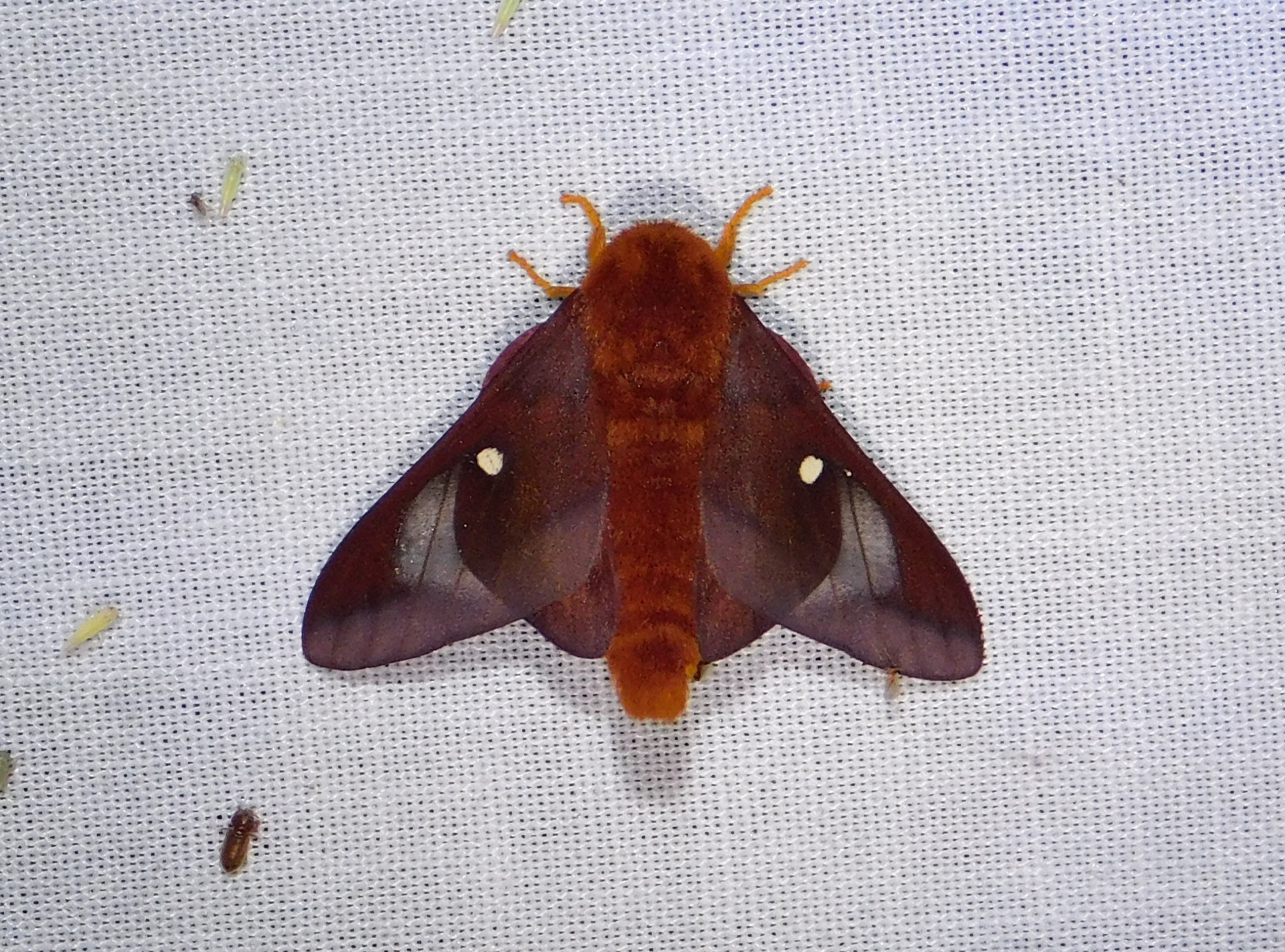
Pink-striped Oakworm (Anisota virginiensis)
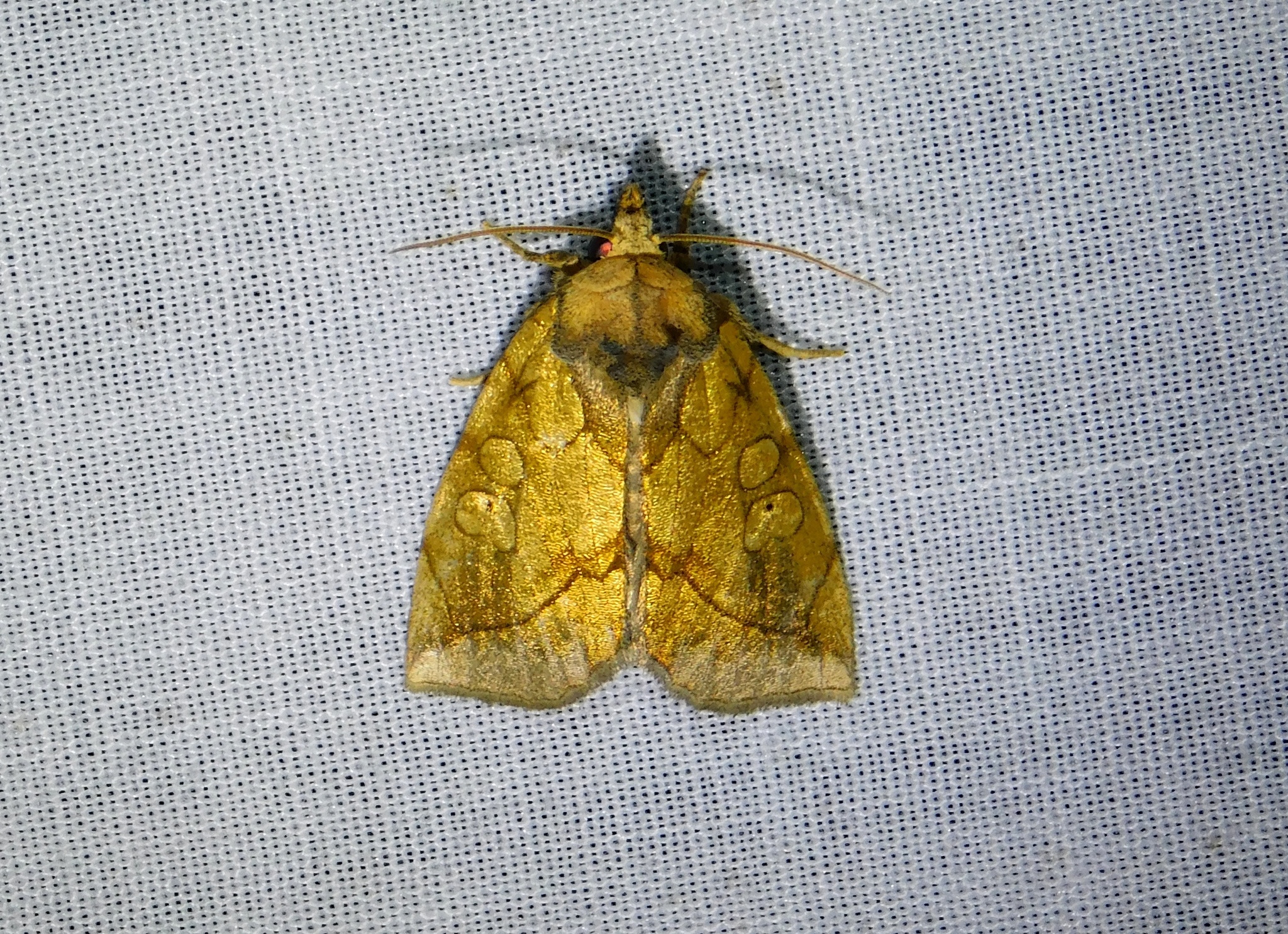
Gold Moth (Basilodes pepita)
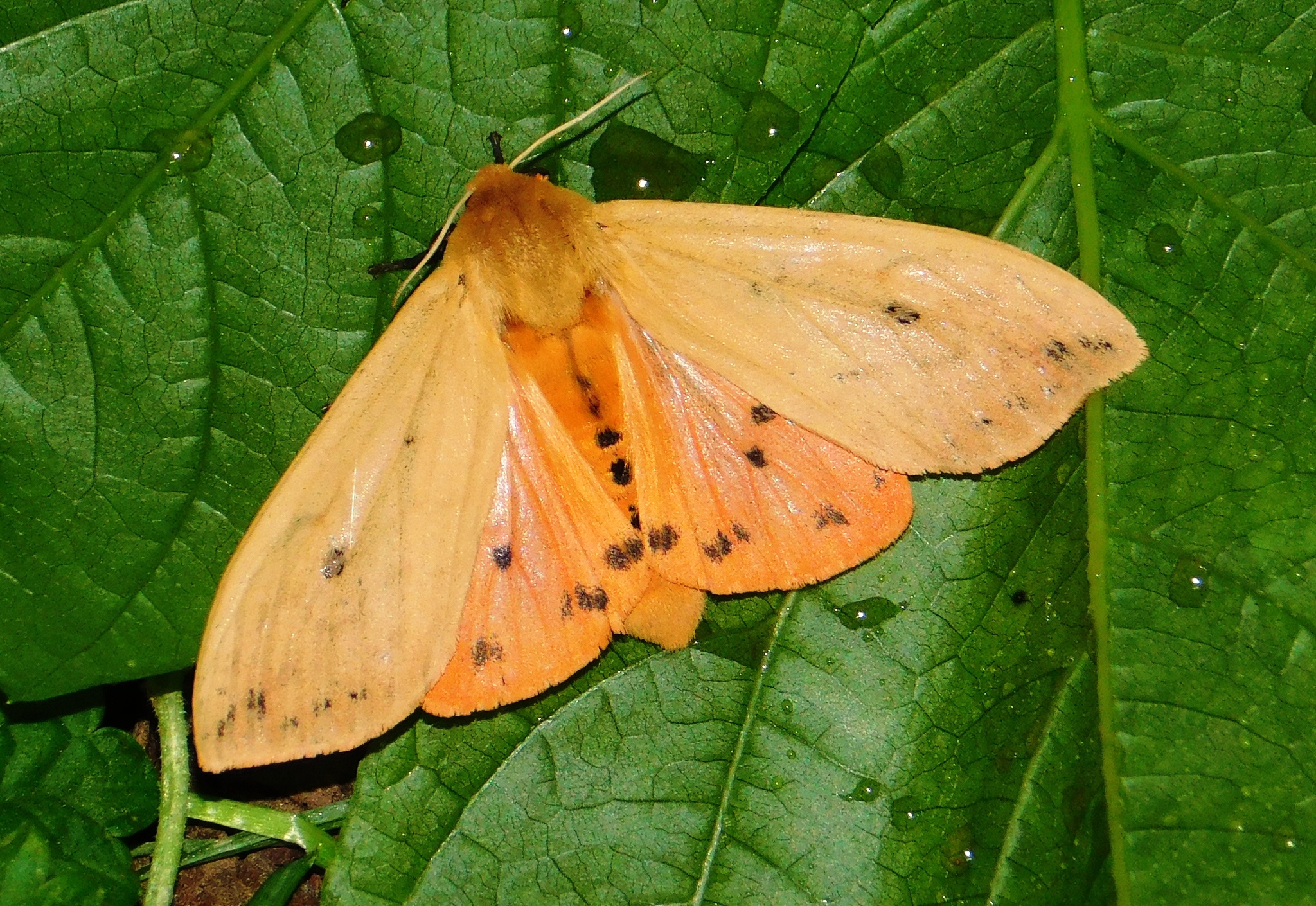
Isabella Tiger Moth (Pyrrharctia isabella), the adult of the Woolly Bear caterpillar
About the author
Holly Taylor
Holly Taylor got her start with Tennessee State Parks as a Seasonal Interpretive Ranger in 2006, working six years at Edgar Evins State Park before working as a wildlife presenter for the Natural History Education Company of the Mid-South. She took time off to stay at home with her son before returning to TN State Parks as the assistant to State Naturalist Randy Hedgepath in 2018. She graduated from TTU in 2009 with a B.S. in Conservation Biology and also serves as the chapter coordinator for the Cumberland Mountain Chapter of the Tennessee Naturalist Program. She has a life-long passion for the natural world and loves nothing more than sharing that passion with others.