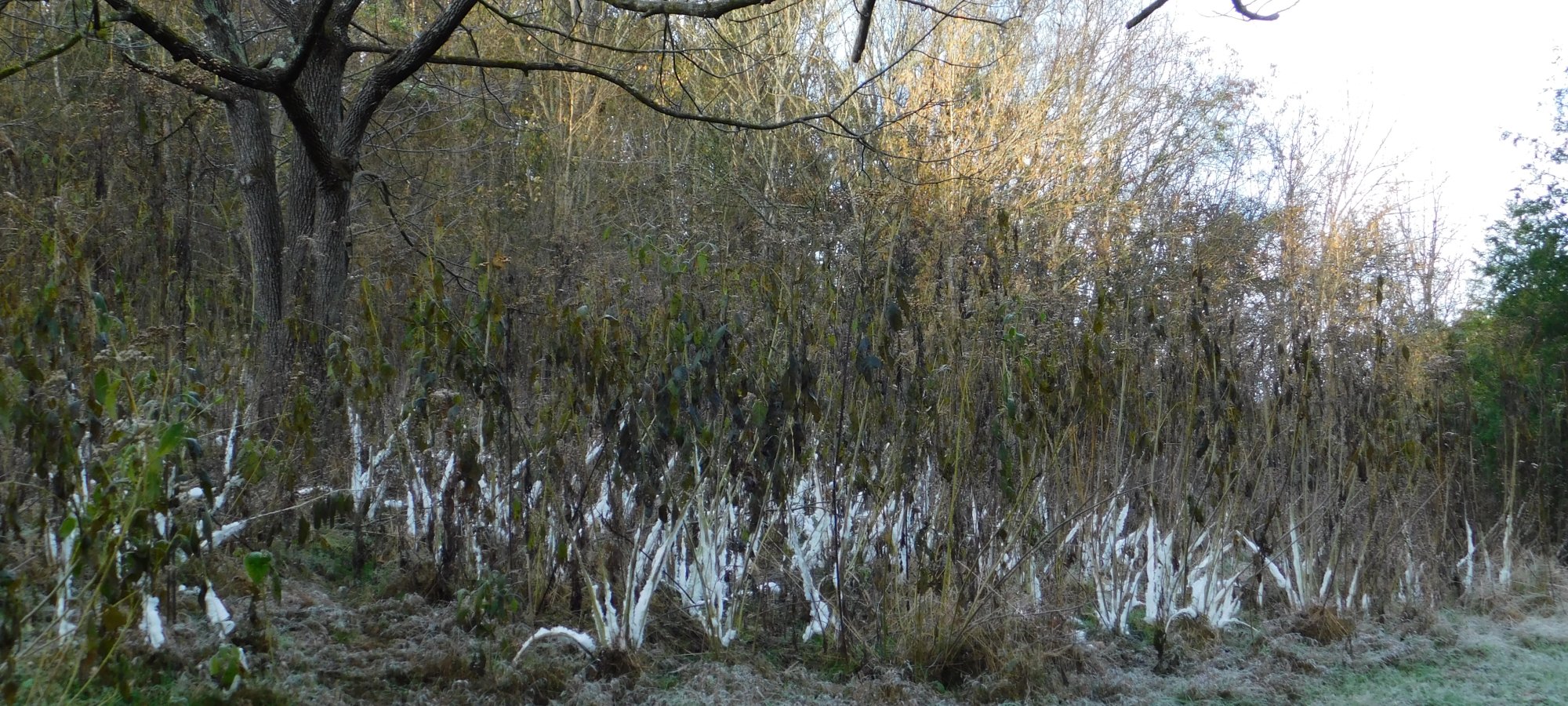
These plants release moisture from their stems and root systems which ruptures the epidermis (outermost layer) but leaves the rest of the plant intact. If the ground is not yet frozen, the atmosphere is cold enough and the air still enough, this moisture freezes into delicate ribbons and curls. These can take on such whimsical forms it is as if they have whirled and danced straight out of a child’s fairy tale.
They go by other names as well: rabbit ice, frost ribbons, ice flowers or ‘Eisblatt’ (“ice leaf”), if you are German. Bob Harms from the Plant Resource Center at the University of Texas coined the technical term crystallofolia to describe this phenomenon. It is so beautiful and mysterious, but why on earth does this happen? To be truthful, botanists aren’t entirely sure.
It is theorized that by releasing this excess moisture the plants prevent damage to their cells by forming ice crystals. If this is the case then why do they use this method and not other plants? There are very few plant species the world over that exhibit this phenomenon. In addition, the amount of moisture released exceeds the amount of sap residing in the plant, so it must be augmented by additional moisture pulled from the earth. This sap is in fact supercooled, a state where liquid is below the freezing point without solidification or crystallization. Upon exposure to the atmosphere it will freeze instantly.
The first frost flowers to emerge are usually the most magnificent, since they are releasing more moisture. As winter progresses the ice formations become smaller and closer to the ground, but they can be viewed as late as January.
Some sources cite other species of Verbesina, namely Verbesina alternifolia (Wingstem) as producing crystallofollia as well, but I have never witnessed this. Both species often occur together and I have never seen V. alternifolia with frost flowers, nor have other recent observers. I think this mistaken belief arose from misidentification or confusion over common names.
If you wish to view this wondrous phenomenon keep an eye on the forecast during the fall. If it looks as though nighttime lows are going to fall into the upper 20’s (28 degrees F appears to be the magic temperature), especially on a clear night when the wind is still, set your alarm and strike out early. These ice formations are incredibly delicate and melt fast with the rising sun.
While I know of many who pack away the hiking boots during the colder months, I would encourage you to not cease your explorations when it gets cold and dreary. There are always new wonders to behold!