
Spring Wildflower Scavenger Hunt

Copy linkShare to Facebook (opens in new window)X (opens in new window)Share by email
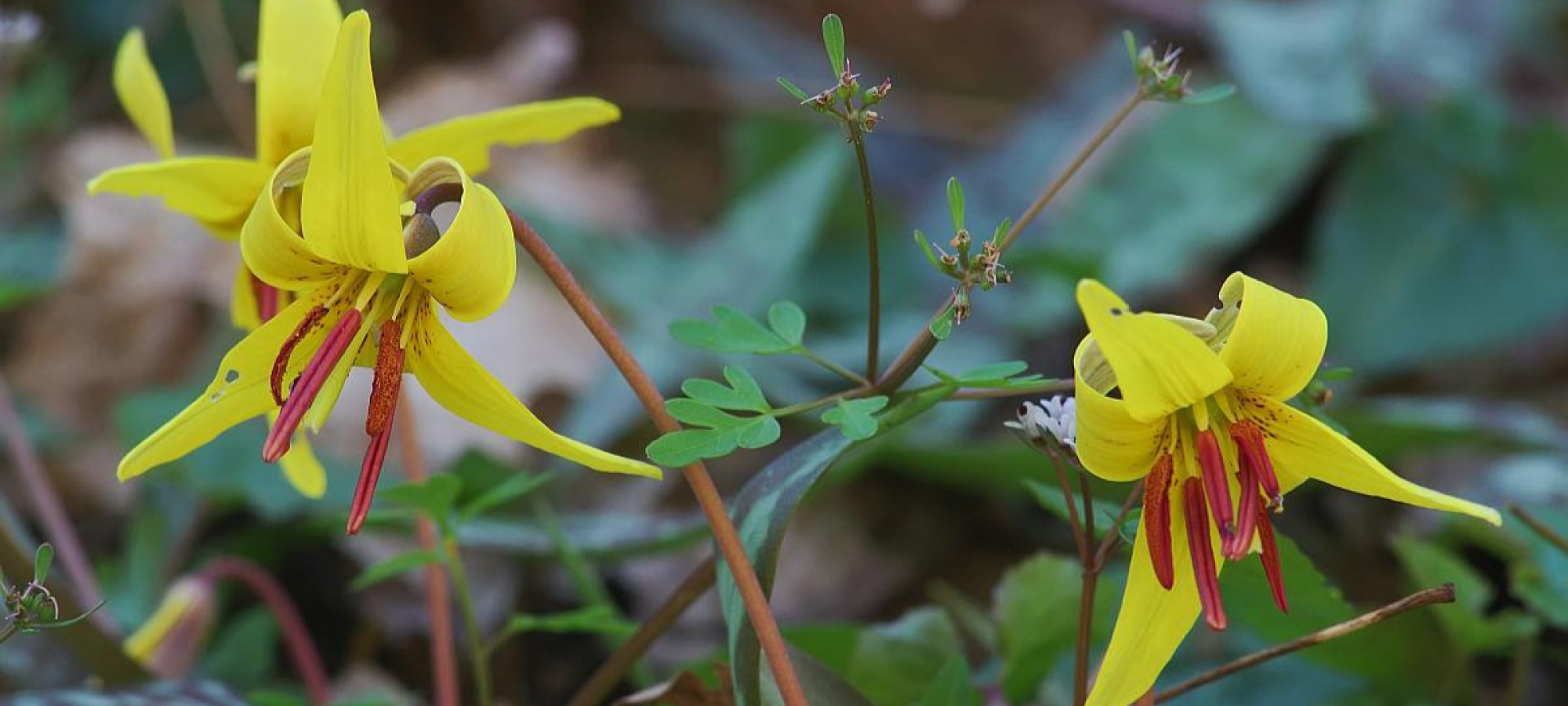
  • Three yellow trout lily wildflowers bloom on a forest floor surrounded by green leaves
  • With each spring, new blooms pop up to ensure us that warmer weather is near. More than just beautiful accents to our hiking trails, these wildflowers serve an essential role in the ecosystem supporting pollinators and wildlife. As you enjoy our parks this spring, we challenge you to look closer and get to know these blooms. We've put together a list of 14 wildflowers and flowering shrubs that you can find in our parks this season. We've also listed parks where these flowers have been spotted before to guide your search.

    As you're out discovering new blooms, record what you find with the free iNaturalist app. In the app, click 'observe,' snap a picture of the plant you're looking, and hit "what did you see." iNaturalist will then provide you with the name, image, and description of the species it thinks you've found. Make sure to record the park location and share to help our naturalists at Tennessee State Parks keep track of the living things in our parks. You might even have your recording deemed research-grade!

    iNaturalist

    Spring beauty flowers blooming on forest floor with identification tag.

    1. Spring Beauty

    Scientific Name: Claytonia virginica

    You'll find the Spring Beauty in clusters low to the ground. Its flowers can be pink or white with dark pink stripes. Like a potato, this flower has a tuber that forms at the base of the roots. Native Americans and Colonists used to eat them, and their sweet, chestnut flavor is still enjoyed by some today.

    Viewing: January – May

    West Tennessee: Meeman-Shelby State Park

    Middle Tennessee: Long Hunter State Park, David Crockett State Park, Port Royal State Park, Bledsoe Creek State Park, Henry Horton State Park, Booker T. Washington State Park, Old Stone Fort State Park.

    East Tennessee: Cove Lake State Park

    Close-up of a white flower with a yellow center against a blurred natural background.

    2. Nashville Gladecress

    Scientific Name: Leavenworthia stylosa

    There are four species of Gladecress found in Tennessee, but the Nashville Gladecress is a bit of a show-off. You'll know you've spotted a Nashville Gladecress by its long notched white, purple, or yellow petals with a yellow center. It produces a sweet and robust honey scent making it popular among pollinators.

    Viewing: March – May

    Middle Tennessee: Long Hunter State Park, Cedars of Lebanon State Park

    Bright yellow flower with green leaves on forest floor.

    3. Early Buttercup

    Scientific Name: Ranunculus fascicularis

    The Early Buttercup gets its name from being the earliest buttercup to bloom for the season. This dainty flower has five yellow petals and a hairy stem. Emerging pollinators benefit from its bloom, but you won't see deer, rabbits, or other mammals munching because its leaves are poisonous to them. You'll spot it in dry areas with sparse vegetation.

    Viewing: March – May

    Middle Tennessee: Long Hunter State Park, South Cumberland State Park

    Vibrant field of blue and purple flowers with green leaves.

    4. Virginia Bluebell

    Scientific Name: Mertensia virginica

    These flowers start as a cluster of pink buds that blossom into beautiful trumpet shaped flowers in shades of blue. Large grey-green oval shaped leaves line their stems that can grow up to 24 inches tall. Butterflies are the most frequent pollinator, perching with ease on the edges to enjoy the nectar.

    Viewing: March - June

    West Tennessee: Meeman-Shelby State Park

    Middle Tennessee: Radnor Lake State Park, Edgar Evins State Park, Old Stone Fort State Park, Dunbar Cave State Park, Montgomery Bell State Park, Cedars of Lebanon State Park, Burgess Falls State Park, Standing Stone State Park

    East Tennessee: Frozen Head State Park, Sycamore Shoals State Park

    White phlox flowers blooming in green grass with inset location map.

    5. Glade Phlox

    Scientific Name: Phlox bifida

    The Glad Phlox is a ground cover plant, meaning it grows in thick clusters spreading out to cover as much bare earth as possible. Its full bloom makes for a beautiful sea of lush pale blue and white flowers. Its petals are uniquely notched, resembling the shape of a Y.

    Viewing: March - May

    Middle Tennessee: Long Hunter State Park, Radnor Lake State Park, Cedars of Lebanon State Park

    Two white bloodroot flowers with yellow centers against a brown leafy background.

    6. Bloodroot

    Scientific Name: Sanguinaria canadensis

    The wildflower gets its name from the red juice its stem and roots produce. It has large round leaves and white flowers with golden-orange centers. At night and on especially cloudy days, these flowers close up and reopen when sunlight returns. Indians used the plant as a dye for baskets, clothing, and war paint, as well as for insect repellent.

    Viewing: March - April

    Middle Tennessee: Edgar Evins, Dunbar Cave State Park, South Cumberland State Park

    East Tennessee: Frozen Head, Red Clay State Historic Park, Sycamore Shoals State Park, Roan Mountain State Park

    Three purple hepatica flowers blooming among dry leaves.

    7. Round-lobed Hepatica

    Scientific Name: Hepatica americana

    The Round-lobed Hepatica has three leaves with rounded tips, a hairy stalk, and blue flowers. This flower is one of the earliest blooming wildflowers and was once used as a medicinal herb. In the late 1800s, more than 400,000 pounds of dried Americana leaves were used in just one year to make a tonic for liver ailments. 

    Viewing: March

    Middle Tennessee: Old Stone Fort State Park, Cummins Falls State Park

    East Tennessee: Big Ridge State Park, Roan Mountain State Park

    Wild violet plant blooming among leaf litter on forest floor.

    8. Sharp-lobed Hepatica

    Scientific Name: Hepatica acutiloba

    Similar to the Round-lobed Hepatica, the Sharp-lobed Hepatica has three leaves and is one of the earliest blooming wildflowers. They differ in leaf shape with the Sharp-lobed Hepatica leaves being pointy. They have white or blue flowers and found in moist forest areas.

    Viewing: March

    Middle Tennessee: Burgess Falls State Park, Cummins Falls State Park, South Cumberland State Park

    East Tennessee: Frozen Head State Park, Warriors Path State Park

    Close-up of a white wildflower with green leaves, blurred background.

    9. Wood Anemone / Nightcaps

    Scientific Name: Anemone quinquefolia

    Although you may think you see petals, these small and delicate-looking flowers don't have any. What you're seeing are petal-like sepals. Sepals are leaves that protect the developing flower bud. They can be green and leaf-like or in this case, composed of petal-like tissue. You'll find these flowers in shades of white or pink growing in clusters low to the ground. If you see them, that's an indication of a healthy woodland floor! 

    Viewing: March – June

    Middle Tennessee: Bledsoe Creek State Park

    East Tennessee: Roan Mountain State Park, Frozen Head State Park, Norris Dam State Park

    White trout lily flowers blooming in a forest setting.

    10. White Trout Lily

    Scientific Name: Erythronium albidum

    When you first see a While Trout Lily, you might think that it's wilting because it's facing downward. The flower is doing just fine; in fact, it's protecting itself. The flower contains nectar that attracts insects that pollinate the flower, and those rob it of its nectar. By facing downward, the flower is protected from pollen washing away and prevents pesky insects from taking nectar from pollinators. While this flower is one of the first woodland flowers to bloom in the spring, it isn't easily spotted in Tennessee.

    Viewing: February – April

    Middle Tennessee: Cedars of Lebanon State Park

    ''"

    11. Prairie Trillium

    Scientific Name: Trillium recurvatum

    The trillium can be tricky to identify, even for botanists. These seemingly simple plants with three leaves and three stamen have only a few structural differences between the species making them difficult to tell apart. The Prairie Trillium has a flower that's reddish-purple, and its leaves have splotches of light and dark green on top and smooth pale green bottoms.

    Viewing: March – May

    Middle Tennessee: South Cumberland State Park, Dunbar Cave State Park

    West Tennessee: Meeman-Shelby State Park, T.O. Fuller State Park, Old Forest State Natural Area in Overton Park.

    Red and pink blossoms on a plant with green leaves, blurred garden background.

    12. Red Buckeye (shrub)

    Scientific Name: Aesculus pavia

    This shrub has bell-shaped flowers that can be deep red or yellow that grow in clusters up to 10 inches long. Their leaves are dark green and glossy. American Indians used to throw powdered seeds and branches of this and other buckeye species into water pools to stun fish. This process would cause them to rise to the surface for a more straightforward catch.

    Viewing: March – May

    Middle Tennessee: Radnor Lake State Park, Montgomery Bell State Park

    West Tennessee: Meeman-Shelby State Park, T.O. Fuller State Park, Old Forest State Natural Area in Overton Park.

    White wildflowers with a green foliage background.

    13. Bulbous Bittercress

    Scientific Name: Cardamine bulbosa

    These flowers are small with white or pinkish petals. Their leaves are edible and have a peppery taste. Its natural habitat is moist soils of bottomland forests and swamps.

    Viewing: April

    West Tennessee: Old Forest State Natural Area in Overton Park, Pinson Mounds State Park, T.O Fuller State Park

    Middle Tennessee: Montgomery Bell State Park

    East Tennessee: Cove Lake State Park

    Bright yellow wildflowers blooming in a green field.

    14. Butterweed

    Scientific Name: Packera glabella

    This adaptable species can bloom in both shade and sun just as long as there's moisture present. Blooms of the Butterweed are profuse and fill landscapes with bright yellow petals throughout the spring.

    Viewing: March – May

    West Tennessee: Big Hill Pond State Park,  Ghost River State Natural Area (Mineral Slough trail and boardwalk)

    East Tennessee: Cove Lake State Park, Norris Dam State Park

    All wildflower distribution maps used in this article are credited to the University of Tennessee Herbarium