
Tennessee’s New State Park and the Spanish Entrada

Copy linkShare to Facebook (opens in new window)X (opens in new window)Share by email
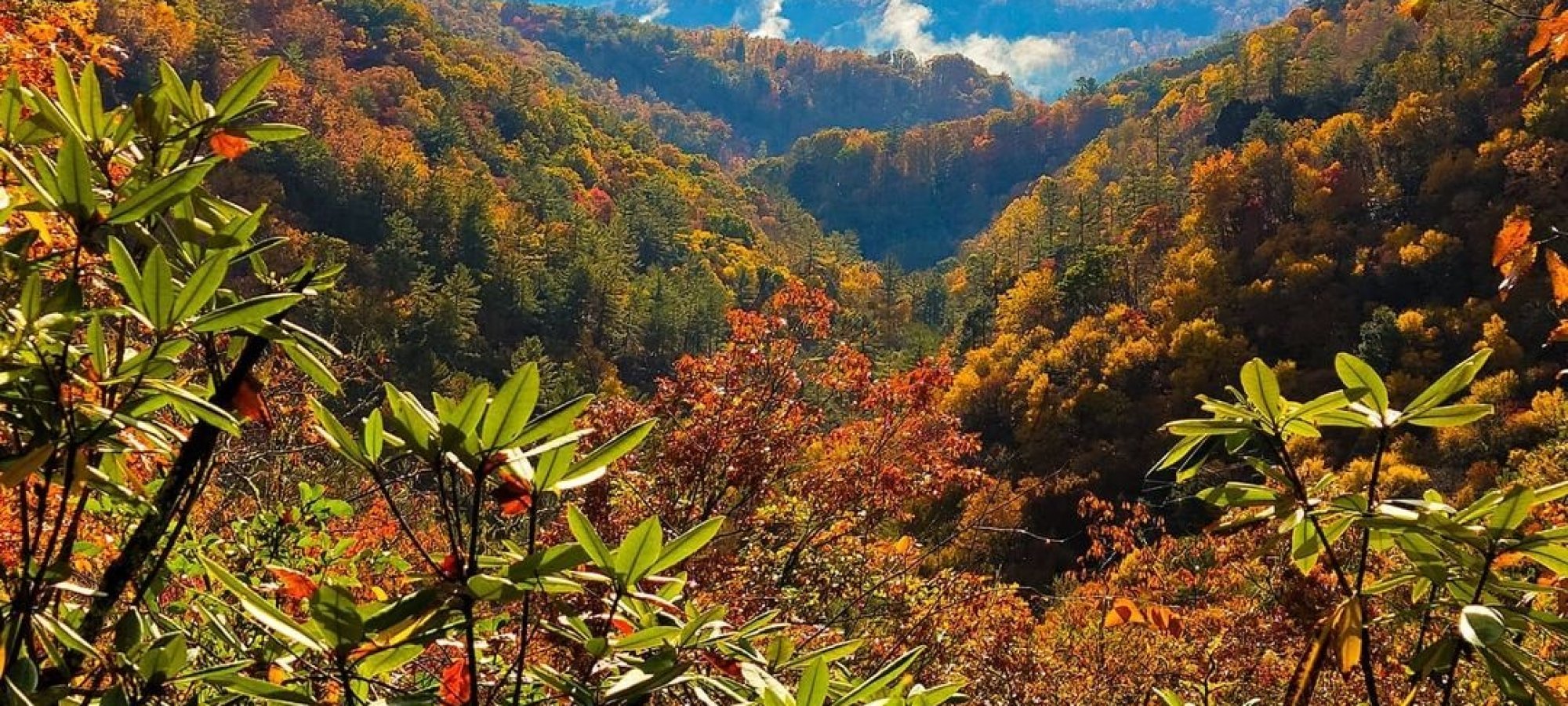
  • Autumn foliage blankets a mountain valley under a blue sky.
  • February 19, 2015  |  

    Where history in Tennessee begins…

    Rocky Fork State Park is in the process of becoming a reality. It is a portion of a large wilderness area brought into public ownership in Northeast Tennessee that will be accessed through the Tennessee State Park managed property. No other such expanse remains to be obtained - and it is also the first area of Tennessee to come into written history.

    Here was the entry point of the first known Europeans into what is now Tennessee. Following the Nolichucky River, the Spanish expeditions of both Hernando de Soto and Juan Pardo entered Tennessee in the vicinity of Rocky Fork. Their route seems to have taken them around, rather than through the Rocky Fork property as they followed a loop of the Nolichucky River.

    Charles Hudson’s study that established this route is available as Knights of Spain, Warriors of the Sun published by the University of Georgia Press. Through decades of research, the places mentioned in the four journals that contain period accounts of De Soto’s expedition where taken at face value, though the documents in which they were found had been translated by individuals unfamiliar with Southeastern geography or American Indian placenames. Hudson’s study is based on new interpretation of the original manuscripts by researchers familiar with the native languages of the Southeast. The place names are now recognizable. The known path of the later Pardo Expedition can now be seen to have used the same placename references found in the earlier De Soto journals. De Soto and Pardo, then, took the same path through the Appalachian Mountains into Tennessee. This gives us the most clearly defined change from De Soto trail routes proposed in earlier research.

    spanish-entrada-web__banner.jpg

    Rather than entering Tennessee along the Pigeon River, French Broad, or Little Tennessee, the best evidence now places his route along the Nolichucky. By showing that this earlier Spanish entrada came into the Tennessee country as far north as the Rocky Fork lands, we now know that De Soto was in the Tennessee country much longer than previously thought.

    Archaeologists have located one of the placenames mentioned above. Joara, in Western North Carolina, is a site with American Indian and Spanish artifacts found together. It is not known what language the inhabitants spoke. They were on both cultural/linguistic and physical geographic boundaries. There was a Cherokee town of ‘Jore’ that may be related. The area name, ‘Swannanoa’ is probably derived from the Cherokee suwalinunhi, meaning “the Suwali trail,” that may have been the actual period name of the trail they were using. There is a Swannanoa River and Gap along the trail.

    For the De Soto expedition, Joara was the last stop prior to entering the Blue Ridge Mountains. From Joara, the expedition could see the high mountains that they would be crossing. Soon they would camp where they suffered from extreme cold in late May. They waded along the Toe River until halting at its confluence with the Cane, the head of the Nolichucky, where they were met by emissaries from the Tennessee country.

    These “Tennessee emissaries” led them out of the mountains to Guasili, somewhere along the Nolichucky not that far from Rocky Fork. The Spanish, “felt themselves fortunate to have come to this place, beautifully situated among small streams…” (Hudson from Gacilasco, 335-361). A strong possibility for this site is Plum Grove, a 54 acre archaeological site that stayed active and large after the contact. One Spanish account claimed that it had 300 houses and a mound. This site is between Erwin and Jonesborough.

    Here is where history, as opposed to the prehistoric, begins in Tennessee. Other Tennessee State Parks along the Tennessee De Soto (and Pardo) routes may be of interest to you. The De Soto route in Tennessee passes the general area of Davy Crockett Birthplace Park, Panther Creek State Park, Seven Islands State Birding Park, Fort Loudoun State Historic Park, Hiwassee/Ocoee Scenic Rivers Area and, finally Red Clay. The Cherokee Removal site of Red Clay State Historic Park lies very close to where De Soto’s expedition left the Tennessee country.

    In addition to recommending Rocky Fork State Park and others along the route, I very much recommend finding Charles Hudson’s book that I have followed and paraphrased here. It should be available in a larger format paperback as: Knights of Spain Warriors of the Sun by Charles Hudson, The University of Georgia Press, 1997.

    Person walking along a leaf-covered forest path surrounded by warm autumn foliage and tall trees.

    Ward Weems

    Related Articles

      African American History at Booker T. Washington State Park

      As we celebrate African American history throughout the month of February, we also recognize the ties to our cultural heritage. Shared and equitable access to our parks is directly tied to our mission to preserve our natural landscape and the history behind it. T. O. Fuller State Park and Booker T. Washington State Park** are two parks in Tennessee that were established for the state’s African American population in an age when segregation barred equal access to the landscape. In this blog, we're reviewing the history of Booker T. Washington State Park.
      African American History at Booker T. Washington State Park - Read Article

      Honor Black History at Tennessee State Parks

      During Black History Month this February—and throughout the year—we invite you to reflect on Black history in Tennessee's state parks. Explore these parks that preserve and share Black history and heritage.
      Honor Black History at Tennessee State Parks - Read Article

      African American History at T.O. Fuller State Park

      February 17, 2021  |  As we celebrate Black History Month throughout February, we also recognize the ties to our cultural heritage. Shared and equitable access to our parks is directly tied to our mission to preserve our natural landscape and the history behind it. T. O. Fuller State Park was established for the state’s African American population in an age when segregation barred equal access to the landscape.
      African American History at T.O. Fuller State Park - Read Article