
Media Crowdriff
Caving
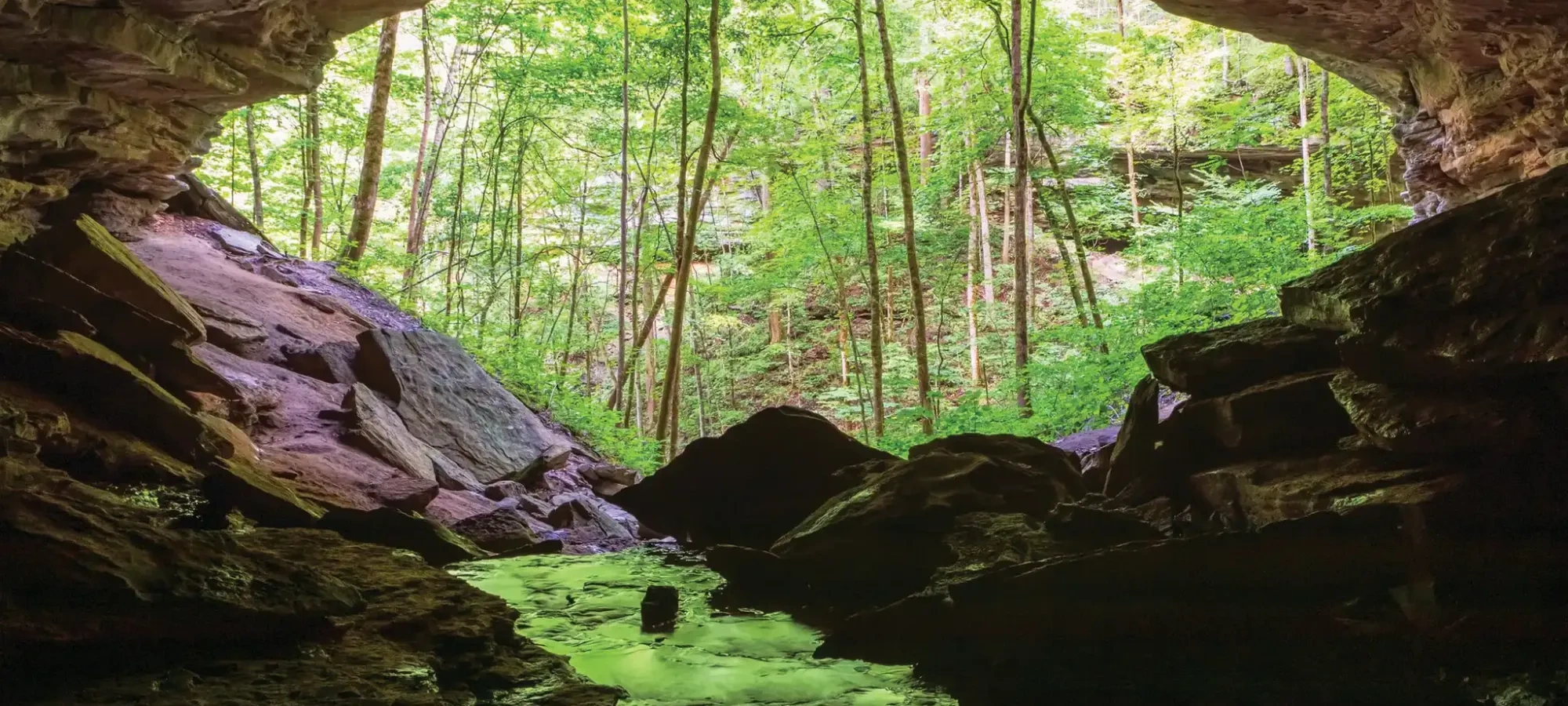
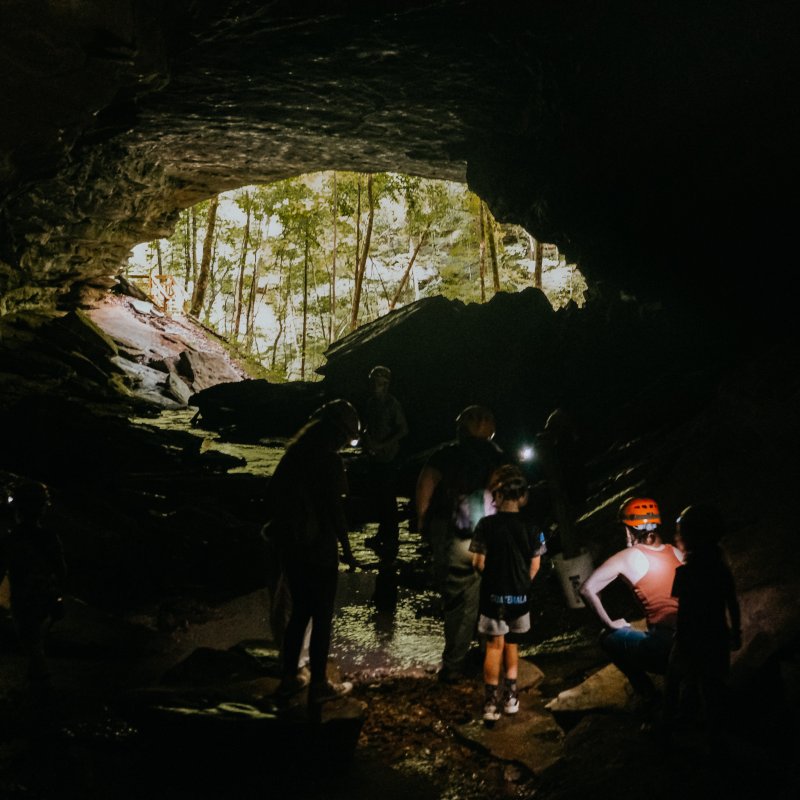
Caving at Tennessee State Parks
Tennessee State Parks are rich with above-ground and below-ground experiences for visitors.
Tour-led opportunities give visitors a peek into the formation of caves, the wildlife, and dangers. Where available, permits are granted for self-exploration of caves. Check out the caving information for each park to know restrictions, available tours, and other helpful information.
About Caves
For the potential explorer with the proper permits, wild caves hold amazing resources but also challenging dangers.
-
Most of Tennessee’s caves are in the eastern two-thirds of the state, in areas with limestone.
Limestone is a rock laid down as calcium deposits on the bottoms of shallow oceans, millions of years ago. Now hardened into the different rock formations, limestone is also very soluble. When exposed to rain and flowing water, limestone erodes leaving channels and cavities. These cavities can stretch for miles along the original bedding planes or joints in the beds.
-
Caves can have a variety of secondary formations found within them.
The most notable are stalactites, stalagmites, flowstone, and a variety of other forms of calcite left by the slow movement of water in caves. Even the primary formation of caves can leave remarkable channels and sculpted rock, or sometimes large rooms. Because caves can be very stable environments, the animals found living in a cave are unique to that cave. Spiders, millipedes, beetles, and other small critters sometimes evolve in the isolation of their one cave and may be limited to that one cave, or other caves in that area. The karst systems near the common border of Tennessee, Alabama, and Georgia (aka the TAG region) contains the greatest diversity of cave-obligate species in North America. Other caves can have ice age remnants of the mammals that used those caves for shelters.
-
Some caves have cultural remains from human usage.
These remains can be from the Native Americans and be thousands of years old. Some caves may have remains from saltpeter mining dating to the Civil War or the War of 1812. Some caves might contain the remains of old moonshine stills, placed in caves to avoid detection during Prohibition. But all of these cultural remains are important and most very sensitive. Several caves in State Parks have been gated to protect these cultural resources, and admittance is only allowed when accompanied by a park employee.


Clean Caving Guidelines
-
Decontamination Requirements
Tennessee State Parks require cave-level dedication or decontamination of cave gear (including everything worn or taken into a cave) as detailed below:
- Incoming cave gear that has been in a cave will require decontamination or cave-level dedication.
- Gear will require decontamination between all caves within the Park.
- Incoming and outgoing gear will require decontamination, use of disposable coverings, or cave-level dedicated gear in cave areas and caves with colonial bats at any time of year.
- Outgoing cave gear will require decontamination before use in any off-Park caves.
-
Acceptable Standards for Activities With Intimate Cave Sediment Contact
The minimal acceptable decontamination standards for caving are the current acceptable standards available from the U.S. Fish and Wildlife Service. At the time of the preparation of this plan, standards for cave work are available at the USFWS’s partner WNS website.
-
Transport and Storage Procedures
After gear is decontaminated, people must take care not to let it come in contact with gear that has not been decontaminated or with storage containers, car trunks, etc. that have been used to haul dirty cave gear.
Decontaminated gear should be segregated from other cave gear (either by placing in sealed bags or by placing it in separate containers to keep it clean).
Vehicles that have been used to haul dirty gear not properly stored should also be decontaminated.
Careful double bagging of potentially contaminated gear after exiting the cave but before placing it in vehicles is essential to reduce the potential for contaminating vehicles and other gear.
-
Decontamination of Outgoing Gear
Gear (including clothes, footwear, and caving gear) that has come in substantial contact (more intimate contact than normal walking tours on trails) with the sediments of a park cave must be decontaminated before use in any other cave.
Footwear must be decontaminated even if it comes into only minimal contact with the cave.
We expect that our cooperators and researchers will comply with park decontamination requirements. Our relationship with researchers and cooperators is built on a shared desire to understand and protect cave resources. We would hope that there would not be a need for park personnel to individually examine each participant for signs of appropriate decontamination.
We expect groups to police themselves. However, park personnel working with groups will be watching for signs of potentially contaminated gear. If we find evidence that groups or individuals are not complying with gear restrictions and decontamination procedures, we would immediately need to reevaluate our decisions to allow certain activities to continue because our assumptions about our ability continue them in a biologically responsible manner would potentially be invalid.

Permits
To ensure that Tennessee State Parks continue to provide quality areas for recreational caving, all cavers should register online or with park management before their visit.
Once you have registered, you will receive a confirmation email/receipt. This receipt is your permit; keep it with you while caving. At some locations, you may be asked to leave a piece of paper with your registration number on your car dashboard.
- Groups of eight or more people, please call the park before filling out a registration.
- Be sure to follow all Clean Caving Guidelines, Leave No Trace, and all park rules and regulations.
- You will be required to fill out a Liability Release and Clean Caving Acknowledgement.
- Caves are open to the public from May 1 through August 31.
You can request a permit by selecting the park and cave in the helpful links below and completing the form.
Caving Permits
Why Are Caves Closed September Through April?
Caves are closed during the winter to leave our threatened bats undisturbed during their hibernation period.
In 2010, a fungal disease was found in Tennessee’s cave-dwelling bats. This fungus creates a condition on the bats called the “White Nose Syndrome” (WNS). This fungal infection leads to the death of many of the affected bats, and several species of Tennessee bats have almost been wiped out due to WNS. Population numbers of the Tri-Colored Bat and the Little Brown Bat have dropped to the point that these species may decline into extinction due to the WNS.
The fungus that causes the WNS is now in Tennessee caves. But we require that all cavers come to our caves clean, and leave with gear either clean or segregated, so the spores that cause WNS don't spread.
The latest information about WNS decontamination procedures is available from the White Nose Syndrome Response Team.
This decontamination process is especially important for cavers that might be traveling. You don’t want to spread it to other states or caves that might be clear of the fungus.
The fungus does not directly affect humans. Although, with the loss of bats, we may see an increase in mosquito-borne carried diseases since bats are such great mosquito-eating machines.

Happenings
No events are scheduled at this time, but there's always more to explore.