


For centuries, a 12-foot high stone sculpture stood in Putnam County, its exact origin puzzling residents and visitors. It’s been described as “sphinx-like,” more precisely as “a big gray dog in a sitting position,” and has been dated to over 1,500 years old. When railroad workers blasted a zone through the area in the late 1800s, the statue was reduced to fragments, and one 4-foot piece was incorporated into a monument that still stands in Monterey.
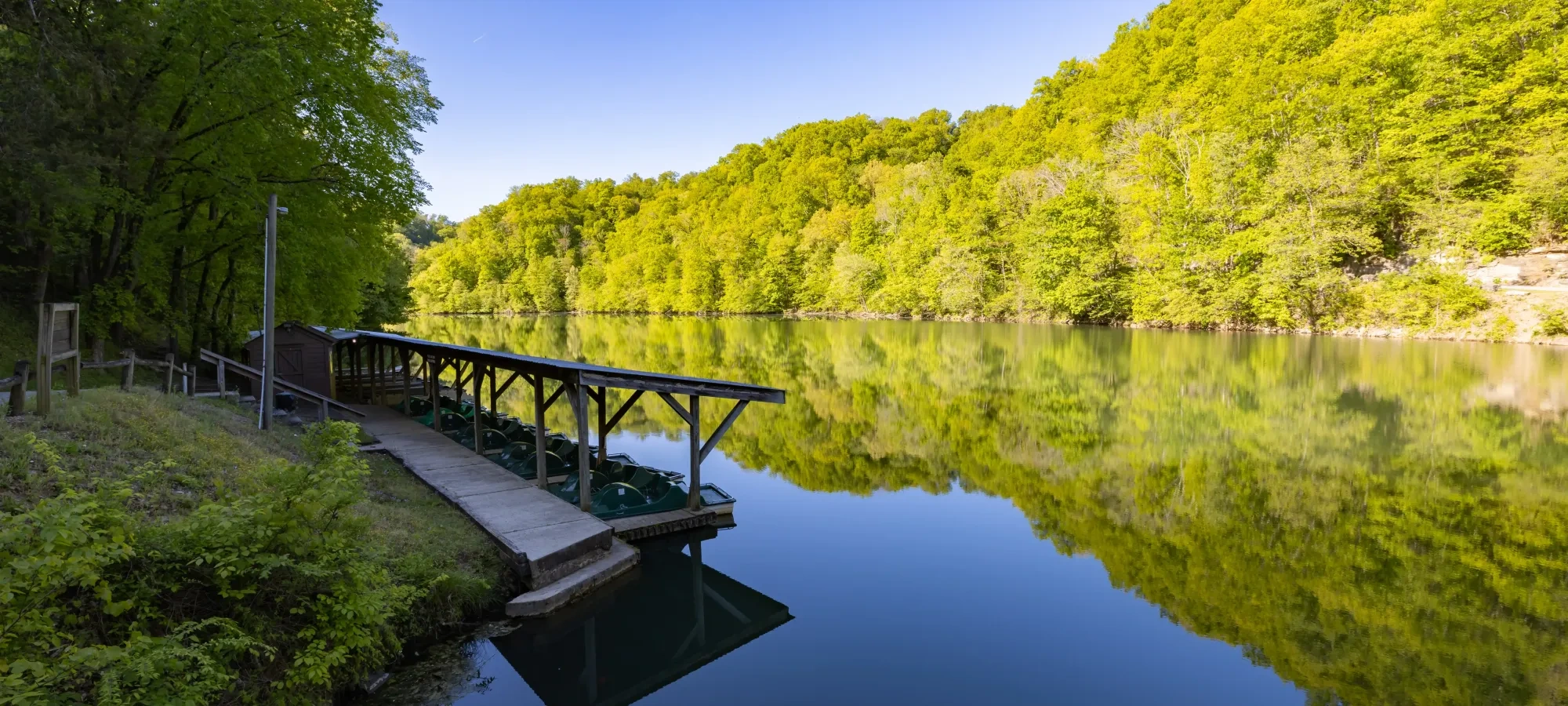
Though its story may be lost to time, the mystery of the monolith lingers on, preserved in the name of Standing Stone State Park, an 855-acre retreat in nearby Overton County nestled in the surrounding 11,000-acre Standing Stone State Forest on the Cumberland Plateau. It’s one of Tennessee’s earliest state parks, established in 1939 as a Works Progress Administration project to revive eroded lands and create a recreation area, just two years after the founding of the Tennessee State Park system. The park contains a true, often contrasting, assortment of landscape–steep ridges and rocky inclines; dense forests and great, wide meadows; ambling brooks and a quiet, lazing lake. With this variety, Standing Stone offers an array of outdoor activities that my family explored during a camping trip this spring.
Spring, in fact, is the perfect time to visit Standing Stone. Wildlife is roused from winter sleep, bursting out of hibernation and onto display. The weekend of our April visit, we were blessed with dry skies and warm sun. Even luckier, our stay coincided with the park’s annual Spring Nature Rally, offering an amazing lineup of workshops, lectures, guided hikes, and other activities for all ages. No matter when you visit Standing Stone, though, there is much to enjoy in every corner of the park.


