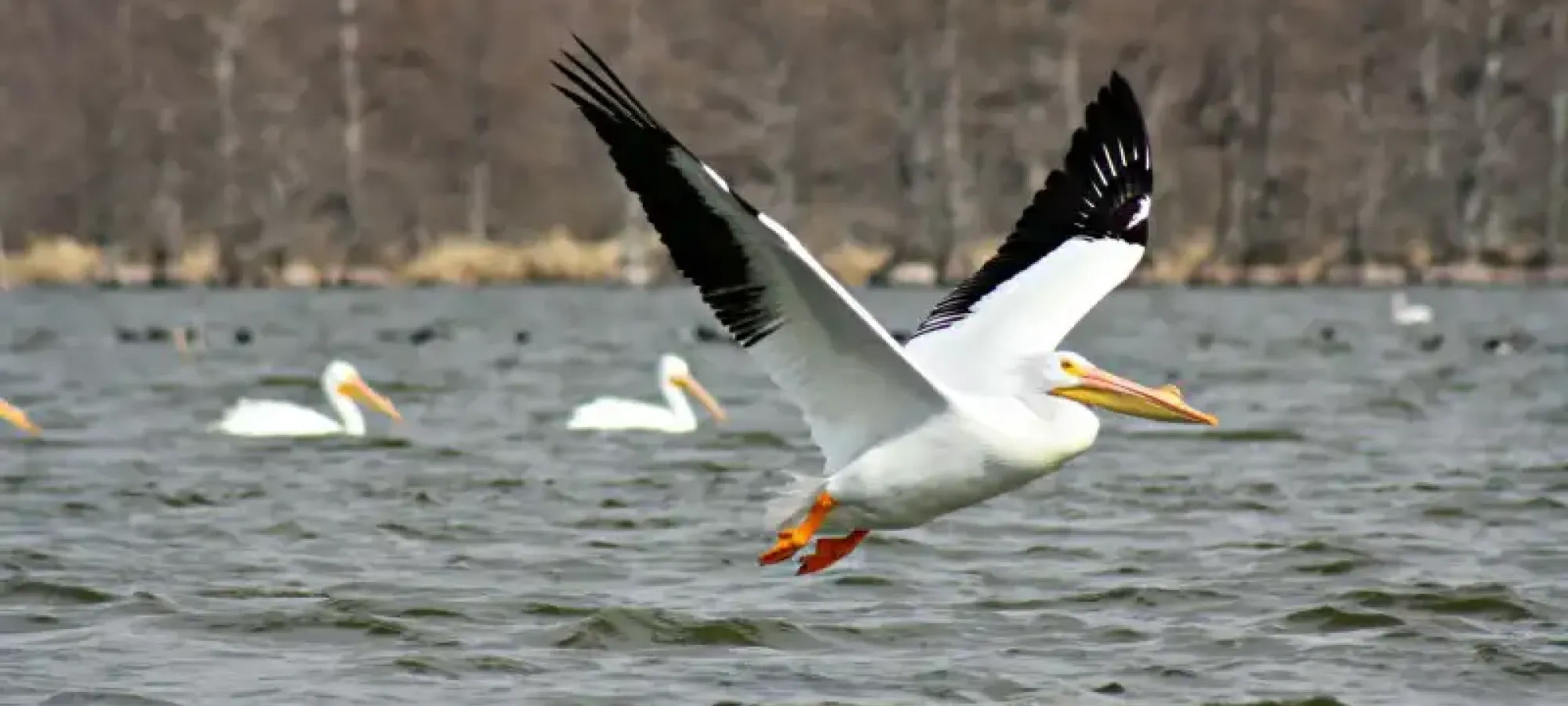
They are normally daytime feeders, however during the breeding season they have been known to fish under the light of the moon. While non-game fishes (i.e. carp & suckers) are their preferred food source, they are opportunistic, and have been known to eat salamanders, tadpoles and crayfish. In some regions they have begun helping themselves at aquaculture ponds and trout hatcheries, much to the chagrin of those attempting to propogate these fishes. They are also not above stealing catches from other birds, such as Double-crested Cormorants.
While their population today is relatively stable, like many bird species they suffered greatly during the widespread overuse of pesticides such as DDT throughout the mid-twentieth century. Historically, they have also been targets of persecution by humans, believing them to be major competitors for sport fish. They were shot, clubbed and their eggs destroyed during the 1920s (even in Yellowstone National Park!), which took a significant toll on their numbers. Wetland ecosystems have shrunk substantially over past several decades. Their entire population breeds in a mere 60 scattered colonies on inland waters in the Mid-Western and Western United States, as well as parts of western Canada. Because of the relatively small area used for their breeding grounds, and the uncertain future of some of these habitats, they will continue to be vulnerable to disturbance and habitat loss. They are particularly shy and skittish while nesting and will often abandon eggs and nestlings with even minimal human distrubance.Their aquatic lifestyle and foraging behaviors also make them especially susceptible to getting entangled in discarded fishing line. Because of their large size, it is very rare that they fall victim to natural predators, so it is up to us to ensure their secure future.