Parks Planting for Pollinators

Copy linkShare to Facebook (opens in new window)X (opens in new window)Share by email
_dsc9528.jpg

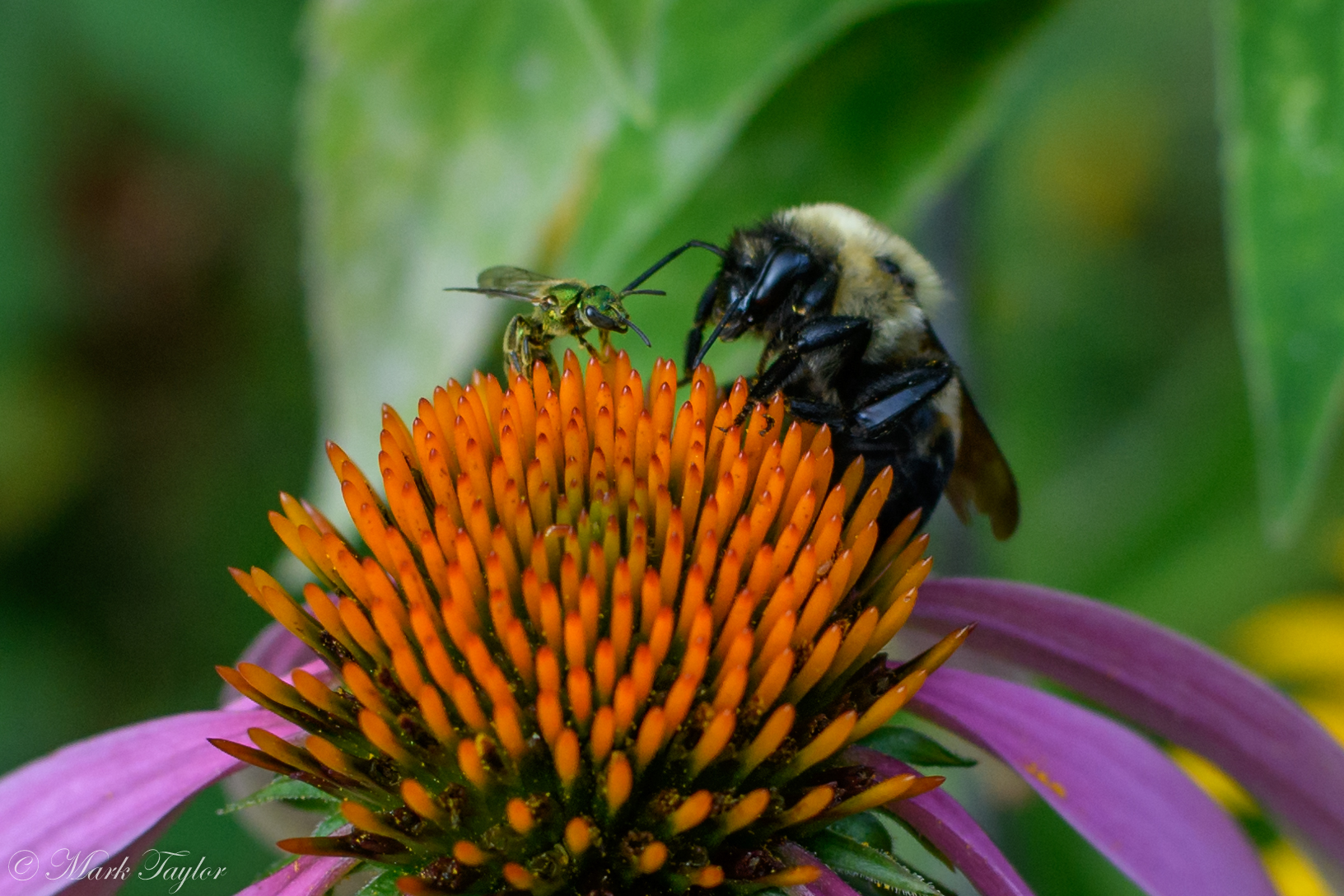
A Green Metallic Sweat Bee and a Bumble Bee share space on a Purple Coneflower. (Photo credit Mark Taylor)

It's National Pollinator Week! This is a time set aside to recognize and celebrate pollinators of all species. It’s no secret that pollinators are crucial for both our crops and local ecosystems. A loss of these species would mean a complete breakdown of wild food webs, supply chains and even our National security. The bad news is, insect pollinators are in steep decline (along with all other insects) around the globe. Habitat loss is the number one contributing factor, but pesticides and invasive species are also having an impact.

  • dscn7457.jpg

A Common Buckeye butterfly nectaring in the fields at Pinson Mounds State Archaeological Park

Around 50% of the plants native to Tennessee are what we call heliophiles, aka plants that require sunny conditions to thrive. Most of the native, open habitat types in Tennessee have disappeared (over 99%), with only a few remnants left along roadsides, power line right of ways and what few habitats we have managed to preserve. Our state’s botanical heritage has largely disappeared from the landscape, leaving only very small pockets of habitat for our native pollinators.

  • Wildflowers in a sunlit meadow with a dirt path in the background.

A roadside prairie pocket located just outside of Chickasaw State Park

The good news is, nature is resilient and the habitat needs of most pollinators are quite modest. In other words it isn’t too late to reverse the trend!

Many of our state parks are fighting the good fight, dedicating areas both large and small to the conservation of pollinators. These projects may simply be a few beds of native plants decorating park buildings, or large-scale prairie installations spanning many acres. No matter the square footage or acreage provided, these plantings make a measurable difference to pollinators and the other wildlife that utilize them.

  • Outdoor scene with an informational sign at a garden

The pollinator garden at Bledsoe Creek may be small, but it makes a big impact for the local ecosystem! Learn more about the project from their Facebook post.

I wanted to feature just a few of these parks, but know that there are many more working fervently to preserve and protect our native pollinator

1. Cumberland Mountain State Park

  • cumberland-mountain-state-park.jpg

With its iconic bridge, long history and lovely amenities nestled into scenic pocket on the outskirts of Crossville, Cumberland Mountain State Park is a popular and well-known getaway. If you have visited the Homestead Harvest Restaurant lately you may have noticed the beds full of wildflowers lining the parking lot. These plantings prove that native plants can be just as beautiful as they are valuable, and pollinators of all sorts can be seen zipping among the flowers on a spring or summer day.

  • Group of people walking beside a flowering garden path.

Jr. Rangers learning about native plants with State Naturalist, Randy Hedgepath outside the CCC Museum at Cumberland Mountain State Park. Tennessee Coneflower and Butterfly Weed are beautiful, beneficial and very hardy landscaping plants.

The trail sides also abound with spring wildflowers that support a plethora of pollinators.

  • dscn4423.jpg

Native wild roses like this Swamp Rose (Rosa palustris) make great pollinator plants, and can be seen growing along the Byrd Lake Trail

2. Dunbar Cave State Park

  • 69437550_10101721979711178_5010574543333359616_n.jpg

While this park is best known for its incredible cave filled with human stories stretching back for tens of thousands of years, it also provides some amazing pollinator habitat! The pollinator garden in front of the Visitor Center features a lovely diversity of flowering plants, trees and shrubs. At the northern end of the park there is a 15-acre native prairie project that was created as a joint effort of Southeastern Grasslands Initiative and the Tennessee Quail Forever Program.

  • dscn7954.jpg

Late summer in the prairie at Dunbar Cave State Park

It grants visitors with a small window into the past, when a similar landscape would have covered most of Montgomery County. It is estimated that a sprawling grassland encompassing half a million acres, known as the Pennyroyal Praire, once blanketed the region. This would have been what the first humans (and the buffalo!) encountered as they entered the land that would later become Tennessee. A Three Sisters Garden can also be found near the Pollinator Garden, featuring crops that would have been familiar to prehistoric Indigenous Peoples who once lived and farmed the area. These people depended on the same pollinators we depend on today to pollinate our modern squash and beans.

  • dscn7599.jpg

Squash Bees have been pollinating our domestic squash for thousands of years

  • dscn7951.jpg

Late season nectar plants are critically important for migrating Monarch butterflies

All of these areas support a diversity of pollinators during the growing season.

3. Roan Mountain State Park

  • 355475096_279304831427163_4257937983545620998_n.jpg

Verdant mountain views, rivers trickling over polished stones and a rich heritage of Appalachian culture all come together at this beloved state park in East Tennessee.
A Tiger Swallowtail nectaring on Common Milkweed at the Miller Farmstead. (Photo credit Tennessee Photographs)

Wildflowers abound along the river sides, but you can also take a stroll through one of the pollinator fields beside the main park road or at the beautiful and historic Miller Farmstead. Mid-summer is a good time to enjoy the cooler mountain air and see a plethora of butterflies fluttering among the flowers.

  • 355381081_1051717556214288_1267462797419637765_n.jpg

The roadside fields in bloom at Roan Mountain State Park. (Photo credit Tennessee Photographs)

  • 355551625_758220129385589_168074172014463802_n.jpg

Purple Coneflower is a pollinator powerhouse (Photo credit Tennessee Photographs)

Don't forget to visit nearby Carver's Gap to see the unique grassland meadows along the Appalachian Trail, known as balds. These areas have been open since the last Ice Age, but are beginning to close in, sparking conservation efforts by local agencies.

4879930068_ae109cda64_o.jpg

4. Edgar Evins State Park

  • dscn4493.jpg

Park Ranger Mark Taylor in one of the pollinator fields he manages at Boat Ramp 1

Some parks make use of most any available open space to provide precious islands of habitat to pollinators. Edgar Evins features beautiful lake views and forested trails, but as you drive along the main park road you will take notice of the newly established pollinator corridor in the right of way. Road sides have proven to be excellent habitat for pollinators. Areas beside roads and under power lines have to be maintained open anyway, so why not plant sun-loving natives?

  • dscn5009.jpg

This is also a great option for hillsides that are too steep to mow safely. Converting mowed areas to native plants helps to save taxpayers’ dollars, reduces our carbon footprint and helps to prevent erosion, in addition to providing pollinator habitat. Several other converted areas can be viewed at the park entrance, Visitor Center and boat ramp 1. These pollinator corridor projects were funded by the Iris Fund. You can read more about the project on The Tennessee Magazine.

5. David Crockett Birthplace State Park

  • dc_birthplace_3.jpg

This is yet another park that seamlessly blends history, beauty and pollinator habitat. The fields that stretch for about 20 acres across the park are maintained to encourage a diversity of native flowering plants that pollinators (and birds!) love.

  • Narrow path through a lush green meadow, bordered by trees.

(Photo Credit Karen Travis)

A stroll along the half-mile Meadow View Trail offers countless opportunities to spot pollinators and other wildlife.

  • planting-for-polinators

A Clouded Sulphur butterfly nectaring at David Crockett Birthplace State Park. (Photo credit Karen Travis)

  • milkweed_at_dc_birthplace.jpeg

Milkweeds provide copious nectar for pollinators, and also serve as host plants to the imperiled Monarch butterfly

6. Rock Island State Park

  • Scenic waterfall cascading into a serene river surrounded by lush greenery.

Rock Island State Park is best known for its waterfalls, like Twin Falls. The scoured river gorges protect plants unique to that area, several of which are new to science.

Rugged river gorges and waterfalls define this breathtaking state park in Warren County. The Tennessee Valley Authority (TVA) has partnered with State Parks to manage pollinator habitat under the power lines at Rock Island State Park. This project stretches along the Collins River across from the power plant, and features a diversity of native plants.

  • Information board at Rock Island State Park with map and flower images.

On a recent visit we were able to record an American Bumble Bee, one of many species of Bumble Bee that is in steep decline.

  • dscn4162.jpg

American Bumble Bee on Butterfly Weed

It is estimated that the population of these once-common bees has dropped by nearly 90% in the last two decades. This highlights just how precious these habitats are. We often aren’t even aware of just how many species are being sustained by these life-giving plants.

7. Seven Islands State Birding Park

  • planting-for-pollinators

Photo credit Justine Cucchiara

Our only state park dedicated 100% to birds, it is living proof that habitat that is great for birds is also great for pollinators, and vice versa. Located just outside of Knoxville, the rolling fields stretch for an impressive 250 acres along the French Broad River, encompassing a diversity of habitat types to support birds.

With a backdrop of the Great Smoky Mountains, one can walk for several miles enjoying birds, pollinators and beautiful views.

  • planting-for-pollinators-blackeyed-susan

Black-eyed Susans (Rudbeckia) are hardy, beautiful, and beloved by pollinators. (Photo credit Justine Cucchiara)

  • litter_clean_up_paddle_(126)-2.jpg

Coral Honeysuckle (Lonicera semervirens) provides nectar to butterflies and hummingbirds, and the foliage feeds the caterpillars of the Snowberry Clearwing moth (photo credit Justine Cucchiara)

8. Cedars of Lebanon State Park

  • dscn4437.jpg

Tennessee Coneflower is found only in the limestone glades of Middle Tennessee

Named for the juniper trees that reminded early settlers of the Holy Land, this park encompasses over 1,100 serene acres situated in the central basin of Middle Tennessee. The most prominent ecological zones of the Central Basin would be the limestone glades, featuring over a dozen plants found there and nowhere else.
These precious pockets of biodiversity likely support pollinator species that have yet to be described. Other places that provide for pollinators are the fields located along the Cedar Run Trail and the beautiful Pollinator Garden located right behind the Nature Cente

  • Curvy path through a lush garden with yellow flowers at sunset.
  • dscn4685.jpg

A Pipevine Swallowtail caterpillar munches away in the pollinator garden at Cedars of Lebanon. These butterflies depend exclusively on pipevines for their life cycle.

dscn4707.jpg
  • dscn4702.jpg

A Tiger Swallowtail nectars on Common Milkweed along the Cedar Run trail at Cedars of Lebanon State Park


These are only a few examples of the amazing efforts put forth by our park rangers, as well as the hard work of Friends groups, volunteers and other state, private and non-profit organizations. Every little bit counts, and it takes a community of dedicated individuals to protect our pollinators.

  • dscn9775.jpg

TDOT has partnered with several State Parks to install pollinator habitat. This is at Big Hill Pond State Park. Learn more about Tennessee Pollinators.

In addition, spring wildflowers in any of our state parks support a diversity of pollinator species. Forested areas are also very valuable as both foraging and nesting habitat for pollinators, so having a diversity of habitat types filled with native plants really helps our pollinators thrive!

Be sure to visit a park near you with pollinator habitat and walk slowly to observe pollinators at work. You may see bees, butterflies, wasps, beetles, flies, moths and even hummingbirds as you spend time among the flowers.

  • dscn4221.jpg

Day-active moths like this Snowberry Clearwing adore native plants like Beardtongue (Penstemon)

  • original_(1).jpeg

Fuzzy Scoliid Wasps make awesome pollinators, and they also help to control invasive Japanese Beetles

You may find inspiration and ideas for recreating some of these plantings in your own backyard. Native plants are hardy, beautiful and above all, beneficial! They support a diversity of wildlife, not just insects, and less mowing is easier on the ecosystem and your bank account.

  • dscn5010.jpg

Prairie Coneflower (Ratibida pinnata) makes an amazing pollinator plant, with its high drought tolerance, long bloom season and widespread appeal to different species

Here are some native plant nurseries and other resources where you can find a diversity of native plants and native plant seeds to add to your outdoor spaces. Aim to include the plants that are most regionally appropriate for where you live. Native plant nurseries love to talk plants, and they can give you the best recommendations for your property.

GrowWild Inc., Fairview

Nashville Natives, Fairview

Overhill Gardens, Vonore

Tennessee Naturescapes, Clinton

Roundstone Native Seed Company, KY

The Xerces Society for Invertebrate Conservation has a plethora of resources on creating pollinator habitat, as well as a Pollinator Pledge Program that you can participate in. You can learn even more about creating your own home-grown habitat here: Home - Homegrown National Park.

Consider joining your nearest Wild Ones chapter , where you can meet up with other native plant enthusiasts that are working hard to make a positive change for pollinators. You could also join the Tennessee Native Plant Society to learn more about native plants and get involved in their conservation. The Southeastern Grasslands Initiative is a newer State Parks partner that seeks to identify, preserve and restore native grassland habitat across the state. Consider volunteering your time removing invasive plants, gathering seed and much more! Most state parks also provide a variety of volunteer projects aimed at invasive plant removal and maintenance and installation of pollinator habitat, such as the annual Weed Wrangle that takes place every March. Help join the fight to save our native pollinators! Check out the TN State Parks Volunteer Portal, here to see how you can help. 

While all of our parks strive to preserve and protect our pollinators, it takes the involvement of people like you to really turn the tide. There are few things more rewarding than welcoming nature at your doorstep, knowing that you are helping to ensure the future for our precious pollinators.

  • 216984081_10102419764085698_2857476978291252227_n.jpg

The author's son admiring a Spicebush Swallowtail caterpillar

holly_taylor_headshot__small.jpg

Holly Taylor

Related Articles