
March 20, 2024 |
An Ode to the Beech Tree


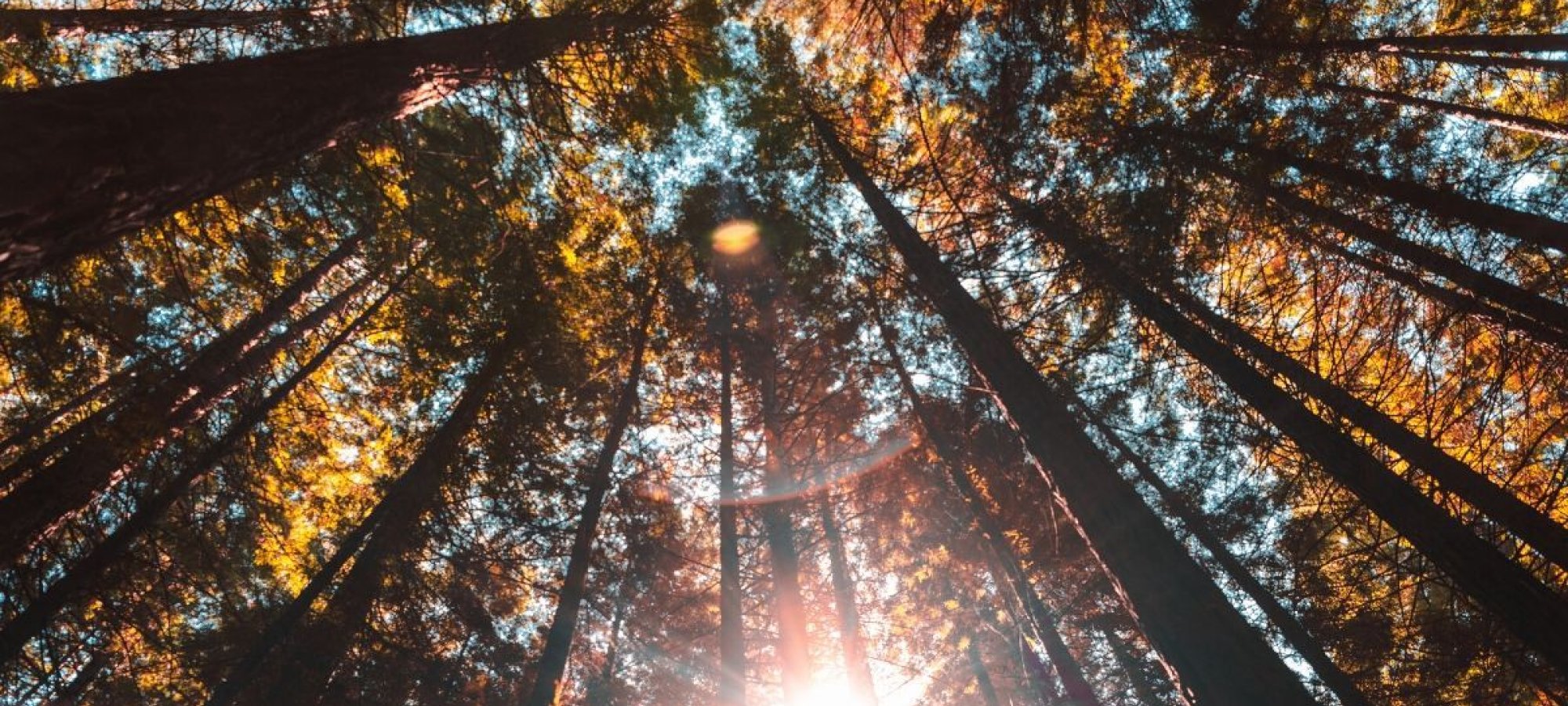

Photo by Marty Silver
Whether we realize it or not, trees are our constant companions whenever we venture out of doors. They provide welcomed shade on hot days or a helping hand when we stumble on the trail. Their leaves produce abundant oxygen to fill our lungs and airborne compounds that reduce stress and boost our immunity when we inhale them.
The forests of the Southeast boast some of the greatest diversity anywhere, but with nearly 200 species found in Tennessee, it would take a lifetime to do them all justice with the written word.
Today let’s focus on a tree that can be found in just about every corner of the state: The American Beech (Fagus grandifolia). It is one of the easiest trees to identify in every season. The bark is smooth and gray, and the massive trunks of older trees are reminiscent of mighty dinosaur limbs.

The leaves are thin and glossy, turning a warm brown in the fall and clinging to the branches of younger trees throughout the winter months; a phenomenon known as marcescence (read more here: The Mystery of Marscescence).

If no leaves are present, the buds can be a helpful identifier, being sharp and pointy like the tip of a spear.

Photo by Mark Taylor
These are slow-growing trees, preferring to grow up in the shade of oaks and hickories, typically in the drier soils of less fertile uplands. They don’t shy away from thin, steep or rocky places to spread their roots, often keeping company with maples, mountain oaks and sassafras.

Photo by Marty Silver
They have a tendency to hollow out as they age, providing safe havens for wildlife, and legend has it that they are far less likely to be struck by lightning than other trees.
Their signature bark has the unfortunate tendency to serve as a canvas for "artists" and lovestruck teenagers. Wounding the tree in this fashion can introduce disease and distrupt its ability to take up nutrients.

This can significantly shorten the lifespan of these trees, which usually take at least 40 years to reach maturity, and could live up to 400. Not to mention that the scars never fully heal and remain for its entire life.
Beneath their branches the forest floor is often sparsely populated by plants, but one in particular only grows from the roots themselves. It is a parasite known as Beech Drops (Epifagus virginiana). While very abundant, it is easy to overlook because of its lack of green pigmentation. Chlorophyll isn’t needed by a plant that steals its food from others!

There is another little sympatric (meaning “occurring with”) wildflower that goes unnoticed, not just because of its diminutive size, but because of its unpredictable bloom cycle. Measuring less than 3 inches in height, the Three Birds Orchid blooms synchronously in late summer, usually following a drop in temperature.

Seeing one in bloom is a rare treat indeed, as each flower only lasts a single day!

Although the drier soils beneath the imposing spread of mature beech trees is often on the dry side, there is at least one fern that commonly grows in association with them. The aptly named Beech Fern (Phegopteris) doesn't mind soils that are a bit drier, as long as there is a good layer of leaf litter for them to live in.

One of the more bizarre species associations with the Beech revolves around a boogying aphid and a gross-looking fungus. Beech Blight Aphids (Grylloprociphilus imbricator) show up on beech trees in late summer, sipping sap from the branches. Althought they can occur in large numbers, they typically don't have a negative impact on the trees. Whenever they are disturbed they all begin to wag their backsides in unison, as a way to deter predators. (Click this link to see them in action: Boogie-Woogie Aphids.) Like other aphids, their waste is a sugary liquid known as honeydew, and they can produce copious amounts of it underneath their feeding areas. This in turn attracts a sooty mold fungus known as the Honeydew Eater (Scorias spongiosa), which feeds exclusively on the extrement of the Beech Blight Aphids.

When fresh, it takes on the appearance of an alien sponge, sometimes reaching the size of a basketball. It eventually dries into a black, hardened mass that persists throughout the colder months.

Beech leaves feed nearly 30 species of moth caterpillars, including the beautiful Luna Moth.

Lots of caterpillars means plenty of food for hungry birds and other predators!
The flowers of the beech are rarely seen since they are typically very high up on the tree.

They produce both nectar and pollen, and are visited primarily by bees.
The most notable event in a beech tree's life is the production of its fruit. It can take them 40 years to reach blooming size, and another 20 before they begin producing heavy crops of nuts (known as mast). They only produce mast on average every 4 years, or twice that if they get hit with a late frost.
Mast years for beech trees are a special occasion in the natural world, as they are some of the most nutrient dense nuts to be found in our forests. They contain up to 50% fat and 20% protein, far more than acorns.
2023 happened to be a mast year for the American beech, and the forest floor was littered with their triangular nuts and small, spiky husks.

Peeling back the thin shell reveals the meat inside.

Although small, it is packed with flavor, tasting like a cross between an almond and a Brazil nut. While they are edible, the raw nuts contain high amounts of a toxic substance known as saponin that can cause gastric issues if eaten in large amounts. Drying or roasting the nuts removes this toxin, though one must be patient, as peeling them en masse is quite time consuming!

While this carpet of food is nowadays met with quiet celebration by mammals and birds, there was a creature that once descended upon them like a hurricane. Beechnuts, along with American chestnuts, were the favorite food of the extinct Passenger Pigeon.

Passenger Pigeons depicted by John James Audubon in 1824
Thought to once be the most numerous bird species on the planet, their mighty flocks darkened the skies for days and broke branches from the trees. Wherever they roosted huge deposits of nitrogen-rich fertilizer was laid down, transforming the forests they visited. Though they were estimated to number in the billions during the 19th century, by 1914 they were gone completely, due to excessive hunting pressure.
Today they are but a ghost haunting our Southern skies, and yet the mighty beech tree is still a vital strand in a complex food web.
Winter into early Spring is a good time to step out and get to know the beech trees before they are drowned out by an ensuing flood of green foliage.

Now that Spring has finally arrived, the scores of nuts dropped a few months ago, or at least the ones that escaped the hungry mouths of wildlife, have now sprouted into the next generation of Beech trees.

With a bit of luck, in several decades' time, one may grow into another mighty trailside warden that is a signature of our eastern forests.


Holly Taylor
Related Articles
-
Rain Crows and Caterpillars - Read Article
Rain Crows and Caterpillars
Have you ever heard a rain crow? Learn more about these incredible birds and their unique relationships with caterpillars. -
-
A Year in Birds at TN State Parks - Read Article
A Year in Birds at TN State Parks
In Tennessee, at least 423 species have been recorded since 1900, and most of them have been viewed in one of our state parks at one time or another. -
-
“A Wonderful Bird is the Pelican…” - Read Article
“A Wonderful Bird is the Pelican…”
We often associate pelicans with sea spray, waves and warm beaches, yet one of America’s largest and most majestic birds breeds in the American Heartland and can be seen during its winter migration on inland freshwater and coastal bays and estuaries throughout our continent. -


