Burgess Falls Highlights
Warning Alert
Visitor Center Construction
Update 4/3/2026: Construction of the new Visitor Center continues, and the upper parking lot remains closed. During this time, parking is extremely limited, and RV/trailer parking will not be available. Please plan accordingly and park in designated spaces only.
Due to the construction of the new Visitor Center, the park office has relocated to 8487 Burgess Falls Rd. Baxter, TN 38544. Parking will be limited at the park during construction. For more information, please see our recent press release. We thank you for your patience.
Before You Visit Burgess Falls
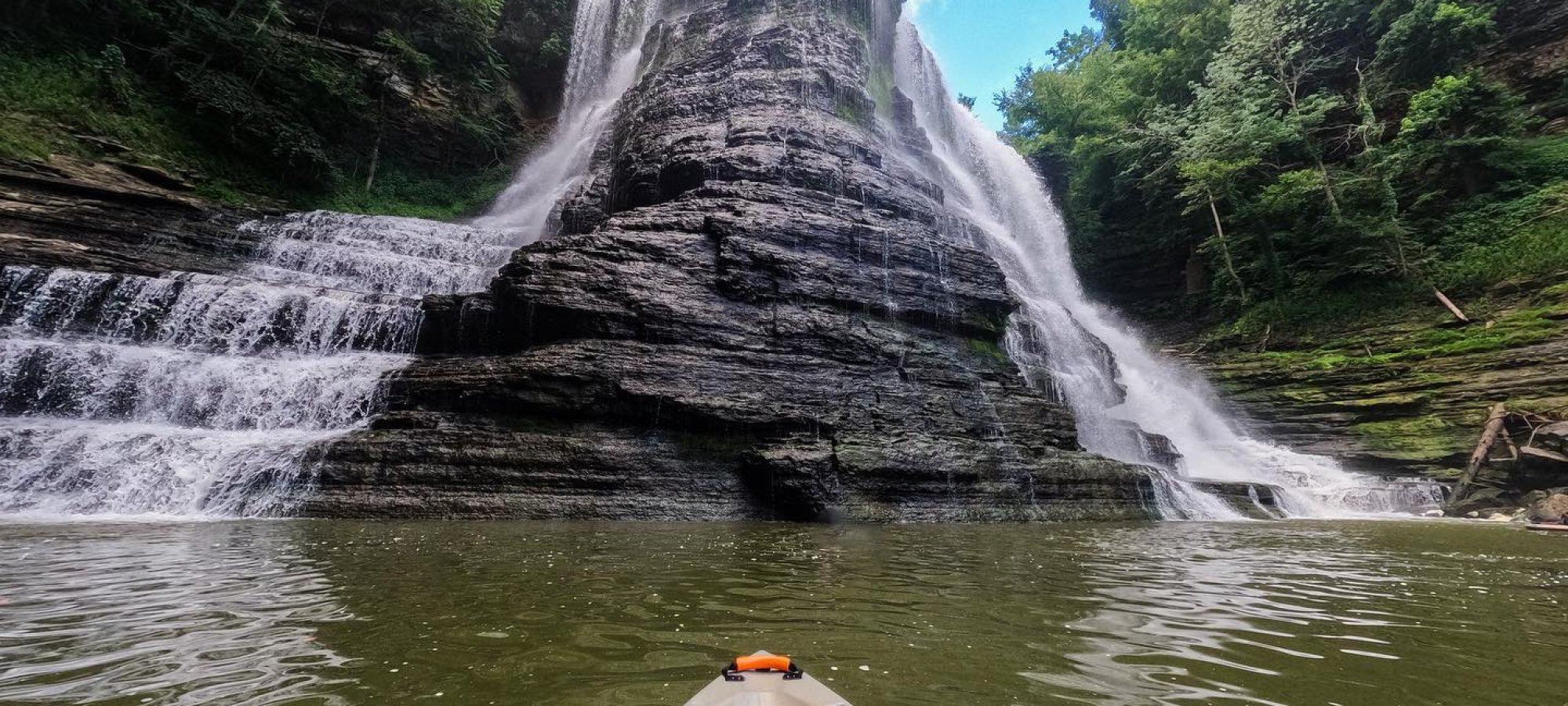
Please Note: There is no access to the base of the falls from the park. The base of the falls can be accessed by boat or kayak from the Cane Hollow Recreation Area.
- There is no designated swim area at Burgess Falls.
The park experiences high visitation. Please do not park on roadsides or in non-designated areas. If the parking lot is full, please consider visiting another state park in the area.
Test test test
Test Alert
A Symphony of Water and Stone
Burgess Falls State Park invites you to witness a dramatic display of nature's power and artistry. Here, the Falling Water River carves its way through the rugged landscape, culminating in a series of breathtaking waterfalls that cascade into the Caney Fork River. But the beauty of Burgess Falls is more than just what meets the eye; it's a story etched in stone and whispered by the wind. Read on to discover the history, hidden gems, and natural wonders that await.
Discover Burgess Falls State Park
Burgess Falls State Park is a testament to the beauty and power of nature, and the importance of preserving it for future generations.
The story of this park is one of transformation, from a Native American hunting ground to an industrial site harnessing hydroelectric power, and finally, to a protected natural area where visitors can immerse themselves in the splendor of Tennessee's landscape. The park's centerpiece, the series of waterfalls along the Falling Water River, has drawn people to this area for centuries. Today, Burgess Falls State Park offers a sanctuary for both nature and those seeking respite from the everyday. Whether you're drawn by the thunderous roar of the falls, the tranquility of the forest trails, or the rich history of the area, Burgess Falls promises an unforgettable experience.
History
The land now known as Burgess Falls State Park has a rich and varied history.
Originally inhabited by Native American tribes, including the Cherokee, Creek, and Chickasaw, the area served as a hunting ground for centuries. In the late 19th century, European settlers arrived and began to utilize the power of the Falling Water River, establishing a gristmill and sawmill.
In 1924, the river's potential was further realized when a dam and hydroelectric power plant were constructed to provide electricity to the city of Cookeville. This operation continued until 1944, leaving behind remnants of industrialization that still stand as historical landmarks within the park.
Recognizing the ecological significance of the area, the state of Tennessee designated the territory as a State Natural Area in 1971, protecting its diverse forest and aquatic habitats. The area was preserved with the signing of the Natural Areas Preservation Act in 1971/1973. Burgess Falls officially opened as a state park on July 8th, 1975, offering new amenities to visitors.
Today, Burgess Falls State Park continues to evolve, balancing preservation with recreation. The park has earned a Platinum Go-Green award, a testament to its commitment to sustainability through initiatives like the Window Cliff Prairie project, bear-safe practices, dog waste bag dispensers, bluebird nest box projects, and fishing line receptacles.
From the Rangers
-
The Perfect Day
Begin your day with a hike along the River Trail to witness the series of waterfalls, from the cascades to the majestic Burgess Falls. Pack a picnic to enjoy at the picnic pavilion and let the kids burn off energy at the playground. If you're feeling adventurous, consider paddling to the base of Burgess Falls from the Cane Hollow Recreation Area for a unique perspective.
-
Insider Information
While the River Trail is a must-see, don't overlook the Ridgetop Trail for a less-crowded experience. This trail meanders through mountain laurel and offers scenic downstream views. For a truly magical experience, visit after heavy rain when the Falling Water River rages, creating a mist that throws rainbows hundreds of feet into the air when the sun is just right.
-
Know Before You Go
Parking at Burgess Falls is limited. It is recommended to visit during the week or early in the morning to avoid crowds. Also, there is little to no cell service in the parking lots or on the trail at Burgess Falls. The temporary park office has decent cell service.


Trails
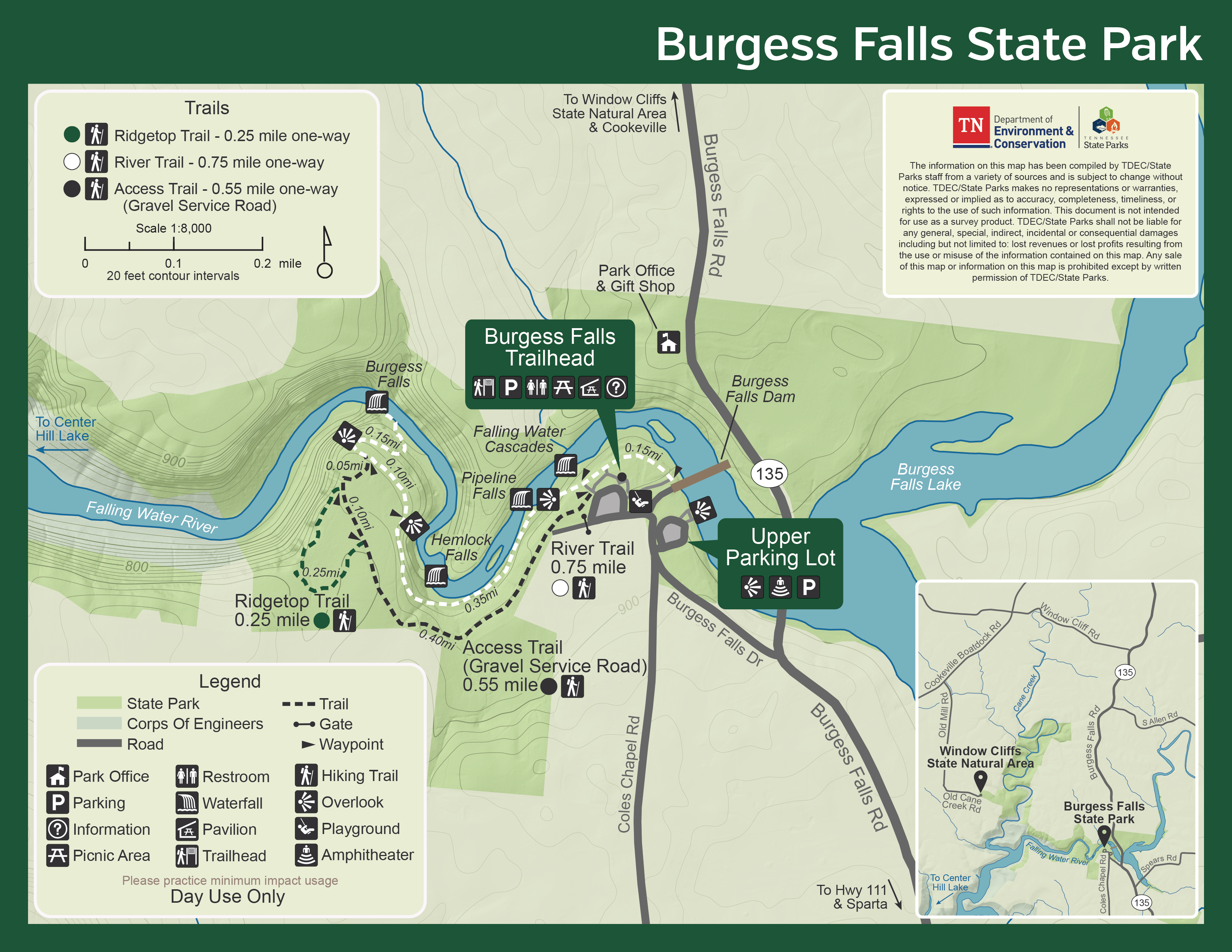
Burgess Falls State Park offers 1.75 miles of hiking trails, including the popular River Trail and the less-crowded Ridgetop Trail. Window Cliff State Natural Area also has 5.5 miles of trails.
Water Features
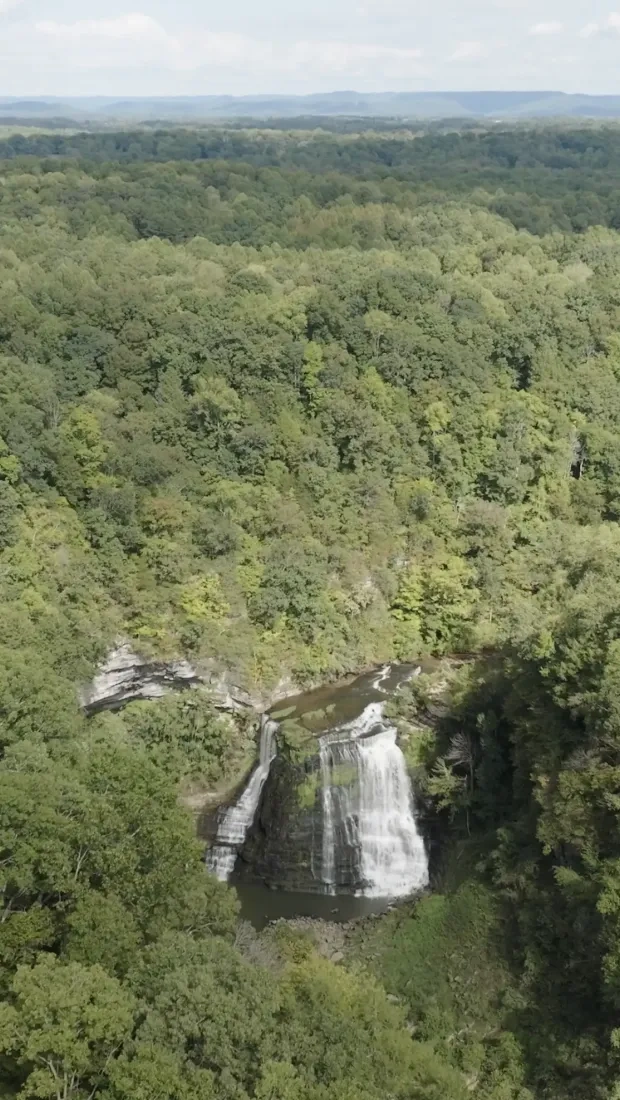
The park's defining feature is the series of waterfalls along the Falling Water River. These include Falling Water Cascades, Pipeline Falls, Middle Falls, and the 103-foot Burgess Falls. The park also features Burgess Falls Lake.

Window Cliffs Story: Wild Side TV
Learn how the community came together to help develop the trails so that Window Cliffs can be shared with many visitors.

Plants
Burgess Falls State Park has a diverse range of flora.
To learn more about the unique plant life of Burgess Falls, be sure to ask a Park Ranger during your visit.
Plant Types
- Oak (Quercus spp.)
- Beech (American Beech)
- Hemlock (Eastern Hemlock)
- Poplar
- Early Saxifrage
- Large-Flowered Trillium
- Sweet Betsy Trillium
Birds
Barn and northern rough-winged swallows are known to sally out over the river.
Green and yellow-crowned night herons may be seen during spring and summer at the river’s edge and on a lake created by an early concrete dam. Also, keep an eye out for osprey and bald eagles which frequently pass through the park.

Animals
Keep an eye out for the park's resident wildlife.
You might even spot a river otter playing below Burgess Falls. Talk to a Park Ranger to discover the best places to view wildlife and learn about their habits.

Animal Species
- Butterflies
- Plain-bellied Water Snakes
- Copperhead
- Gray Rat Snake
- Squirrels
- Rabbits
- River Otters
- Deer
Inspiration
-
3-Day Winter Waterfall Getaway in Middle Tennessee
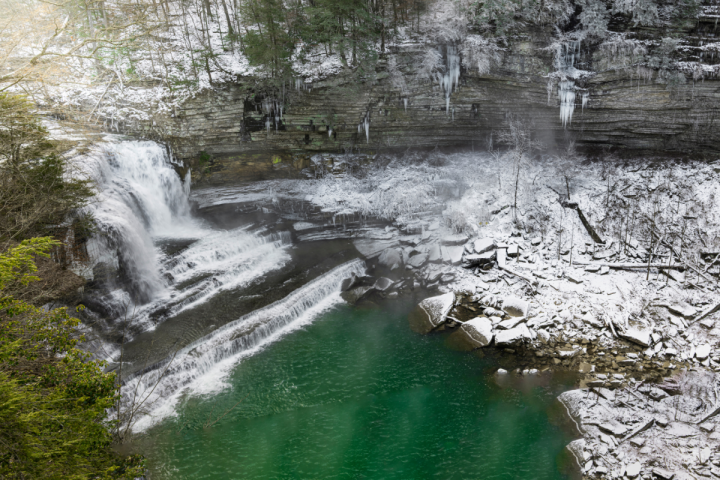
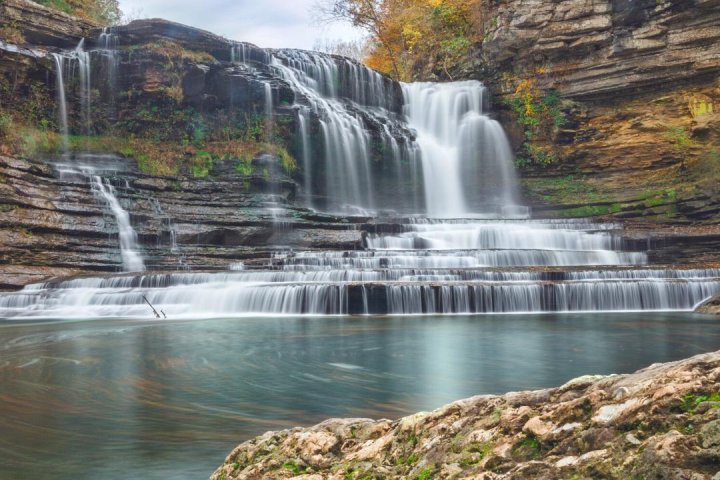
3-Day Winter Waterfall Getaway in Middle Tennessee - Read ArticleThis three-day trip itinerary is centered around Edgar Evins State Park and visits two iconic waterfalls in the surrounding Middle Tennessee area, Cummins Falls and Burgess Falls. -
Fall Family Getaways at Tennessee State Parks
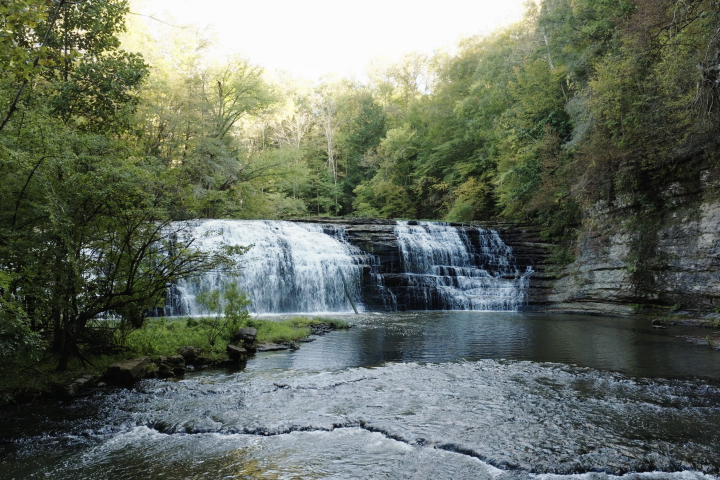
Fall Family Getaways at Tennessee State Parks - Read ArticleTo help you plan your fall vacation, we’ve put together a list of family-friendly getaways. Each experience offers a variety of crowd-pleasing activities and overnight accommodations that fit the needs of families. -
Waterfalls in Middle Tennessee: What to See and Where to Stay
Waterfalls in Middle Tennessee: What to See and Where to Stay - Read ArticleTennessee’s most scenic waterfalls are found in state parks. Use this guide to plan your visit and discover where to stay near eight popular falls. -
Are Leaves Really “Litter?”
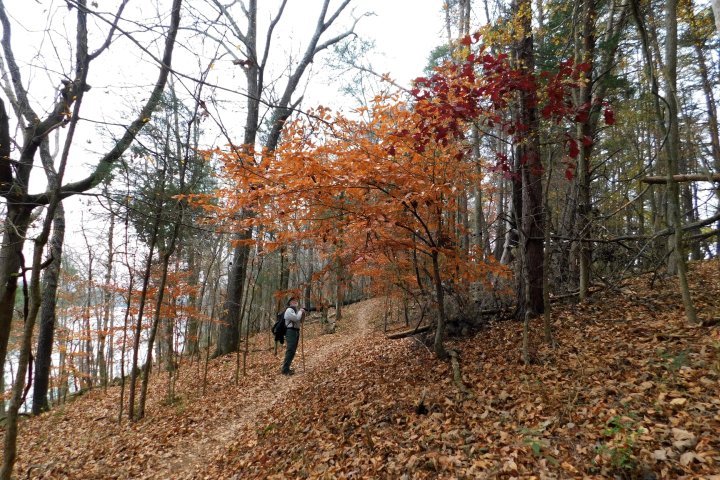
Are Leaves Really “Litter?” - Read ArticleLet's explore the one type of litter that is actually good for the environment, as well as the organisms whose lives depend on it.