Sadie Ford Heritage Farm
Sadie Ford Heritage Farm and Cultural Arts Center
Come learn about the agricultural heritage, farming practices, land use patterns, and natural history of Tennessee.
Sadie Ford Heritage Farm and Cultural Arts Center
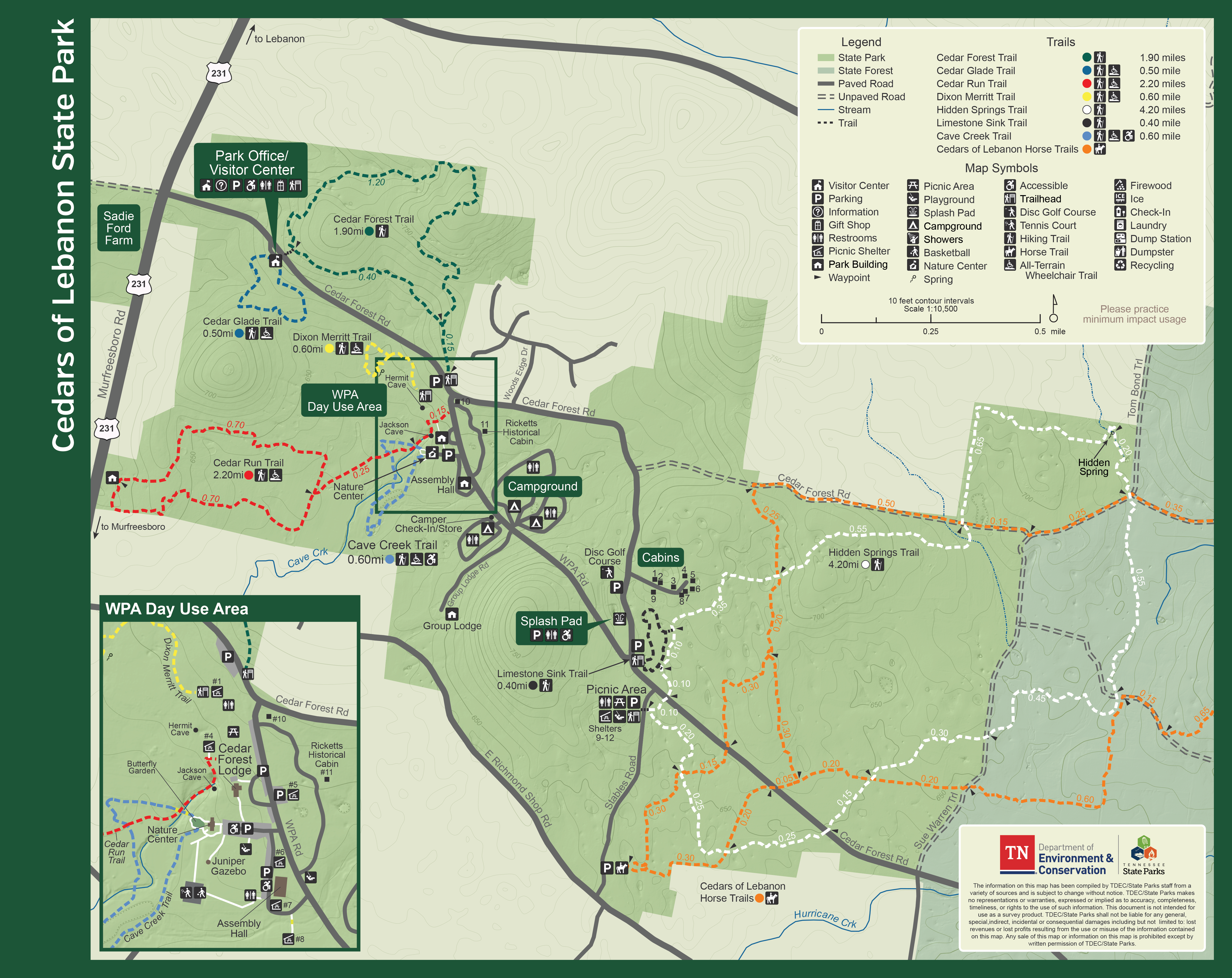
The Sadie Ford Heritage Farm and Cultural Art Center occupies 73.3 acres opposite the entrance to Cedars of Lebanon State Park and represents a cultural landscape with a high level of historic integrity.
The house and outbuildings, including a milking barn, livestock barn, and corncrib, are characteristic of an early-to-mid 20th-century working farm. As the last extant pre-park farm in the area, this property allows the park to create a furnished, functioning farm circa 1920 - 1937 for an immersive, year-round, educational experience of living history open to the public.
The park plans to partner with Wilson County artists and history-focused festival groups to demonstrate and teach traditional skills and crafts associated with farms of this era, such as riving wood shingles, cooking molasses, milling corn, weaving, gardening, and beekeeping among others. Interpretive programming can highlight the area's agricultural heritage, farming practices, land use patterns, and natural history as well as the story of displaced and relocated families during Roosevelt's New Deal programs.


The House
The 1920s-era house, built for local school teachers Delta and Sadie Ford, retains its historic character with an intact chimney, original wood windows featuring diamond encasement details, shed roof dormer, stone foundation, and farm setting. Additions to the rear of the house in the 1950s will be removed, and other postWPA-era or non-historic upgrades will be corrected during rehabilitation.
As the farm's centerpiece, the house will feature period furnishings and decorations, serving as a museum for artifacts, photographs, and documents to celebrate early cultural life and the park's history with interpretive displays on area pre-history and settlement, WPA, and 1940s army maneuvers. Options for facility rental and use as a classroom or meeting space are planned.
-
Milking Barn
The farm will feature early agricultural crops (cotton, tobacco, wheat, sorghum), heirloom vegetables, and farm animals (goats, chickens). A workshop with period tools, a blacksmith shop, period farm equipment, and animal stalls bring to life the sights of sounds of an early twentieth-century farm.
-
Management
The Sadie Ford Heritage Farm and Art Center are managed by Cedars of Lebanon State Park, which will coordinate the stabilization and restoration of all buildings and planned activities.


The Land
Approximately 65 acres of the property contain natural cedar glade, barrens, and woodland communities which are slated to be restored through best land management practices, improving habitat for wildlife and plants. The park can partner with local schools for outdoor classroom experiences and with universities to establish ecological and biological monitoring plots for field research.