Cedars of Lebanon Highlights
A Glade of History and Wonder
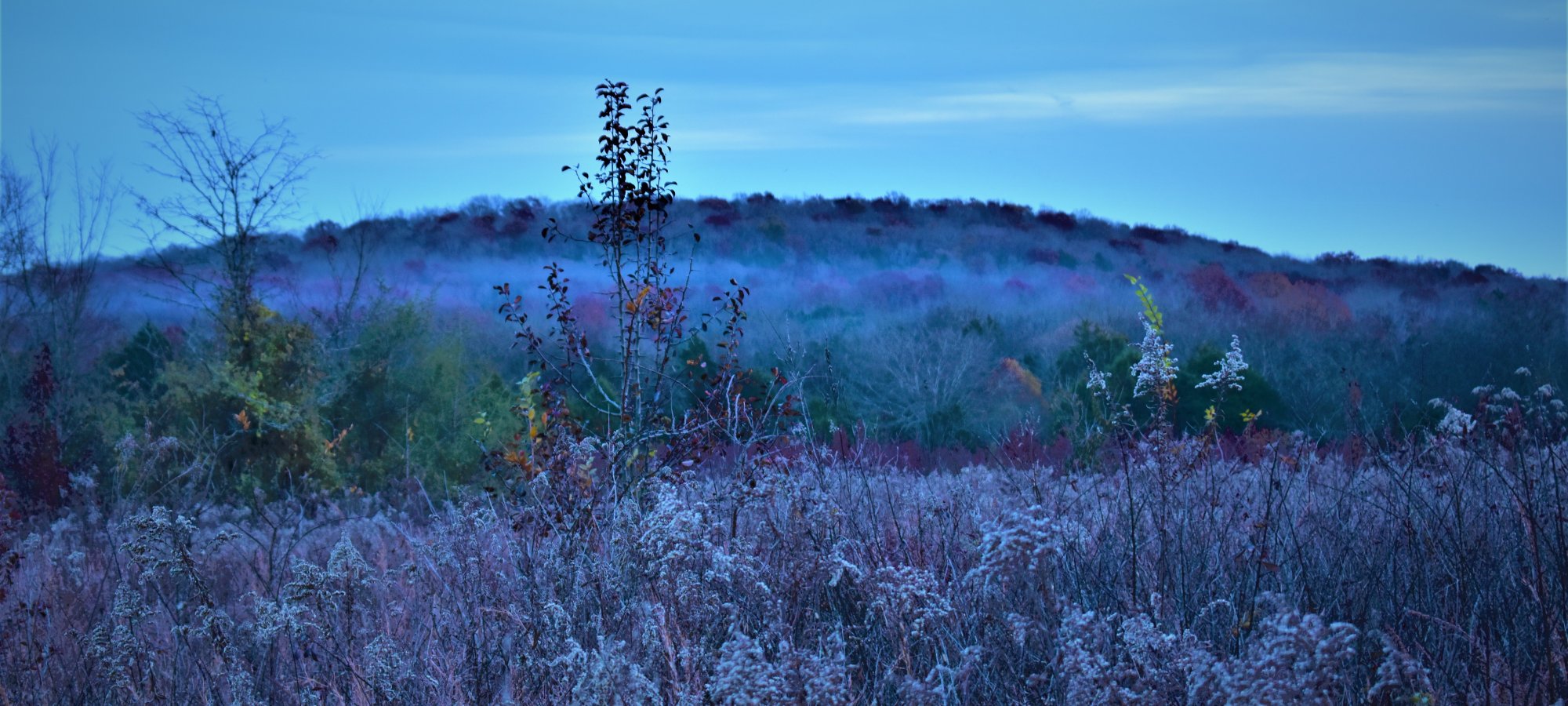
Discover the rare beauty and rich history of Cedars of Lebanon State Park, home to unique cedar glades, geology, and plant species. Explore the park’s diverse experiences, from horseback riding to wildflower hunting, and discover what makes this landscape truly one of a kind.
Explore the Park
Discover Cedars of Lebanon State Park
The park is co-managed with the Cedars of Lebanon State Natural Area, created to preserve its globally rare Cedar Glade ecosystem. The park's story is one of reclaiming land scarred by past agricultural practices and transforming it into a sanctuary for both nature and recreation. The park offers a place to explore the unique beauty of the cedar glades, hike among the sinkholes, and step back in time at the historic Sadie Ford Heritage Farm.

History
Established in 1937, Cedars of Lebanon State Park arose from lands previously used for agriculture, primarily small family farms raising livestock.
The park's name is derived from the abundance of cedar trees in the area which early settlers likened to the Cedars of Lebanon mentioned in the Bible.
The park's development is deeply intertwined with the New Deal era. During the Great Depression, the Civilian Conservation Corps (CCC) played a pivotal role in reclaiming the land and constructing many of the park's iconic structures, including the Cedar Forest Lodge, built between 1935 and 1937. These Works Progress Administration (WPA) structures stand as a testament to the era's efforts to provide employment and conserve natural resources.
During World War II, the park served as a training ground for military maneuvers, adding another layer to its rich history. Today, visitors can explore the park's historical features, including the Sadie Ford Heritage Farm, a 1920s homestead showcasing rural life during the Great Depression.
The park also protects the Sellers Farm State Archaeological Area which contains a Mississippian-era mound. The official Tennessee State Artifact, a 700-year-old Mississippian statue sometimes referred to as SANDY, was also found at Sellers Farm.
Dixon Merritt, a local newspaper man, led the early efforts to encourage the federal government to purchase the land at Cedars of Lebanon and build the park.
The park's history is preserved through ongoing maintenance of its historical structures, exhibits at the Dixon Merritt Nature Center, and guided tours that bring the past to life.
From the Ranger
-
The Perfect Day
Start your day with a hike on the Hidden Springs Trail, immersing yourself in the unique cedar glade ecosystem. Next, step back in time with a tour of the Sadie Ford Heritage Farm, experiencing rural life during the 1920s. Finish the day with a round of disc golf on the park's unique 18-hole course.
-
Insider Information
Venture beyond the well-trodden paths and discover the hidden gems of Cedars of Lebanon State Park. The Cedars of Lebanon State Natural Area, co-managed with the park, offers a chance to explore the rare Cedar Glade ecosystem along a gravel roadway that’s perfect for hiking and biking. Keep an eye out for the endemic Cedar Glade Wildflowers, a testament to the park's unique biodiversity.
-
Know Before You Go
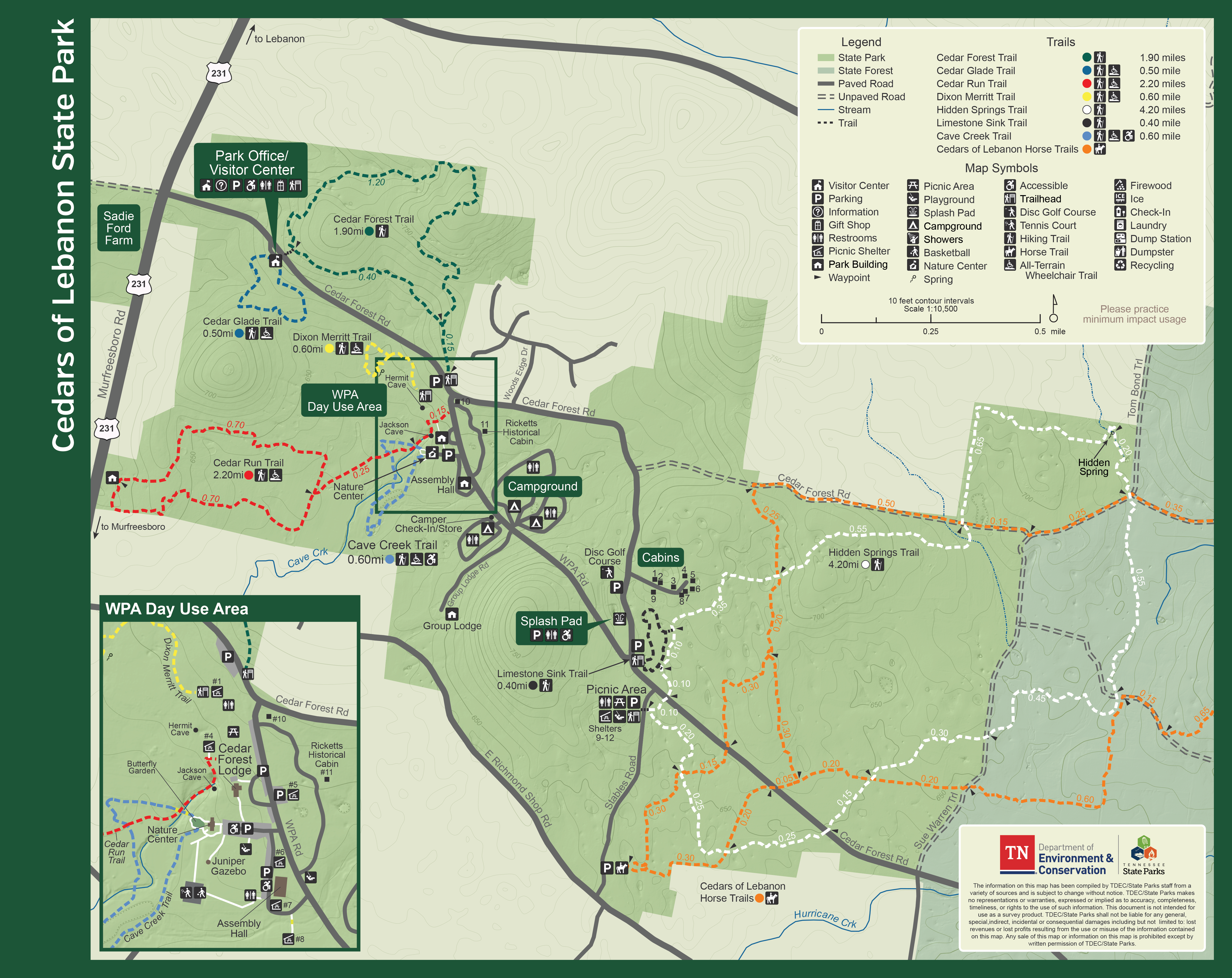
Cell service can be spotty in the natural area and forest, so plan accordingly. RVs and trailers should enter through the main park entrance on Murfreesboro Road (Highway 231), six miles south of Interstate 40.


Trails
Cedars of Lebanon State Park boasts a variety of trails, from the paved, ADA-accessible Cedar Glade Trail to the more challenging Hidden Springs Trail. These trails wind through the unique Cedar Glade ecosystem, offering opportunities to observe the park's diverse flora and fauna.
Caves
Explore the depths of Jackson Cave and Hermit Cave, located behind the Cedar Forest Lodge. These caves offer a glimpse into the park's geological wonders, with muddy passages, deep darkness, and an underground lake.

Plants and Animals
Cedars of Lebanon State Park is a haven for a diverse array of plant and animal life, each playing a vital role in the park's unique ecosystem.
In the 1940s, botanists noticed unique natural ecosystems found in and around Cedars of Lebanon State Park and Forest. These areas are natural rock gardens called Limestone Glades. The presence of glades is due to limestone rock coming so close to the surface of the ground that it causes the soil to be thin or absent. The small amount of soil that does exist along the cracks and potholes in the limestone slab has been built up over many years. Water and surface temperatures vary so much throughout the year that a harsh and inhospitable desert-like habitat is created with its own unique plant community, as 19 rare and endangered species of plants grow profusely here and nowhere else in the world.
From the vibrant wildflowers that carpet the glades to the elusive creatures that roam the forests, there's always something new to discover. Be sure to stop by the Dixon Merritt Nature Center and speak with a Park Ranger to learn more about the fascinating flora and fauna that call this park home.

Plant Types
- Eastern Red Cedar
- Tennessee Purple Coneflowers
- Endemic Cedar Glade Wildflowers
- Various Cedar Glade Species
Birds
Cedars of Lebanon is within a 10,000-acre state forest in the state's Inner Central Basin.
Characterized by thin limestone soils and little surface water, the area is forested with eastern red cedar or by hardwoods on low hills or where deep soils occur. Forests are interspersed with extensive level open cedar glades, unique habitats that support rare or endemic plants, and attract birds of open country such as indigo bunting, prairie warbler, field sparrow and yellow-breasted chat. Adjacent oak-hickory woods are home to forest species such as barred and eastern screech owl, tanagers, vireos, and several warblers. Over 121 species have been recorded.

Bird Species
- American Woodcock
- Barred Owl
- Black-and-White Warbler
- Black-crowned Night Heron
- Blue-gray Gnatcatcher
- Blue Grosbeak
- Canada Goose
- Carolina Wren
- Caspian Tern
- Cattle Egret
- Chuck-will’s-widow
- Common Loon
- Common Nighthawk
- Common Tern
- Common Yellowthroat
- Cooper’s Hawk
- Double-crested Cormorant
- Eastern Screech-Owl
- Eastern Towhee
- Eastern Whip-poor-will
- Field Sparrow
- Forster's Tern
- Great Blue Heron
- Great Crested Flycatcher
- Great Egret
- Horned Lark
- Indigo Bunting
- Kentucky Warbler
- Killdeer
- Osprey
- Ovenbird
- Pied-billed Grebe
- Pileated Woodpecker
- Prairie Warbler
- Prothonotary Warbler
- Red-eyed Vireo
- Red-headed Woodpecker
- Red-shouldered Hawk
- Red-tailed Hawk
- Song Sparrow
- Summer Tanager
- Swamp Sparrow
- Tufted Titmouse
- Vireos
- Warblers
- White-eyed Vireo
- White-throated Sparrow
- Wild Turkey
- Wood Thrush
- Yellow-billed Cuckoo
- Yellow-breasted Chat
- Yellow-throated Vireo
Animals
Wildlife enthusiasts will find plenty to observe, with opportunities to spot various bird species, including waterfowl, songbirds, and birds of prey.

Animal Species
- Spiders
- Venomous Snakes
- Birds
- Squirrels
- Raccoon
- Red Fox
- Gray Fox
- White-tailed Deer
Inspiration
-
3 Camping Destinations Less Than an Hour From Nashville
3 Camping Destinations Less Than an Hour From Nashville - Read ArticleYou don’t have to travel far from Nashville to enjoy a restful night under the stars. Camping offers fresh air, better sleep, and affordable escapes for a clear mind. -
Parks Planting for Pollinators
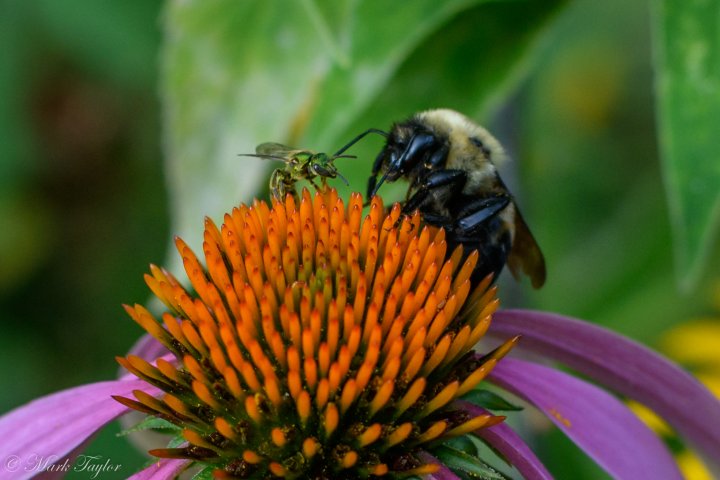
Parks Planting for Pollinators - Read ArticleLearn how state parks are restoring pollinator-friendly spaces and encourages individuals to help by supporting native plants and conservation efforts. -

Wonderful Winter Hikes in Tennessee
Wonderful Winter Hikes in Tennessee - Read ArticleWinter is one of the best times to hike at Tennessee State Parks, with quiet trails, fewer bugs, clear views, and dramatic landscapes of icicles and fresh snow. -

Unique Historic Cabins With Modern Comfort
Unique Historic Cabins With Modern Comfort - Read ArticleEscape the hustle and relax in a renovated historic cabin. These charming stays blend rich history with modern comfort across five Tennessee State Parks.