Pinson Mounds Highlights
A Journey Through Time
Step into a world where ancient mysteries meet natural beauty at Pinson Mounds State Archaeological Park. This park protects one of the largest Middle Woodland period mound complexes in the United States, inviting you to explore the legacy of a civilization that thrived here centuries ago.
Discover Pinson Mounds State Archaeological Park
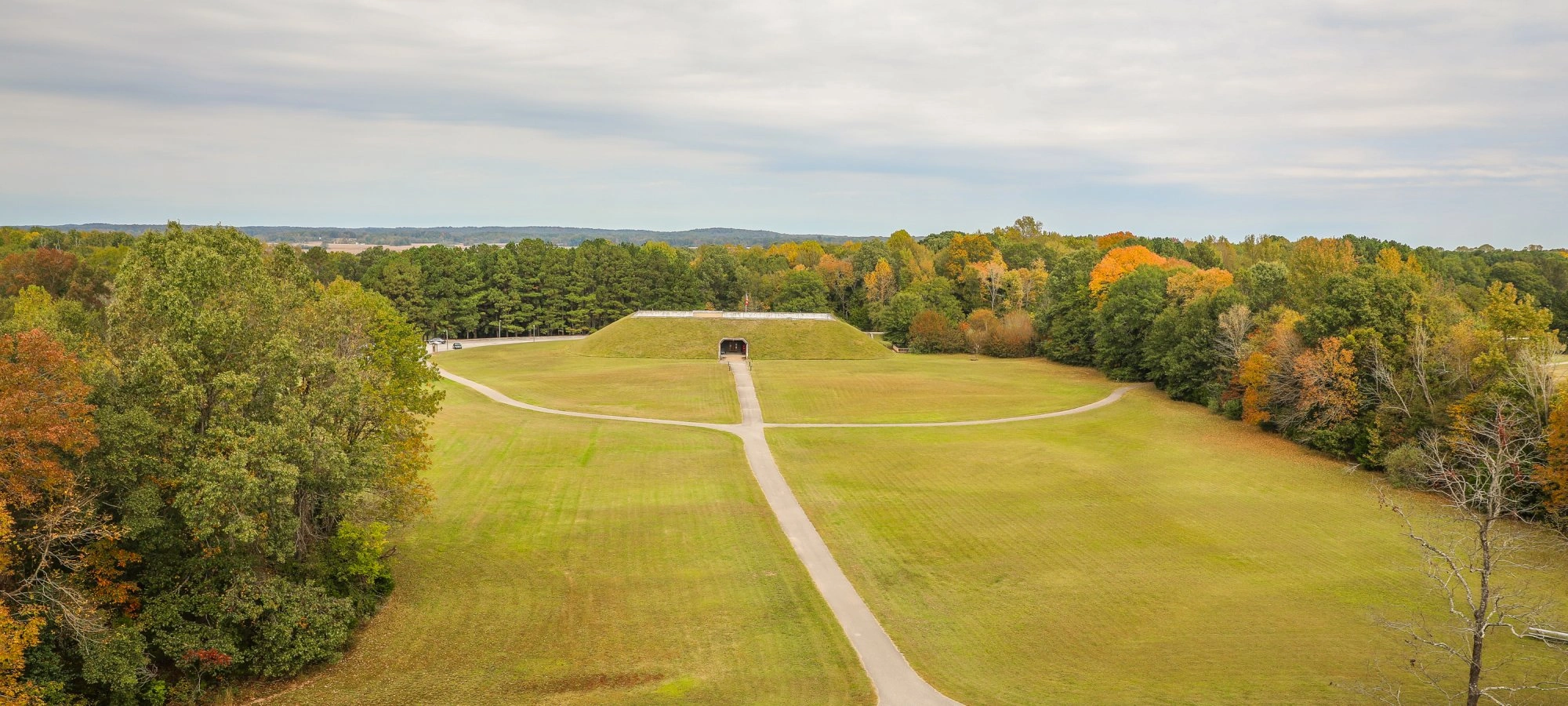
Pinson Mounds State Archaeological Park is a portal to the past: a place where the echoes of an ancient culture resonate through the landscape. Imagine a thriving community of mound builders, carefully constructing monumental earthworks for ceremonial and social purposes. Today, you can walk in their footsteps, climb the towering Sauls Mound, and ponder the mysteries of their beliefs and way of life. The park exists to preserve and interpret this significant archaeological site, offering visitors a unique opportunity to connect with Tennessee's prehistory. A visit to Pinson Mounds State Archaeological Park is an invitation to step back in time, to contemplate the ingenuity and spirituality of those who came before us, and to appreciate the enduring power of the past.
History
The story of Pinson Mounds State Archaeological Park begins long before its establishment as a state park.
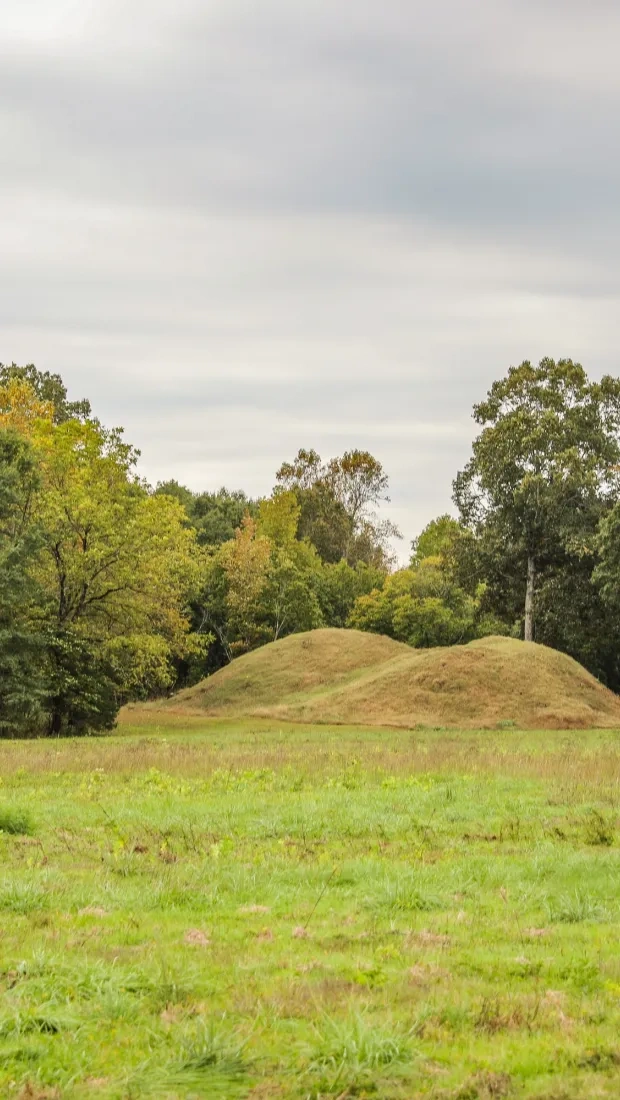
The site dates to the Middle Woodland Period (200 B.C. to 500 A.D.), when a sophisticated culture of mound builders flourished in the area. These people constructed at least 17 mounds, including Sauls Mound, one of the tallest Middle Woodland mounds in the United States, standing at 72 feet high. The complex served as a ceremonial center, a place for gatherings, rituals, and astronomical observations.
Over time, the mound builders disappeared, leaving behind their monumental legacy. The site remained largely undisturbed for centuries, gradually being reclaimed by nature. It wasn't until the 19th century that renewed interest in Pinson Mounds emerged. In 1974, the area was officially established as Pinson Mounds State Archaeological Park, dedicated to preserving and interpreting this important archaeological site.
Since its establishment, the park has been the site of ongoing archaeological research, with excavations revealing valuable insights into the lives and culture of the mound builders. Today, visitors can explore the park's museum, which features exhibits on the history and archaeology of the site, as well as authentic artifacts. The park also offers guided tours, Ranger-led programs, and special events throughout the year, providing opportunities to learn more about the mound builders and their world.
From the Rangers
-
The Perfect Day
Begin your day with a visit to the park museum to gain a comprehensive understanding of the site's history and significance. Then embark on a self-guided tour of the mounds, climbing Sauls Mound for panoramic views and strolling along the boardwalk to observe the diverse wildlife. Conclude your day with a relaxing picnic amidst the serene beauty of this ancient landscape.
-
Insider Information
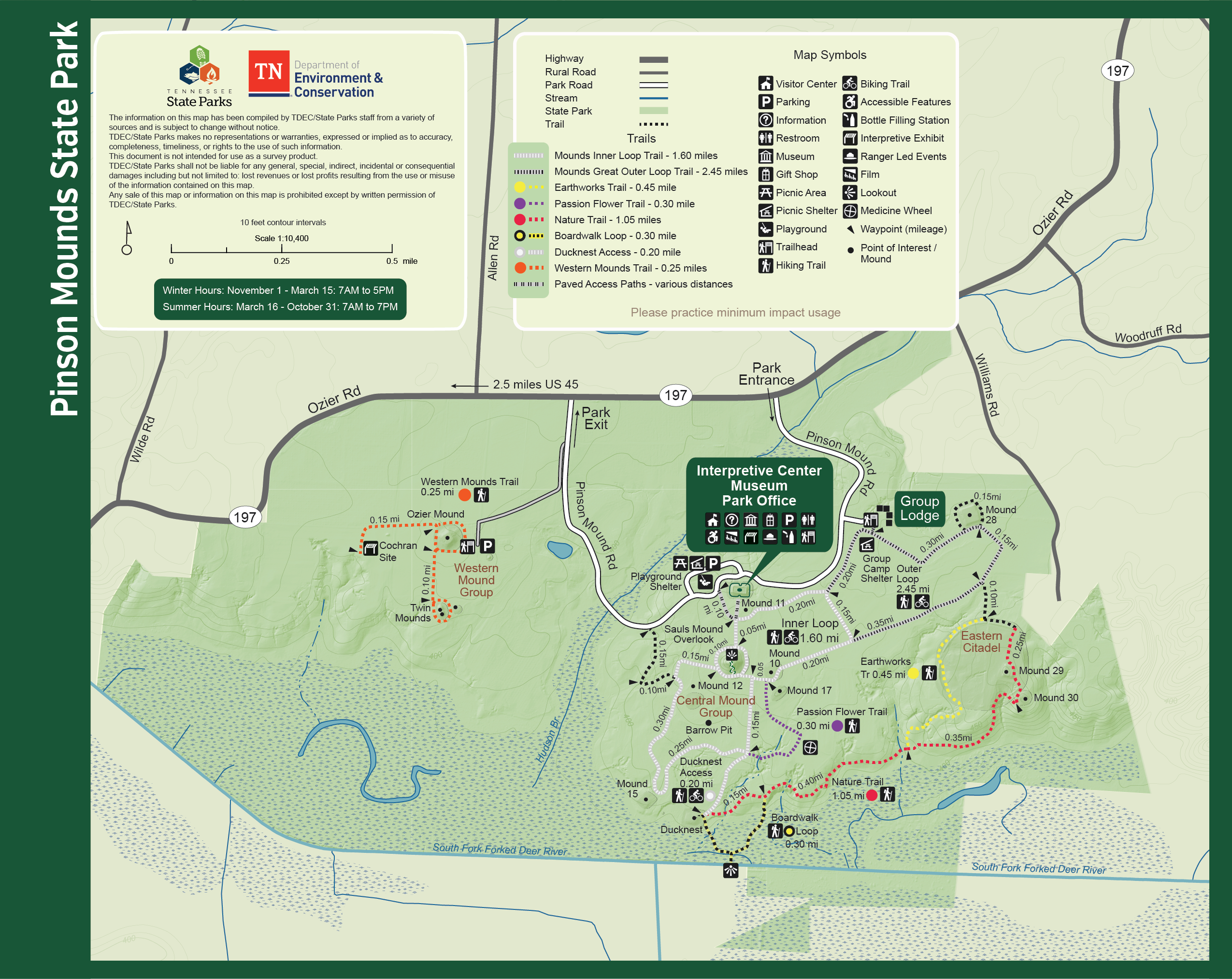
Venture beyond the well-trodden paths and discover the hidden gems of Pinson Mounds State Archaeological Park. Cross the bridges on the Passion Flower Trail, offering intimate views of the surrounding forest and wetlands. Explore the cypress tree swamp by following the boardwalk to visit the river overlook or head out towards the Eastern Citadel to explore the Earthworks Trail. Keep an eye out for special after-hours seasonal events hosted by the Park Rangers.
-
Know Before You Go
Cell service within the park is limited, especially on the Nature Trail, but you may find service in the Central Mound Group area and the Group Camp Parking Lot. Wi-Fi is available in the museum during operational hours and in the Group Lodge for overnight guests. Remember to stay on marked trails, especially near the bluffs, and respect the park's regulations by staying off the earthworks and mounds.


Land and Water
-
Trails
Pinson Mounds State Archaeological Park offers a network of trails that wind through the park, providing opportunities to explore the mounds, forests, and wetlands. The Nature Trail is particularly popular for its diverse flora and fauna, while the trails leading to the summits of the mounds offer panoramic views of the surrounding landscape.
-
Water Features
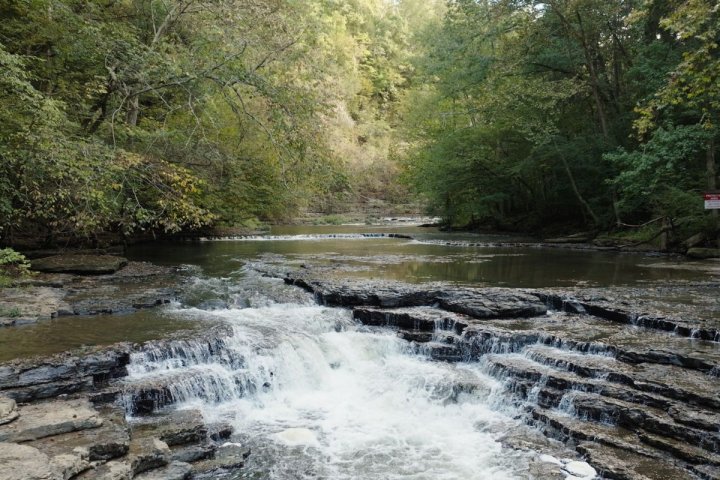
The south fork of the Forked Deer River flows through the park, creating a rich habitat for wildlife and offering scenic views for visitors. A cypress swamp and an upland swamp also add to the park's unique ecosystem.
-
Wetlands
Pinson Mounds State Archaeological Park features significant wetlands, including a cypress swamp and an upland swamp. These areas are vital for wildlife habitat and offer visitors a chance to observe a unique ecosystem.


Plants
Pinson Mounds boasts a diverse array of flora, including native wildflowers that bloom throughout the year.
The Nature Trail is an excellent place to observe these plants, and Park Rangers can provide valuable insights into the park's unique vegetation.
Plant Types
- American Persimmon
- Cardinal Flower
- Jack-in-the-Pulpit
- Ironweed
- Butterfly Milkweed
- Purple Cone Flower
- White Ash
- Sassafras
- Eastern Red Cedar
- Carolina Ruellia
Birds
Bird habitats within the park include old fields and upland and bottomland forest.
Over 130 species of birds have been identified.

Bird Species
- Red-tailed Hawk
- Northern Bobwhite
- Barred Owl
- Acadian Flycatcher
- Summer Tanager
- Indigo Bunting
- Dickcissel
- Eastern Meadowlark
- White-eyed Vireo
- Song Sparrow
- Warbler spp.
- Mississippi Kite
- Wild Turkey

Animals
The park is home to a variety of wildlife.
Several overlooks and open fields provide excellent opportunities for wildlife viewing, and the park's boardwalk offers a chance to observe aquatic animals in their natural habitat.
Animal Species
- Deer
- Birds
- Eastern Box Turtle
- Fox Squirrel
- Eastern Cottontail Rabbit
- Green Frog
- American Bumblebee
- Butterfly spp.
- Eastern Fence Lizard
- Three-lined Salamander
Inspiration
-
Two Day Getaways Outdoors in Tennessee
Two Day Getaways Outdoors in Tennessee - Read ArticleA quick getaway can be just what we need to get back into the rhythms of everyday life. To help you take that much-needed vacation, we’ve put together six ideas for two-day getaways at Tennessee State Parks across the state. -

Parks Planting for Pollinators
Parks Planting for Pollinators - Read ArticleLearn how state parks are restoring pollinator-friendly spaces and encourages individuals to help by supporting native plants and conservation efforts. -

Wonderful Winter Hikes in Tennessee
Wonderful Winter Hikes in Tennessee - Read ArticleWinter is one of the best times to hike at Tennessee State Parks, with quiet trails, fewer bugs, clear views, and dramatic landscapes of icicles and fresh snow. -

A Year in Birds at TN State Parks
A Year in Birds at TN State Parks - Read ArticleIn Tennessee, at least 423 species have been recorded since 1900, and most of them have been viewed in one of our state parks at one time or another.