
Scott's Gulf Safety
Safety at Scott’s Gulf Wilderness State Park
At Scott’s Gulf Wilderness State Park, visitors may encounter wildlife such as snakes, bears, ticks, yellow jackets, and even the occasional skunk. In addition to wildlife, being prepared and aware of the area around you will be very important while exploring our park.
We invite you to review the guides and caution information as well as the recommendations on this page to help you have a safe, enjoyable visit.
Hiking Safety
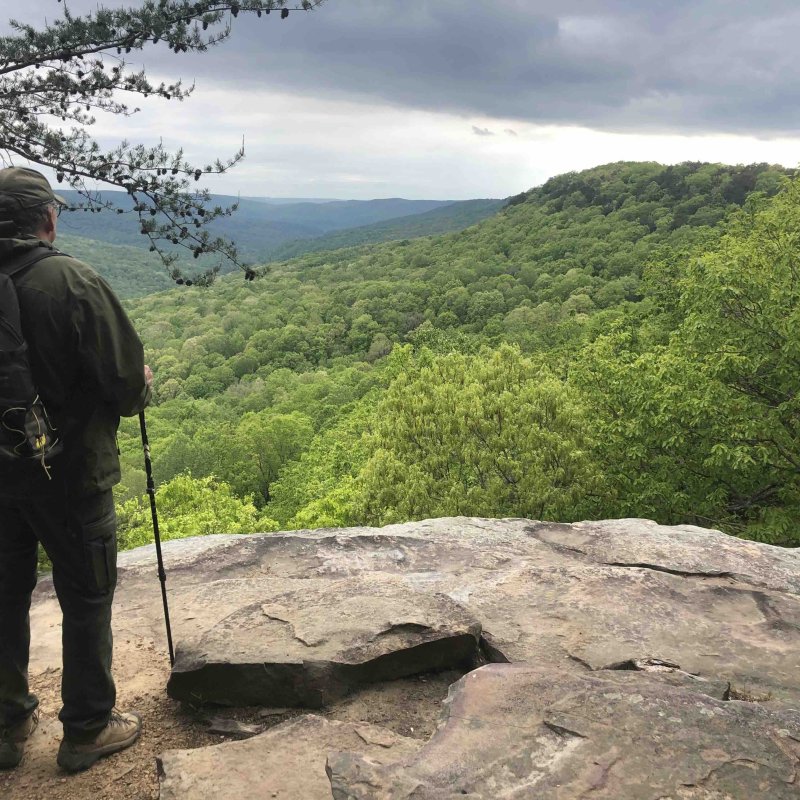
Scott’s Gulf has a variety of trails for every ability of hiker or walker. There are trails that are an easy saunter, such as the 300-yard walk out to the breathtaking Welch’s Point, or the 0.33-mile walk out to Yellow Bluff. However, some of the trails, such as the trail down to Virgin Falls, are tough. Planning ahead will make your trip go more smoothly.
Strenuous Hikes
There are a number of strenuous hikes at Scott's Gulf, including the 4.3-mile one-way Virgin Falls Trail (8.6 miles round-trip) . These trails take a significant amount of time and fitness level to complete as they are both long and can fluctuate up to 2,400 feet of elevation (1,200 feet in and 1,200 feet out) during the trek.
Make sure that you have enough time to complete the hike. If you are hiking into Virgin Falls, get an early start. Whether you come in from the Rylander Cascades Trail (the west side) or do the traditional trail from the east (Scott’s Gulf Road), give yourself plenty of time. For a day hike, at a steady pace, allow 5 to 8 hours. Park management asks that you not begin any of the longer hikes after 2:00 PM. Park staff recommend adding a small headlight in your pack, just in case.
Make sure you tell someone which the trail you are hiking. We get frantic calls from family members regularly, worried about their overdue hikers. But usually they aren’t lost or injured, they just got a late start or didn’t allow enough time for the hike. Remember, cell phone signals can be non-existent down in the canyon, or “Gulf.” If you tell your family members that you will call them once you get the camp set up, you may find out, especially if you are camping down in the Gulf at Virgin Falls or on the Caney Fork, that you don’t have a signal. Some hikers love that! But it may worry your family if they were expecting a check-in phone call.


Wildlife, Ticks, and More
Scott’s Gulf Safety Information has to include a few notes on interacting with (or rather, NOT interacting with) wildlife in the area. Here are a few pointers about wildlife you may encounter while exploring Scott’s Gulf:
- Always wear insect repellent when ticks are out in warmer months.
- Leave wildlife alone, do not try to capture, pet, feed, poke, prod, or harass any wildlife whatsoever.
- Always observe from a distance.
- Give snakes plenty of distance and go around them.
- Warn others of any potential venomous snakes on the trail.
Wildlife Encounters
-
Snakes
There are two venomous snake species found in the park, the Copperhead and the Timber Rattlesnake. Neither species is aggressive, only striking when they feel cornered or surprised.
- Never reach or step next to a rock or log without looking first.
- If you are camping at night in the park, don’t walk around barefoot or in sandals. Both of these snakes have “loreal pits” that are heat sensing and they rarely strike a covered leg or foot.
- If you really don’t like snakes, consider hiking in the winter, when they are in hibernation.
- All snakes in the park are protected as part of the park’s wildlife.
-
Bears
There have been bear sightings in the area, but encounters are rare. It is recommended that you do not take any food into your tent at night to avoid both bears (and raccoons!).
-
Ticks
Ticks are basically torpid if the temperatures are cool (below 55 degrees, for instance). But above that temperature, especially on south facing slopes or sunny, grassy areas, they will quickly become active. Hikers who stay on the cleared trails are less likely to pick up ticks.
- The rangers usually use permethrin on their boots and pants legs to deter ticks when they are in season.
- Rangers also use DEET on their pants legs, but you should not use DEET on your boots or shoes since DEET can melt plastic.
Seed ticks are the larval hatchlings of the mature ticks, and although you can pick up some small ticks in the spring, the actual hatch out occurs mid-to-late summer. If you do get into a batch of seed ticks, the rangers usually use the DEET spray directly on the larval ticks. This will kill most of them, and reduce the chances of them embedding onto your skin.
-
Yellow Jackets
Yellow Jackets are a native small colonial bee that usually nests in the ground. While they are year-round residents of the area, they can become a nuisance mainly in the mid-to-late summer.
During mid-to-late summer, their underground nests become large enough so that the yellow jackets, if disturbed, will come swarming out to try to fend off what they perceive is an attacker. If you are hiking in a group, the first hiker usually causes the disturbance, and then the folks following the lead hiker get the benefit of this disturbance. Here are a couple of tricks to avoid the pesky little bees: if you see something that looks like a cloud of flies roiling around on one side of the trail or the other, that is most likely a group of yellow jackets, swarming out to defend their nest. Just track around them, and stay out of the cloud.
If you wander into that small cloud unknowingly, the yellow jackets will often attach to your clothing, looking for a patch of bare skin. To minimize encounters with them, wear long pants during mid-to-late summer when the yellow jackets are active. They are ground nesting, so if you encounter some yellow jackets, they will normally sting you on the leg first. Sometimes long pants, even in the heat of summer, can be helpful.


Hunting Safety
Scott’s Gulf shares its boundary with two units of the Tennessee Wildlife Resources Agency (TWRA). These properties adjoin each other and even share a couple of trails. It is important to be familiar with designated park trails and be mindful of staying on trail while hiking Scott’s Gulf Wilderness State Park during hunting seasons. These properties are called the Bridgestone-Firestone Centennial Wilderness Wildlife Management Area, and this includes the Big Bottom Unit of the WMA. These two areas that join the park and are managed by TWRA have different management regimes.
Hunters must always be aware of what is in front of and beyond their target. Other hunters, hikers, vehicles, or buildings could be “downrange” of a potential target. Hunters should stay alert and never shoot in a direction that might have hikers, vehicles, or buildings. Not fully identifying the game target, or indulging in “Brush shots” is incredibly dangerous and indicates poor sportsmanship.
Hunting IS NOT allowed within 100 feet of our trails, campsites, roads, or structures.
Hiking During Hunting Seasons
Hiking is permitted on Scott's Gulf Wilderness State Park trails during hunting seasons. Hikers that are hiking during hunting seasons are advised to wear bright clothing, especially blaze orange for safety reasons. Please stick to the trails when traversing huntable areas.
Tip for Hikers: The gun season portion of deer season normally begins the weekend prior to Thanksgiving. During this opening week of gun season, it is recommended to plan your hike using the non-huntable portion of Scott’s Gulf Wilderness State Park. The park contains miles of trails on the non-huntable lands where hunter/hiker interactions should not occur.
