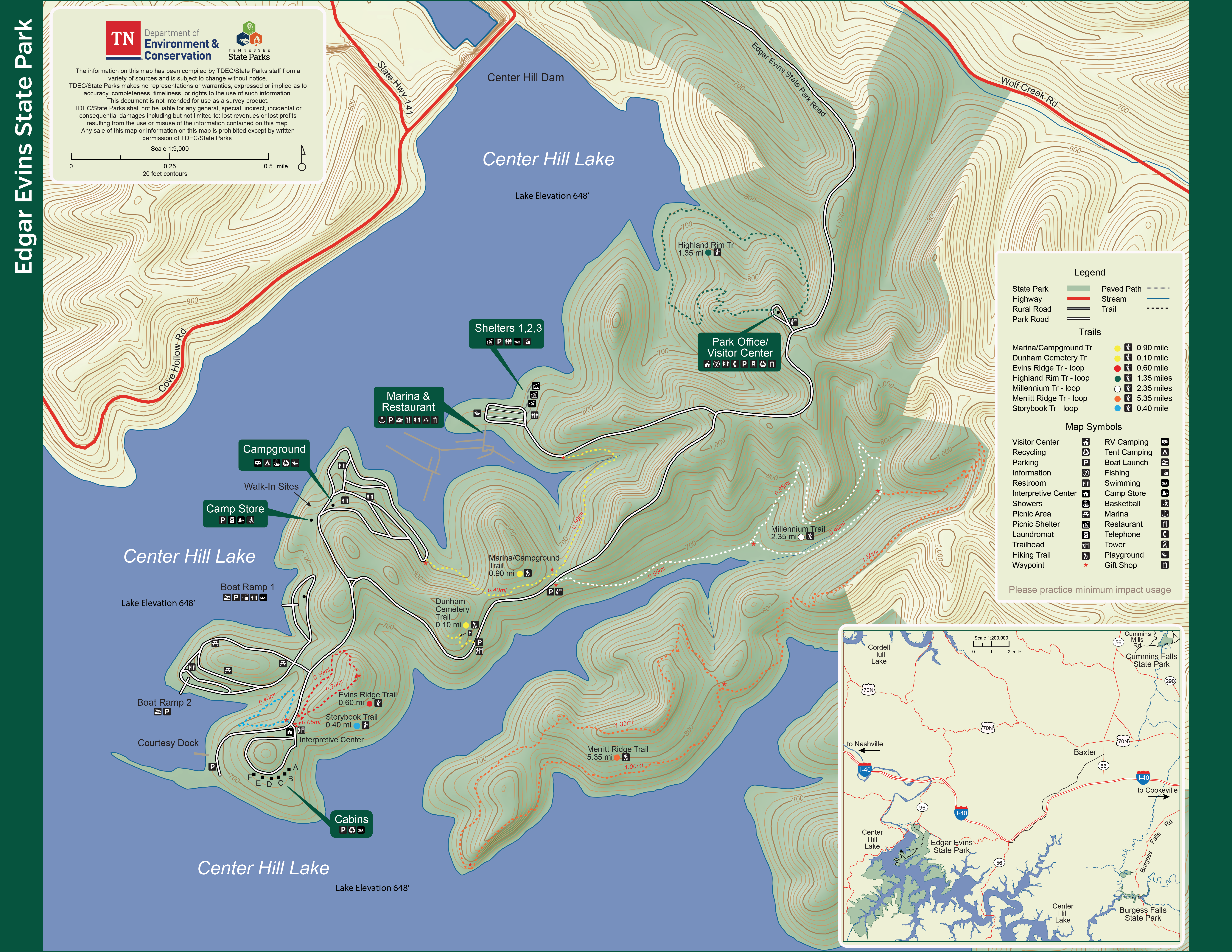
Edgar Evins Highlights
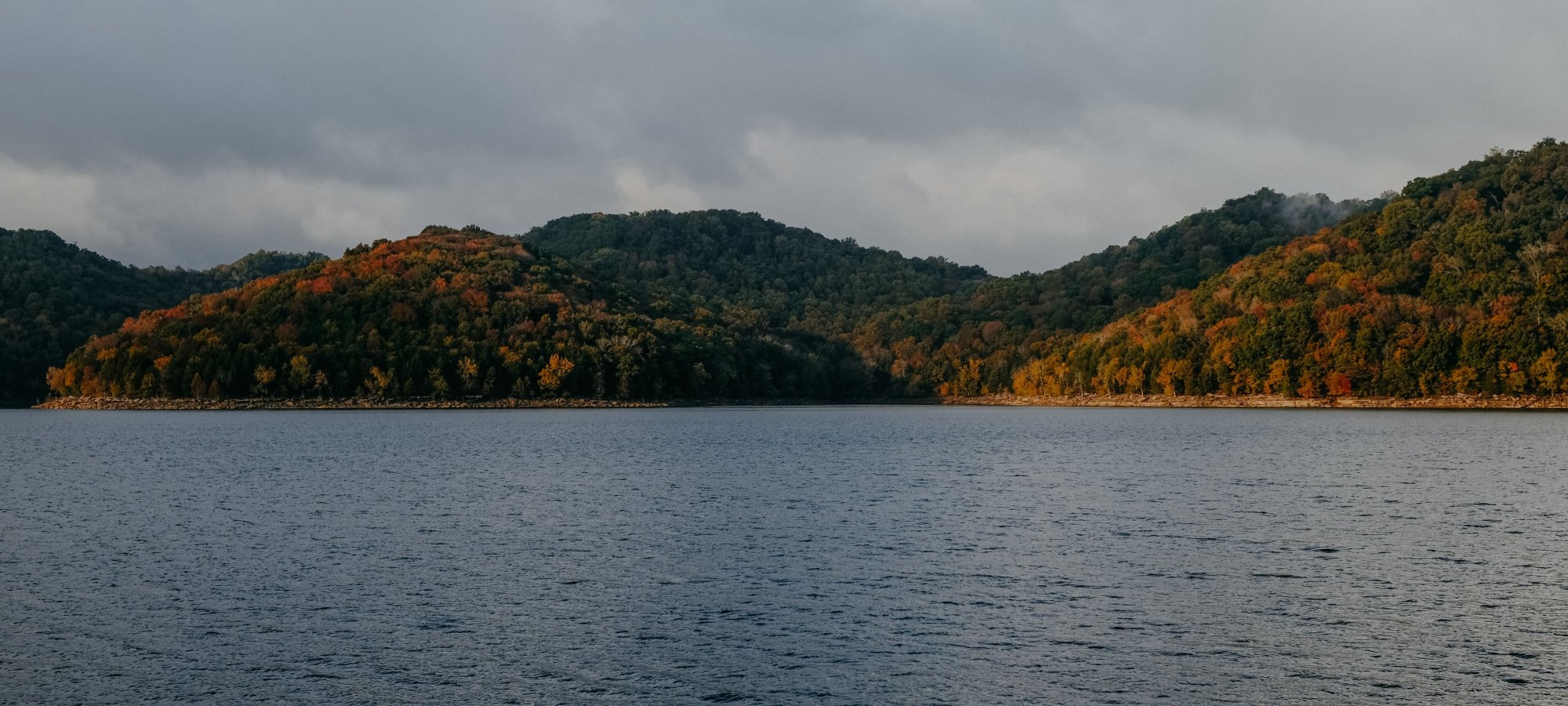
A Jewel on Center Hill Lake
Edgar Evins State Park offers a stunning escape into nature's embrace. With its breathtaking views of Center Hill Lake, lush forests, and rich history, this park promises an unforgettable experience for every visitor. Discover the story behind this beloved destination and prepare to be captivated by its beauty.
Discover Edgar Evins State Park
Edgar Evins State Park stands as a tribute to the legacy of families and communities in this region, offering visitors a chance to connect with nature, explore the past, and create lasting memories on the shores of Center Hill Lake. Come and experience the beauty and tranquility envisioned for this recreational space. It is truly a place where the spirit of Tennessee thrives amidst stunning natural landscapes.
History
The story of Edgar Evins State Park begins long before its official establishment on August 2, 1975.
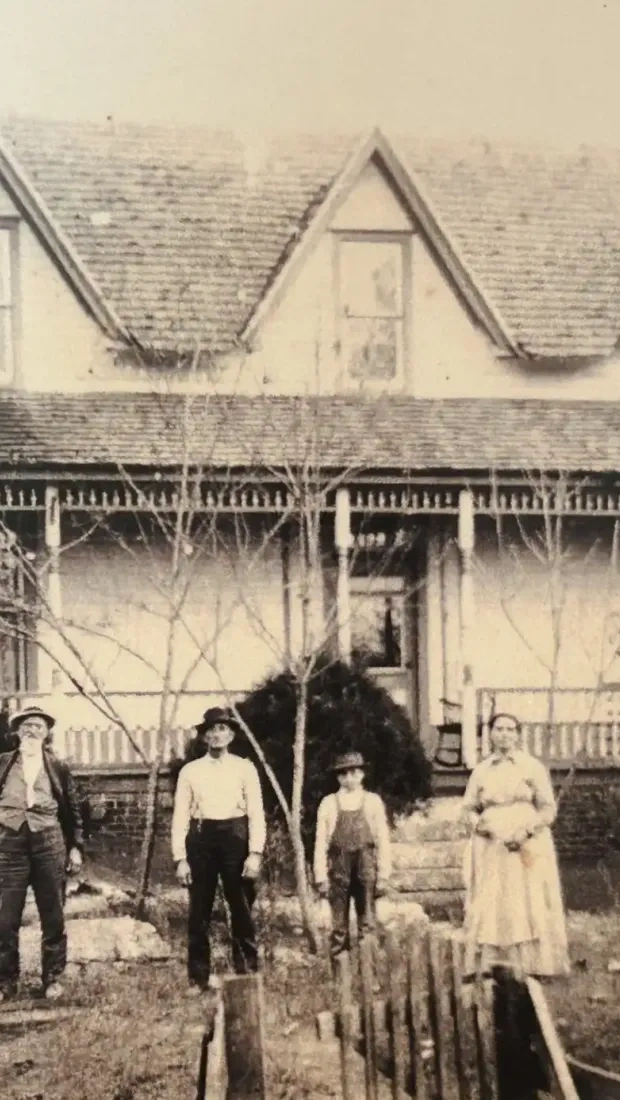
The land, primarily steep hillsides, was once used for farmland, with old furrows still visible after light snow. The park's story is intertwined with the creation of Center Hill Lake itself.
In the 1940s, the Caney Fork River Valley was forever changed when the U.S. Army Corps of Engineers impounded the river, creating the lake for flood control and hydroelectric power. The creation of Center Hill Lake in 1948 dramatically reshaped the region, displacing families and communities that had called the Caney Fork River Valley home for generations.
In time, the recreational potential of this new landscape was recognized by Congressman Joe L. Evins, who championed the creation of a state park to preserve this land for future generations to enjoy. The park is named after James Edgar Evins, a prominent figure in Tennessee politics and the father of Congressman Joe L. Evins. Congressman Evins played a crucial role in securing the park's creation, to honor his father's legacy and provide a recreational space for his constituents.
Today, the park preserves remnants of this past, with several old homesites scattered throughout the area. One notable site is the Hoggard home in Wolf Creek, accessible via the Millennium Trail. Another is the homesite of Lon Christian, an African American sharecropper who lived in Hoggard Hollow. These sites offer glimpses into the lives of those who lived and worked in the valley before the lake's creation, providing a poignant reminder of the region's rich history.
The park's Interpretive Center, located near the cabin area, features exhibits that highlight life on the Caney Fork River before the impoundment, offering visitors a deeper understanding of the area's cultural heritage.
From the Rangers
-
The Perfect Day
Start your day with a hike on one of the park's seven trails, enjoying the scenic views and diverse flora and fauna. Next, head to the Visitor Center and climb the observation tower for panoramic views of Center Hill Lake and the Center Hill Dam. Conclude your day with a picnic at Boat Ramp 2, where you can witness a breathtaking sunset over the lake.
-
Insider Information
For a truly unforgettable experience, head to the courtesy dock at sunset. Whether you choose to watch from your car or stroll down to the dock, you'll be treated to a stunning display of colors as the sun dips below the horizon, painting the sky and lake in vibrant hues. The peninsula also offers a fantastic vantage point for this natural spectacle.
-
Know Before You Go
Cell service can be limited in the campground and cabin areas, with Verizon and AT&T generally offering the best reception. Wi-Fi is available at the campground store and the Interpretive Center. Be aware that some lower campsites can flood during late winter and early spring due to rising lake levels.


Trails
Edgar Evins State Park boasts seven trails, each offering a unique perspective on the park's natural beauty. The Highland Rim Nature Trail, Millennium Trail, and Merritt Ridge Trail are particularly popular for their diverse flora and scenic views.
-
Mountains and Vistas
While not within a mountain range, Edgar Evins State Park offers stunning vistas from its ridgetops. The park road ascends to the top of Moss Ridge, providing panoramic views of the surrounding landscape. Scenic viewpoints can also be found along the roadway past the water tower and in the Edgar Evins Marina parking area.
-
Water Features
Center Hill Lake is the centerpiece of Edgar Evins State Park, offering opportunities for swimming, boating, and fishing. The park provides public access to areas along the lake's shores, allowing visitors to enjoy the water, even without a boat.


Plants
The park is mostly covered by various tree species, with oak, maple, and hickory being the predominant species.
Visit the park during the spring to see the plethora of spring ephemeral wildflowers growing in the understory of the forest, which can be viewed from the park’s trails. Ask a Park Ranger about the native pollinator corridor that contains more than 24 species of flowering plants, providing pollen, nectar, seeds, and habitat for various bees, butterflies, moths, and birds.

Plant Types
- Beech (American Beech)
- Cherry (native Prunus)
- Elm (native species)
- Linden (Basswood)
- Swamp Oak (Willow Oak)
- Sweetgum
- Sycamore (American Sycamore)
- Tulip Poplar (Tulip Tree, State Tree)
- Tupelo (Water tupelo)
- Black Walnut
Birds
Visitors may find a large variety of birds at Edgar Evins State Park.
There are multiple trails and locations throughout the park that give clear visibility to the birds.

Bird Species
- Acadian Flycatcher
- American Coot
- American Goldfinch
- American Kestrel
- American Goldfinch
- American Redstart
- Bald Eagle
- Baltimore Oriole
- Barred Owl
- Bay-breasted Warbler
- Belted Kingfisher
- Black-crowned Night Heron
- Blackpoll Warbler
- Blue-gray Gnatcatcher
- Blue-winged Teal
- Blue-winged Warbler
- Bonaparte's Gull
- Broad-winged Hawk
- Brown Thrasher
- Cape May Warbler
- Carolina Wren
- Caspian Tern
- Cerulean Warbler
- Chipping Sparrow
- Common Loon
- Common Nighthawk
- Common Yellowthroat
- Cooper’s Hawk
- Field Sparrow
- Forster's Tern
- Great Blue Heron
- Great Crested Flycatcher
- Green Heron
- Hooded Warbler
- Horned Grebe
- Indigo Bunting
- Kentucky Warbler
- Lesser Scaup
- Louisiana Waterthrush
- Magnolia Warbler
- Nashville Warbler
- Northern Flicker
- Northern Parula
- Orchard Oriole
- Osprey
- Ovenbird
- Palm Warbler
- Pied-billed Grebe
- Pileated Woodpecker
- Pine Warbler
- Prairie Warbler
- Prothonotary Warbler
- Red-bellied Woodpecker
- Red-eyed Vireo
- Red-shouldered Hawk
- Red-tailed Hawk
- Ring-billed Gull
- Rose-breasted Grosbeak
- Scarlet Tanager
- Sharp-shinned Hawk
- Song Sparrow
- Spotted Sandpiper
- Summer Tanager
- Swamp Sparrow
- Tennessee Warbler
- White-breasted Nuthatch
- White-crowned Sparrow
- White-eyed Vireo
- Wintering Waterfowl
- Wood Thrush
- Worm-eating Warbler
- Yellow-bellied Sapsucker
- Yellow-billed Cuckoo
- Yellow-breasted Chat
- Yellow-throated Vireo
Checklists and Flyers
Animals
Various bird species, reptiles, and mammals can be commonly found at the park.
In the late spring and summer months, around 15 species of fireflies can be seen throughout the park at night. Ask a Park Ranger about the specific park areas that are better for viewing wildlife, including the observation tower at the park office which is an excellent viewing area to watch birds.

Animal Species
- Copperhead
- Timber Rattlesnake
- Squirrels
- Skunks
- Raccoon
- Bobcat
- Deer
Inspiration
-

5 things to do near Edgar Evins State Park
5 things to do near Edgar Evins State Park - Read ArticleEdgar Evins State Park is located just 65 miles east of Nashville along the banks of Center Hill Lake. The 6,000-acre park sits in a steep, hilly area of Tennessee known as the Eastern Highland Rim. The park has cabin and campground sleeping options, and is a perfect place to stage a weekend on the lake or a visit to one of the other attractions in the Cookeville area. Let’s look at where to stay and what to do on your next visit: -

One of the Best Kid-Friendly Cabin Getaways in Middle Tennessee
One of the Best Kid-Friendly Cabin Getaways in Middle Tennessee - Read ArticleWe were excited to discover the story of Edgar Evins State Park during an extended October stay. In my family of two full-time educators and two children under five, by the time Fall Break rolls around, we’re ready for a disconnect into nature with the right amenities that won’t leave us exhausted at the end of our vacation. Located just 65 miles east of our home in Nashville, Edgar Evins checked all the boxes to offer us just that. -
3-Day Winter Waterfall Getaway in Middle Tennessee
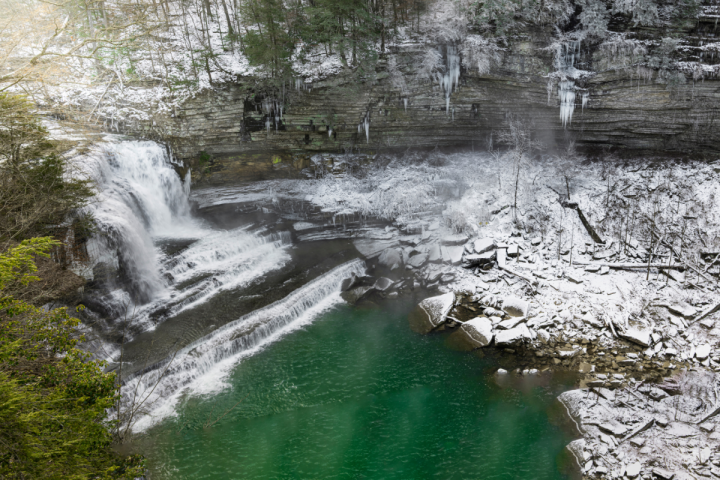
3-Day Winter Waterfall Getaway in Middle Tennessee - Read ArticleThis three-day trip itinerary is centered around Edgar Evins State Park and visits two iconic waterfalls in the surrounding Middle Tennessee area, Cummins Falls and Burgess Falls. -
8 of the Best Waterfront Campsites in Tennessee
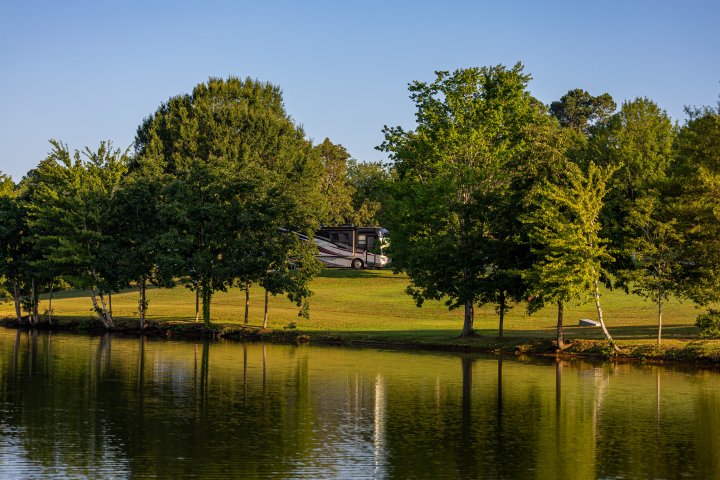
8 of the Best Waterfront Campsites in Tennessee - Read ArticleWe handpicked eight of the best campsites in Tennessee right on the water! Fall asleep to the sounds of the streaming waters or launch your kayak without straying far from camp. Each site can be booked online.