Pickett CCC Memorial Highlights
Notification Alert
Boat Dock and Swimming Area Closed for Accessibility Improvements
The boat dock and swimming area are closed to the public for accessibility improvements.
Guests will not be permitted access to these areas for safety reasons. Guests will be permitted to bring their personal canoes, kayaks, and paddle boards during this time.
A Legacy Etched in Stone
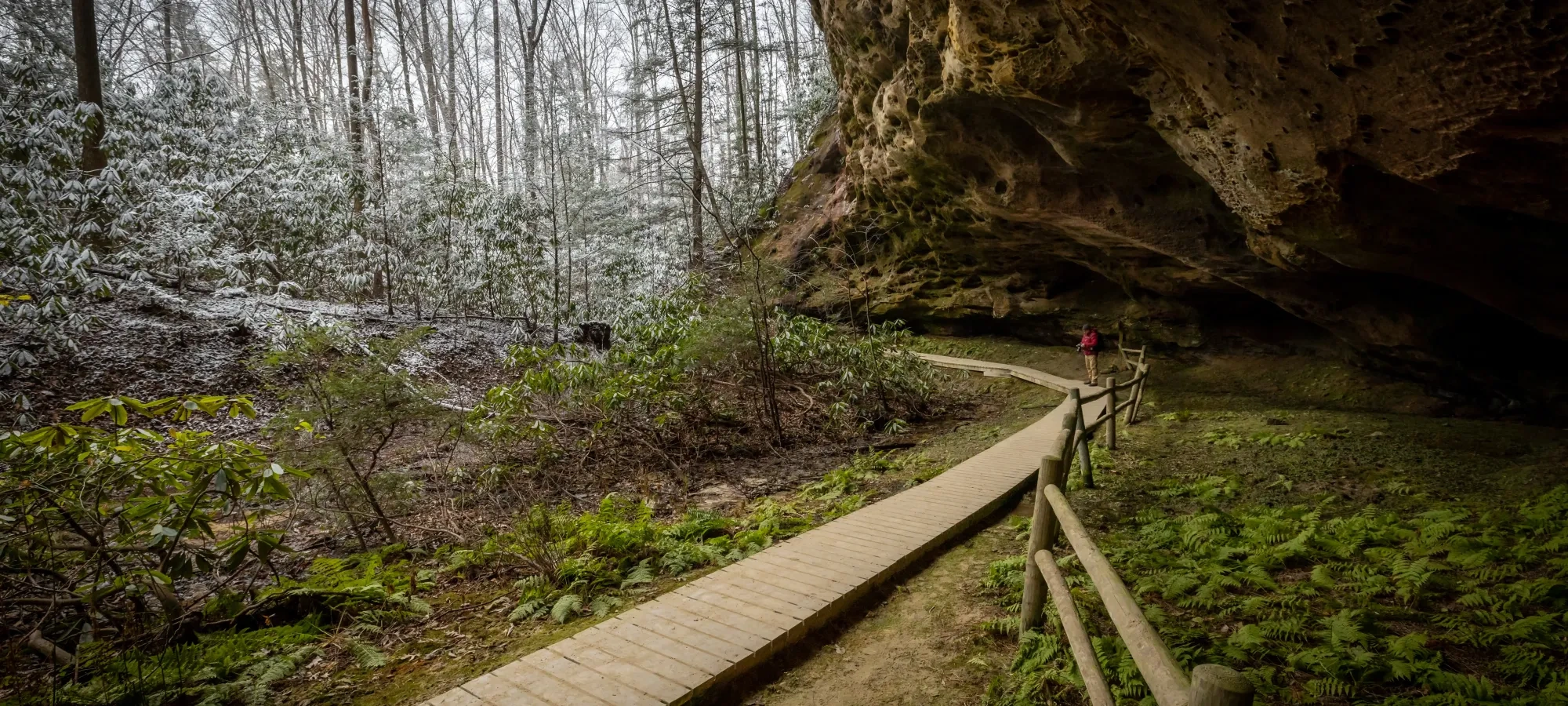
Step back in time and immerse yourself in the rustic charm of Pickett CCC Memorial State Park, a testament to the enduring legacy of the Civilian Conservation Corps (CCC). Nestled on the Cumberland Plateau, this park offers a unique blend of natural beauty and historical significance, where sandstone formations meet the echoes of a bygone era.
Discover Pickett CCC Memorial State Park
Pickett CCC Memorial State Park is a living tribute to the resilience and ingenuity of the CCC. During the Great Depression, they transformed a rugged wilderness into a haven for recreation and conservation. Their craftsmanship is evident in the park's iconic structures — from the rustic cabins to the picturesque boathouse, each a testament to their dedication and skill. Today, Pickett CCC Memorial State Park offers visitors a chance to experience the beauty of the Cumberland Plateau while connecting with a pivotal chapter in American history. Come explore the trails, gaze at the stars, and discover the enduring spirit of the CCC.
History
The story of Pickett CCC Memorial State Park begins long before the arrival of the CCC.
The land was once a wilderness area, sparsely settled by those who obtained land grants from North Carolina. In 1900, the Stearns Coal and Lumber Company purchased the land as part of their "Big Survey," operating a logging camp and railroads across the landscape.
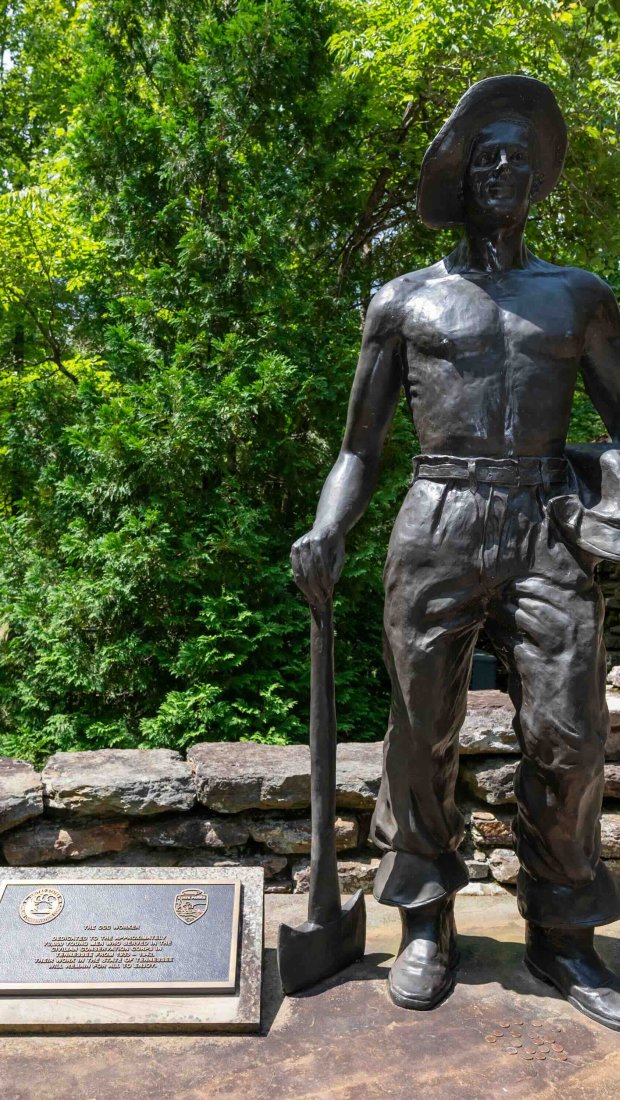
In 1933, the Stearns Company transferred the land to the State of Tennessee, which dedicated it as Pickett State Park and Forest. However, it was the arrival of the CCC that truly shaped the park's identity. Companies 447 and 1471 of the CCC transformed the area, constructing roads, trails, cabins, and other facilities that still stand today. The park was officially dedicated in May 1941. World War I hero Alvin C. York presented the keynote address at the park's dedication in May 1941. United States Representative Al Gore, Sr. and family visited the park in the early 1940s, accompanied by a photographer from Life Magazine. The photos taken during that visit were used to promote the park in the early days and hang in our cabins today.
In 2020, the CCC cabins underwent a historic restoration to stabilize and preserve timber and other features. The CCC Museum has received stabilization and preservation efforts, including replacing asphalt shingles with wood shingles. The Recreation Lodge is scheduled to receive preservation and restoration efforts. Shelter 2 and the CCC Linen House have also received restoration efforts.
The park was later officially renamed Pickett CCC Memorial State Park to honor the members of the CCC who built the park. Today, the park offers visitors a chance to experience the beauty of the Cumberland Plateau while connecting with a pivotal chapter in American history.
From the Rangers
-
The Perfect Day
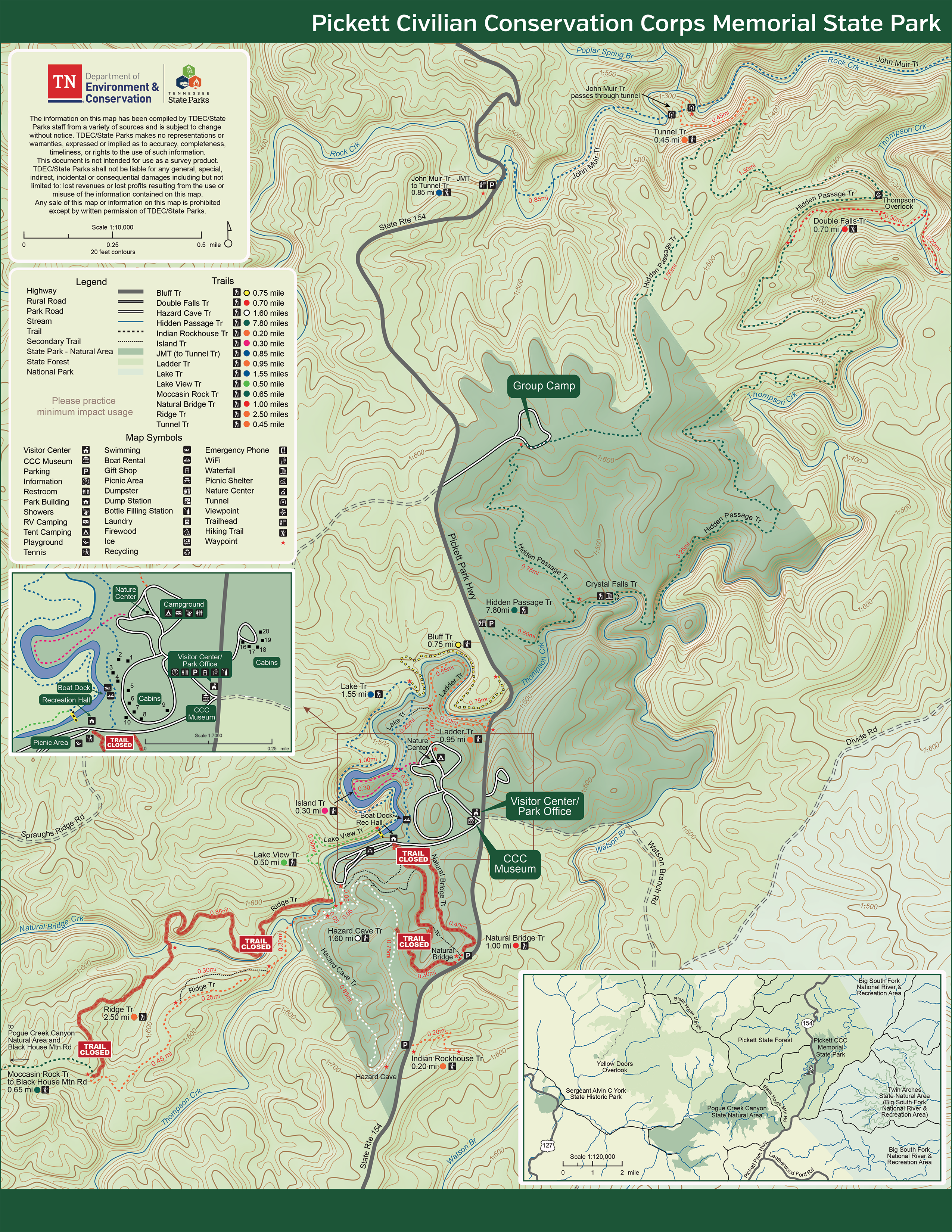
Begin your day with a hike along the Hazard Cave and Natural Bridge trails, marveling at the sandstone formations and unique ecosystems they harbor. Next, immerse yourself in the park's history with a self-guided tour of the CCC Museum, gaining insight into the lives and work of the men who built the park. As evening approaches, find a spot for stargazing and take in the dark sky viewing opportunities at Pogue Creek Canyon Astronomy Field.
-
Insider Information
For a truly unique experience, keep an ear out for the eastern whip-poor-wills calling from the Hazard Cave Trailhead parking lot in the summer. But the real magic happens in the spring and summer on a Ranger-led glow-worm hike to Hazard Cave, where you can witness the mesmerizing bioluminescence of these tiny creatures. Don't miss the chance to explore the Second Chance Arch located on the Natural Bridge Trail or paddle upstream in Thompson Creek to view sandstone bluff lines and diverse habitats.
-
Know Before You Go
Cell service is limited throughout the park, with AT&T being the most reliable carrier, though not accessible in all areas. However, a cell phone booster for Verizon phones is located at the Visitor Center. Cabins 1 through 10 and Cabins 16 through 20 all have Wi-Fi as well as the Visitor Center, enabling Wi-Fi calling. Visitors accessing the park through the nearby Leatherwood Ford Road, also called Highway 297, which leads to Big South Fork, need to be aware of the S-curves and sharp curves. Traversing this road with a horse trailer or large RV can be challenging.


Trails
Pickett CCC Memorial State Park boasts a diverse range of hiking trails that showcase breathtaking views, stunning bluff lines, and unique rock formations. From the popular Hazard Cave Trail to the scenic Natural Bridge Trail, there's a path for every skill level.
-
Mountains and Vistas
While not a traditional mountain range, the Cumberland Plateau provides a rugged, mountainous feel, with scenic overlooks offering stunning views of the surrounding landscape. Adjacent to Pogue Creek Canyon are two spectacular overlooks that offer stunning views of the gorge and valley in Pogue Creek.
-
Caves
The park is home to several rock shelters, including the famous Hazard Cave, a massive sandstone overhang that is particularly popular during seasonal glow-worm hikes.
-
Water Features
Arch Lake spans 12 acres, offering a scenic spot for a variety of recreational activities. Crystal Falls at Pickett CCC Memorial State Park has a total height of approximately 30 feet. The waterfall features a picturesque double-tiered drop, making it a scenic highlight of the park's trail system. It is located on the Hidden Passage Trail. Nearby Colditz Cove State Natural Area, which is co-managed by Pickett, is home to Northrup Falls, a majestic wonder of nature that has a total height of 60 feet.


Plants
Pickett State Park is home to a diverse array of flora.
Spring ephemeral wildflowers blanket the forest floor and towering pine trees dot the ridges. Ask a Ranger about the unique flora found in the park.
Birds
Year-round residents include red-tailed hawk, owls, white-breasted nuthatch, Carolina wren, eastern towhee, and field and song sparrows.
In summer, breeding whip-poor-wills can be heard singing at dawn and dusk, while hooded warbler, worm-eating warbler, wood thrush, and ruby-throated hummingbirds can be found during the day. Flycatchers, eastern wood pewee, blue-gray gnatcatcher, vireos, warblers, and tanagers are also found in summer. Northern rough-winged swallows and eastern phoebes nest on rock faces. In winter, yellow-bellied sapsucker, red-breasted nuthatch, brown creeper, winter wren, hermit thrush, kinglets, yellow-rumped warbler, purple finch, and sparrows can be encountered. Over 100 species of birds have been observed primarily in spring, summer, and fall.

Bird Species
- American Goldfinch
- American Robin
- Black-throated Green Warbler
- Blue Jay
- Blue-headed Vireo
- Brown Creeper
- Carolina Chickadee
- Carolina Wren
- Cliff Swallow
- Dark-eyed Junco
- Eastern Bluebird
- Eastern Meadowlark
- Eastern Phoebe
- Eastern Towhee
- Eastern Wood-Pewee
- Field Sparrow
- Hairy Woodpecker
- Hermit Thrush
- Hooded Warbler
- Indigo Bunting
- Kinglets
- Northern Bobwhite
- Northern Cardinal
- Northern Rough-winged Swallow
- Ovenbird
- Owls
- Pileated Woodpecker
- Pine Warbler
- Purple Finch
- Red-breasted Nuthatch
- Red-eyed Vireo
- Red-tailed Hawk
- Scarlet Tanager
- Sharp-shinned Hawk
- Song Sparrow
- Sparrows
- Swainson’s Warbler
- Tanagers
- Thrushes
- Tufted Titmouse
- Vireos
- Warblers
- Eastern Whip-poor-will
- White-breasted Nuthatch
- Wild Turkey
- Winter Wren
- Wood Duck
- Wood Thrush
- Worm-eating Warbler
- Yellow-bellied Sapsucker
- Yellow-rumped Warbler

Animals
The park is a haven for wildlife.
Ask a Ranger about the unique fauna found in the park, such as resident and migrant songbirds and the occasional black bear.
Animal Species
- Black Bear
Inspiration
-
5 Places to Spend the Night Under the Stars
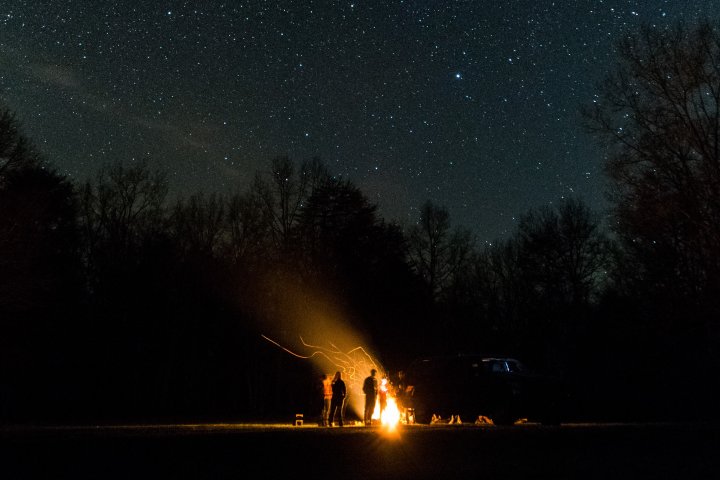
5 Places to Spend the Night Under the Stars - Read ArticleA clear night sky inspires wonder, but city lights dim the view. Luckily, several Tennessee State Parks offer dark skies where you can truly enjoy the stars. -
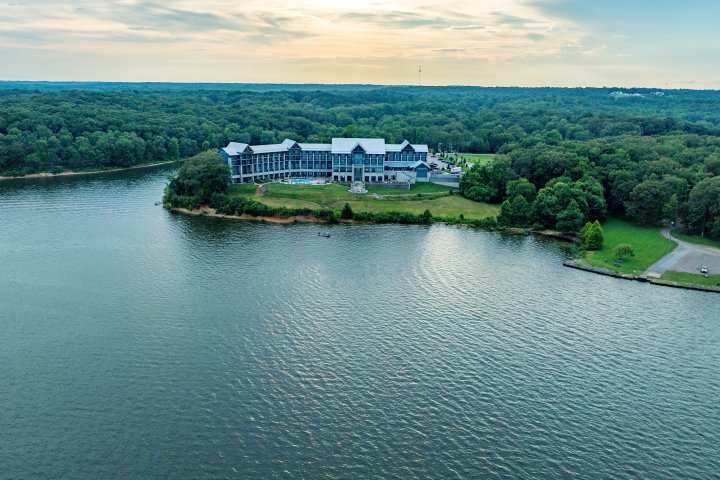
Best of the Best: Premium Cabin & Lodge Rentals
Best of the Best: Premium Cabin & Lodge Rentals - Read ArticleExperience the outdoors with modern comfort. These ten premium cabins and lodges in Tennessee State Parks make your next adventure unforgettable. -
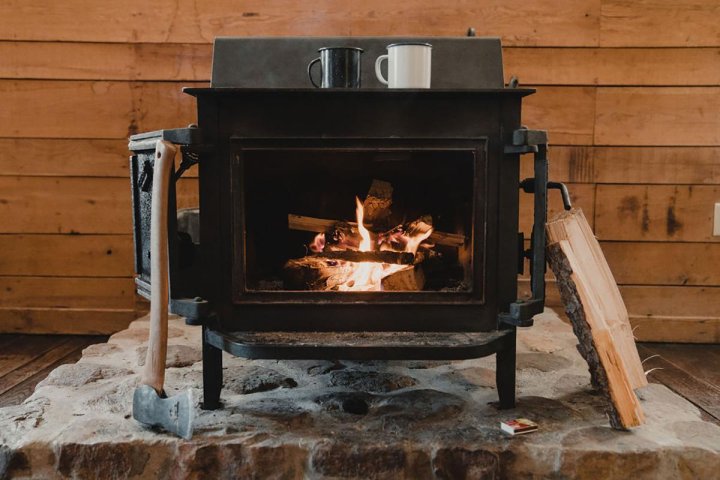
Cozy Cabins for Warm Winter Stays
Cozy Cabins for Warm Winter Stays - Read ArticleWinter is the perfect time to enjoy Tennessee State Parks cabins. Stay warm, get outside, and explore nine cozy cabin options for a memorable cold-weather getaway. -
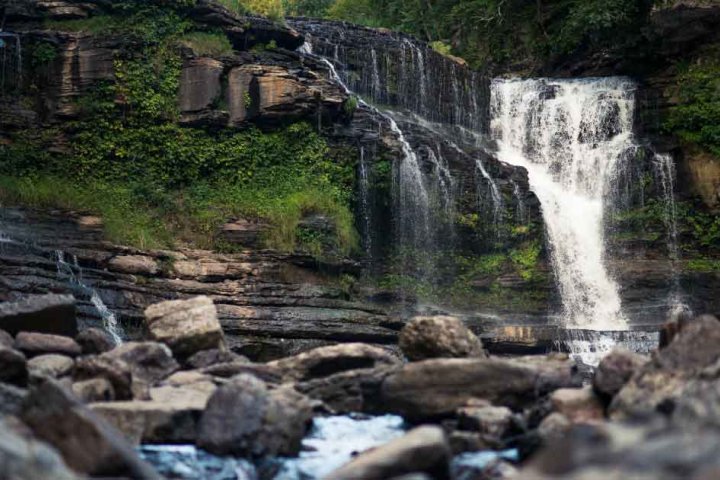
Four Camping Destinations Near Cookeville
Four Camping Destinations Near Cookeville - Read ArticleClose to some of Tennessee’s best waterfalls and overlooks, Cookeville makes camping easy. Explore three nearby campgrounds perfect for a quick outdoor getaway.