Frozen Head State Park Stonecipher Kelly House
Warning Alert
Renovations at Frozen Head State Park
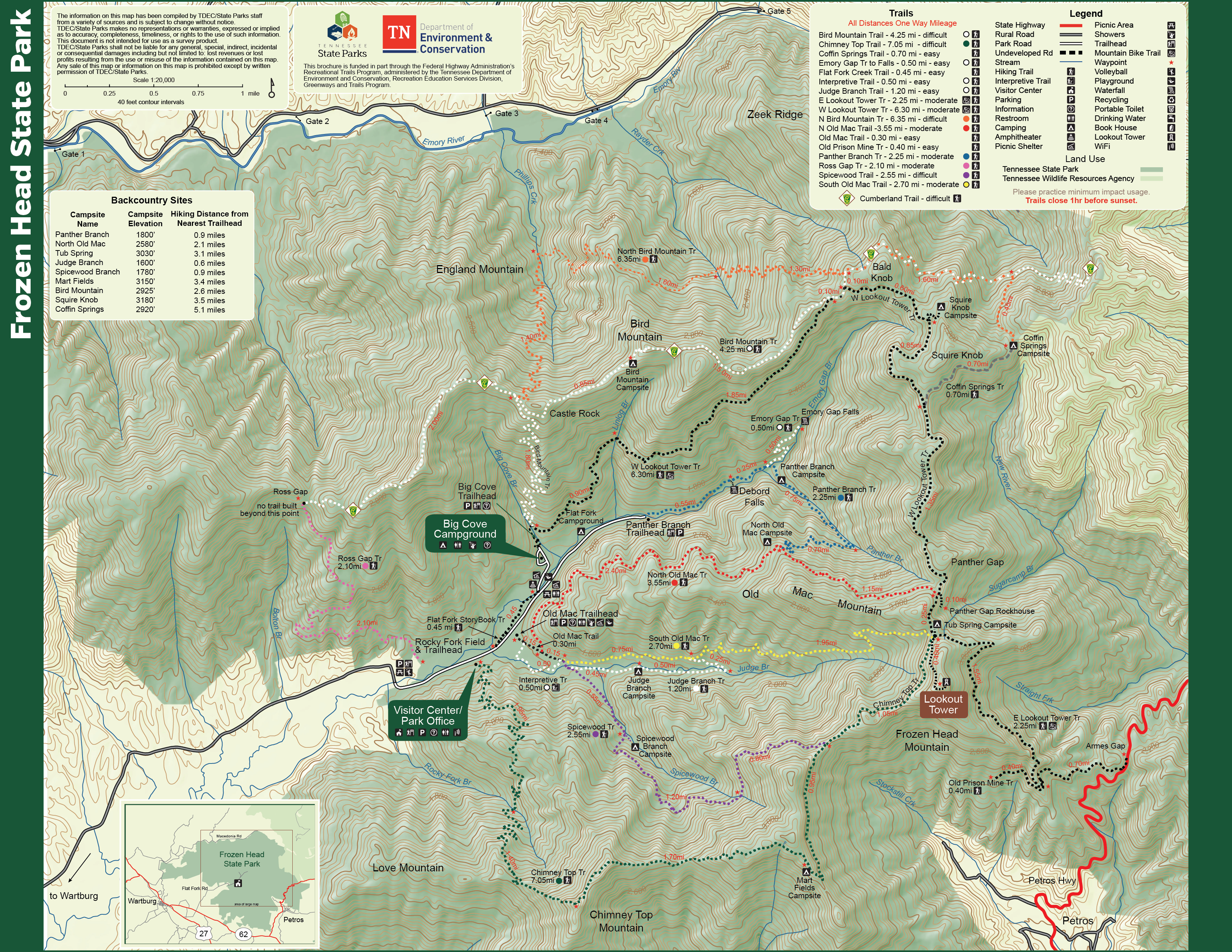
Frozen Head State Park is undergoing several major renovations. As construction progresses, we will keep you updated on which sections have reopened. We thank you for your patience and understanding. If you have any questions about your reservation, please call 1 (888) 867-2757.
Currently Closed:
- All Big Cove Campsites
- All Flat Fork Campsites
- The Visitor Center (but the public restrooms remain open)
- Shelters B & C
- The Rocky Fork Area (including the Ross Gap Trailhead and volleyball courts)
- A number of trails
- The only accessible trail at this time is the Chimney Top Trail behind the Visitor Center. This trail is considered strenuous with significant elevation gain and up to a 14-mile hike.
During this renovation, we encourage campers to check out our nearby parks. Some nearby parks to consider are:
- Norris Dam State Park: Tent and RV sites and cabins, 41 miles away.
- Cove Lake State Park: Tent and RV sites, 42 miles away.
- Cumberland Mountain State Park: Tent and RV sites and cabins, 47 miles away.
- Big Ridge State Park: Tent and RV sites, 50 miles away.
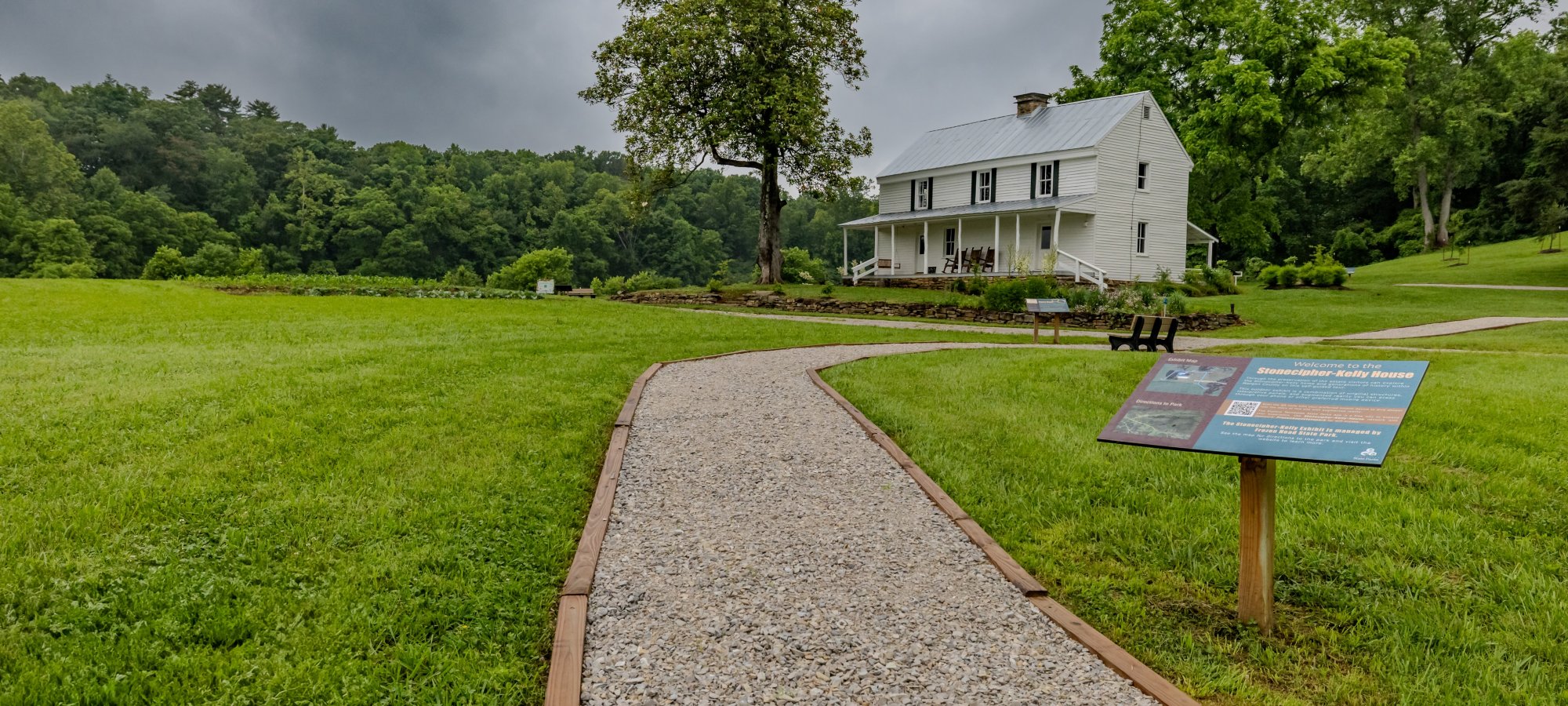

Frozen Head Stonecipher Kelly House
Frozen Head State Park is home to the Stonecipher Kelly Homeplace, an important historic landmark of Morgan County.
Built in 1814, the house was one of the very first European homesteads in the area. Today it is the oldest standing home in Morgan County. Tennessee.
For over 200 years, this saddlebag-plan log house served as a refuge for two families linked by marriage: the Stoneciphers and the Kellys. Later, the property was acquired by the McCartt family and finally purchased by the State of Tennessee. Today, dozens of Morgan County citizens can trace their lineage to the house and its original occupants.
History
Origins of the Homeplace
The house was constructed by Ezra Stonecipher. Ezra was part of a pioneer family of German immigrants, who, in return for military service in the American Revolution, were granted this untamed section of the upper Cumberland Mountains. Along with the Revolutionary War, the house has ties to the War of 1812, the Civil War, and World War I.
Growth in the 1800s
During the mid-1800’s the house was purchased by the Kelly Family, in whose possession it remained for the next 100 years. The Kellys operated a large farm on the property, supplying many local community members with goods and services. The Kellys passed on several traditions and skills that can be reflected in the house today. Part of this rich heritage is the art of fabric production; four generations of dyers, spinners, and weavers have lived in this house. Geographically, the house sat on a busy trade route linking Nashville and Knoxville. Because of this, the Kellys established an extremely lucrative store and a possible post office on the property. This made the residing family not only tremendously wealthy but also a pillar for the local community. The old Emory Road is still evident just outside the front steps of the house.
Architecture
The Stonecipher Kelly House retains a high degree of all aspects of integrity. The house remains in a primarily rural, agricultural setting, unmoved from its original location. It reflects an evolution of design, from its original saddlebag layout to the features added to the house in the late nineteenth and early twentieth centuries. A complex and skilled level of craftsmanship can be seen in the home’s log construction (which remains intact two centuries later), large stone chimneys, and original mantles. Benefitting from rural surroundings, original outbuildings, and relatively few modern intrusions, the Stonecipher Kelly House is highly evocative of the early 1800s in Tennessee, and one of the few residences that can still be associated with this settlement period in the state’s history.