Port Royal Walking Trails

  • Footbridge with railings surrounded by lush green trees under a blue sky.
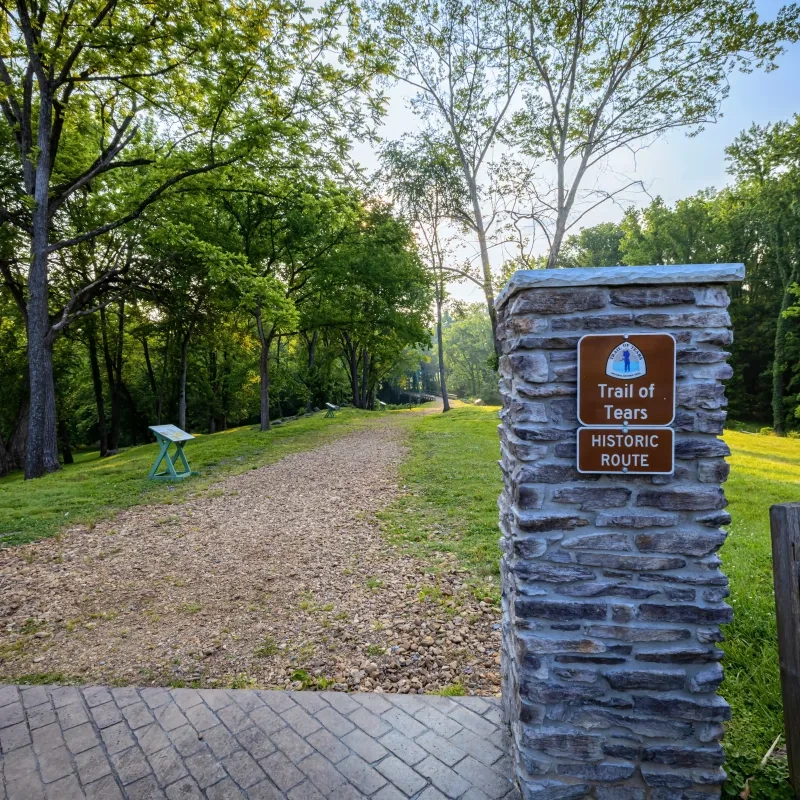
  • Trail lined with trees and a stone sign reading "Trail of Tears Historic Route."

    Walking Trails at Port Royal

    Port Royal State Historic Park has three short walking paths throughout the park.

    Beginning at the General Store and Visitor Center, Old Main Street travels through the old townsite of Port Royal. As you travel, view the archaeological remains of the town and end at Sulphur Fork Creek, where the 1890 Iron Bridge still stands. On your way back, take Hopson Spring Branch for a scenic detour around Historic Downtown. 

    The Hopson Spring Branch trail begins at the Historic Main Street in downtown Port Royal and follows along the Sulphur Fork Creek and the Hopson Spring Branch. This trail is located in a river bottom and will flood during heavy rain.  

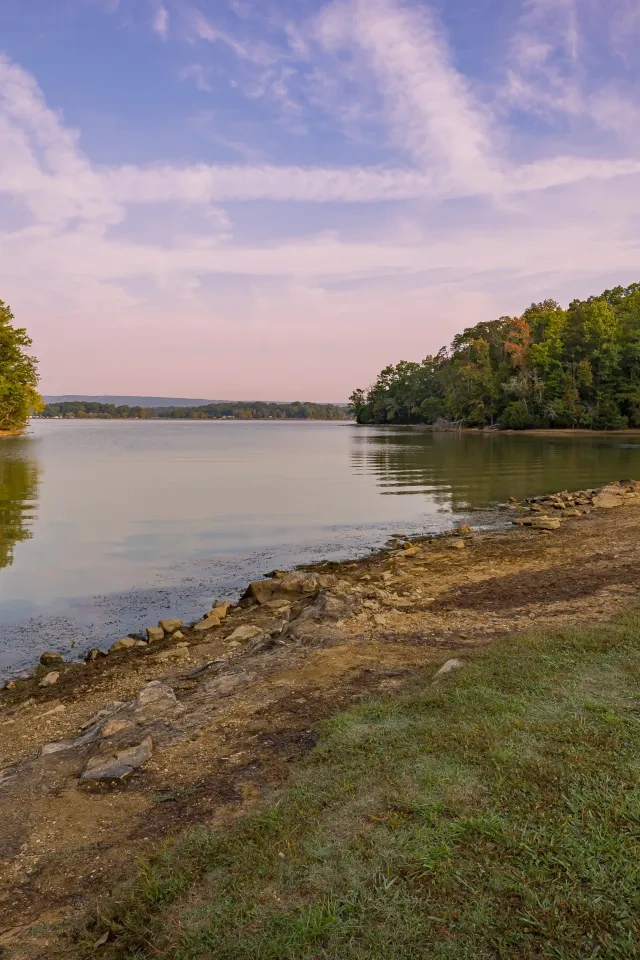
    A portion of the Trail of Tears lies within our park, commemorating the survival of the Cherokee people. This short, preserved piece of history leads to a scenic view of the Red River. 

    Trails

    Trail Definitions

    • Cross Slope 

      Describes the degree of incline from one side of the trail path to the other; measured as a percentage. Cross slope aids in water drainage and impacts the overall trail stability.   

    • Grade  

      Describes the rise in elevation over a horizontal distance on the trail; measured as a percentage.  Higher percentages represent a steeper grade indicating a more challenging ascent or descent for hikers.    

    • Standard Ramp Grade

      Serves as a reference guide for the grade of the trail.  Standard Ramp Grade is 8.3% across all trail assessments.  

    • Surface 

      A characteristic of the trail expressed in terms of material type, grading, compaction, and roughness of the path. Possible surface types include soil, gravel, paved, and mulch.   

    • Tread Width    

      Represents the horizontal distance from one edge of the trail path to the other; measurements can vary.  Tread width helps to determine the amount of space a hiker has to pass through. Obstacles on the trail can alter the remaining tread width.   

    • Trail Types: Loop

      Trail returns at or near the point from which you started. 

    • Trail Types: Network 

      Offers multiple route options within one trail, and each route is connected

    • Trail Types: Out and Back

      This type of trail travels out to an endpoint where hikers turn around and travel back to the starting point.   

    • Trail Types: Stacked Loop

      A loop trail contained completely within another trail.   

    Need a Map?

    Explore our collection of printable and digital trail maps, organized by park. Whether you’re hiking, camping, or paddling, you’ll find the resources you need to navigate confidently.


    Happenings

    No events are scheduled at this time, but there's always more to explore.

    Find More Events